
































Owl of the Desert
  • Home
  • Poetry
    • Fleeing Egypt >
      • Tower of Babel
      • The Orchard
      • Tithing Settlement
      • Chastity for Churches
      • Sign
      • Cleaning House
      • Elijah
      • Rulers of Sodom
      • Beware
      • Two Churches
      • Beginning At My Sanctuary
      • Toll Road
      • Get it Strait
      • Corporation Sole
      • The Religion of the Circle R
      • Fig Tree
      • Eve
      • New Jerusalem
      • Shemlon's Shore
    • Ascending Sinai >
      • Ark
      • Sin of the Calf
      • An Idol Observation
      • Dew from Heaven
      • I love you, Elder Holland
      • Easter
      • How Sweet
      • Haiku
      • The Barn
      • Patron Saint
      • A Conversation with Brigham Young
      • Mine Testimony
      • The Meadow
      • The Gardens
      • Ice Fishing
      • Without End
      • Forest
      • Continental Divide
      • A Great Sacrifice
    • Promised Land >
      • Lanolin
      • Zion
      • Wisdom
      • Take Up Your Cross
      • Was the Sun the Same
      • Plain and Precious
      • Bridegroom
      • Faith
      • Amos
      • But First
      • Wax
      • Parable of the Piano
      • Repentance
      • Wake Up, Child
      • Cold Storage
      • Covered Wagon
      • Multiply and Replenish
      • Rollercoaster
      • The Baptist
    • Seven Stations of the Cross >
      • Jesus Condemned to Die >
        • Life Signs
        • Fashionable Religion
        • Tithing Declaration
        • A Pretty Important Detail
        • Jesus is All
        • Salt Lake Temple
        • Zion in the Lion's Den
        • High Noon
        • Bookmark
      • Jesus Stumbles and Falls >
        • Unveil
        • But Faith
        • Sifting
        • The Ballerina
        • Credit Declined
        • Prayer Circles
        • Work Out Your Salvation
        • Lovebirds
        • Unrequited
      • Simon of Cyrene Bears the Cross >
        • Proxy
        • Chartres
        • Like the Nile
        • Artificial Intelligence
        • Not Born
        • Parable of the Crossing
      • Women of Jerusalem Weep >
        • With A Price
        • Fields of Asphodel
        • Night
        • Desert Rose
        • Goodbye
        • Spring Snow
      • Jesus Stripped of His Garment >
        • Love Letter
        • I am disquieted
        • Dream
        • Noah's Wife
        • Parable of the Five Sons
        • Eggshell
      • Jesus Nailed to the Cross >
        • This Day
        • Sacred Orientation
        • Sacrament
        • Wrestle with God
      • Burial and Resurrection
  • Blog
    • Previous Posts >
      • 2025 Posts
      • 2024 Posts
      • 2023 Posts
      • 2022 Posts
      • 2021 Posts
      • 2020 Posts
  • About
  • Contact


​

A Gospel Goose Chase?

11/29/2023

4 Comments

 
Picture
"A Gospel, a Gospel, We Have Got a Gospel, and We Need No More Gospel!"

What is the gospel?

That seems like a silly question, doesn't it, when we have been taught the gospel our whole lives.  Of course we know what the gospel is!

   Or do we?

I mean, is the gospel we hear on Sunday the same one Christ preached?  The only-true-and-living gospel?

"Wait, Tim; are you saying there's more than one?"

Yes and no.  Obviously there's THE gospel (or "good news") that Christ delivered as the Messenger of the covenant and of our salvation (Malachi 3:1).

But who can say what that is, with it being buried under all the knock-offs and two-thousand years of commentary?

Sometimes it's hard to discern Christ's gospel from the window dressing and elevator music we see and hear at Church.

You know what I mean.  All the splintered and sugared teachings we pass around as if they were the genuine gospel, the real McCoy ― but in reality we're "adding" to or "subtracting" from what Christ preached.

   And whoso shall declare
   more or less than this,
   and establish it for my doctrine,
   the same cometh of evil,
   and is not built upon my rock.


(3 Nephi 11:40)

Ouch; mea culpa.  I am guilty of this.  I think we all are.  At times we have dressed the gospel up in the emperor's clothes of manmade religion and paraded it around like a huckster opening his trench coat at Times Square selling fake Rolexes.

This is a constant struggle, it is, keeping all the noxious weeds out of the Garden of Gethsemane.  They are endlessly sprouting new thorns and (let's be honest) who likes weeding?

So I repeat: What, exactly, is the "pure" gospel of God?
Picture
I Call to the Stand My Expert Witness: Boyd K. Packer

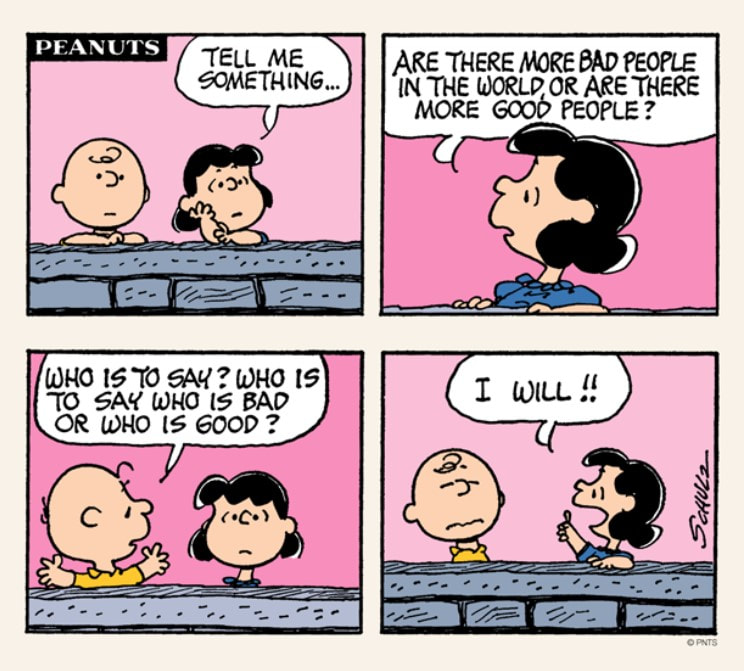
President Boyd K. Packer was viewed by many as a great doctrinal teacher. Even today, all these years later, there is a news story about the Area Presidency in California telling local leaders to stop letting women sit on the stand because of (as Elder Packer coined it) "the unwritten order of things."

So let's look at the version of the gospel Elder Packer believed in:


"I’d like to talk about exceptions. On one occasion when I was president of the New England Mission we were holding a Relief Society conference of several hundred women.  We were trying to get our sewing circles and gossip festivals turned into Relief Societies.  We were setting standards for Relief Society."

Pause.  Right away I am struck by the way Elder Packer describes the women of the Church as being out-of-order with their "sewing circles" and "gossip festivals."  He apparently had "standards" to enforce upon the Relief Society and their short-comings.

After all, doesn't "living the gospel" mean we live up to its standards?

(No, no it doesn't.  We cannot "live" the gospel; see, Clark Burt, "Living the Gospel?" November 6, 2022, Given By the Finger of God.)

Back to the story:

"A woman stood up in the audience and defied [the relief society president] and said, 'You don’t understand. Things are different up in Vermont. This is different, we are an exception. We can’t do that. You must make an exception.'

"Then [the president] quietly, but firmly, said, 'Dear sister, we’d like not to take care of the exception first.  We’ll see to the rule first and then we’ll take care of the exception.'

"Accommodate the rule first!"

Wait; sorry to interrupt this story-in-progress again, but this seems backwards, doesn't it?  Because, by definition, we don't "accommodate" rules.  We "accommodate" things that don't comply with the rules.  We make accommodations for the exception.

​Like stairs.  Stairs are the rule, but the accommodation = wheelchair-accessible ramps for those who are not able-bodied.

So why does Elder Packer say we should accommodate the rule first?

"There is great power and great safety in holding to the scriptures and having an abounding obedience to  . . ."

Me again.  I agree that we should hold to the scriptures; but what in the world does he mean by "abounding" obedience?  Who do we obey?  God and His Christ?  The law of the gospel?  

    Nope.

" . . . to our constituted priesthood authority."

Ah, there's the punchline; he has been leading up to this: the gospel of obedience to Church authorities (is this the gospel Christ preached?).

You see, "exceptions" are subversive; they deviate from the rule.  They fall short of the ideal and thus are deemed unworthy, less-than 
― even dangerous to the flock (should they multiply and replenish).

Elder Packer concludes with this statement worthy of careful consideration:

"[We should] obediently say, 'Lord, I don’t ask to be an exception.'"

(Boyd K. Packer, “Follow the Rule” January 14, 1977.)

I think I understand the point he's trying to make.  But on the other hand, didn't the Lord seek out the exception?  Didn't He go after the lone, lost sheep ― leaving the rule-oriented-ninety-and-nine?
Picture
The Gospel of Exceptions

Look, most people believe in a gospel of ideals.  I don't blame them!  There's someone out there whose ideal version of the gospel resembles an episode of Leave it to Beaver.

Wouldn't that be nice?  To have a gospel that was an expression of a Celestial Standard that we must all match?  No exceptions.

We could all set our watches to that!  Women would all style their hair in the most celestial way (which, come on, has got to be the bouffant).  And men's ties would settle on a single width, no more hipster skinny ties or wide-awful 70s ones.  We'd know, at last, whether two-button or three-button suit jackets were appropriate (and heaven help the sucker in a double-breasted one).


The idea of the gospel being the embodiment of an "ideal" is appealing; after all, isn't Christ our "ideal"?

And, being perfect, shouldn't He tell us what the best-way-of-doing-everything-is?  He could tell us how to speak and dress and which mouth wash He prefers.

This type of gospel
― a gospel of ideals ― delights in drafting handbooks and correlating our religious etiquette, measuring our spiritual statures without regard to circumstances or individuation.  And if we fail to make-the-grade, it must be our own fault.

The Ideal Gospel (trademark pending) is seductive because it feels objective and eternal and unbendable.  Nary-a-bit of moral relativity in sight, to spoil our supper!  No hungry waifs sitting outside our windows to disturb our repast, because we shall all be seated in designated spots around the table eating a pre-selected menu, chosen by our wise-and-noble-head.

Sound good?  No?  Just wait until we apply the Ideal Gospel to families.
Picture
Families-R-Us

Now, applying the Ideal Gospel to families, we'd get something like, well, the Proclamation on the Family, wouldn't we?  We see it fully metastasized in 1995.

Sure, sure, "circumstances may necessitate individual adaptation" yadda yadda.  But we all know the truth (*wink wink*): there's only one right way to family in the Church (well, two if you count polygamy).  Either way, it's the one that'll get us the jackpot in the resurrection.

And so we strive for the "ideal" by getting a temple marriage and staying on the covenant path, with a righteous man married to a righteous woman (or several, if you practice polygamy), who are fertile and have a large family of well-behaved children in a suburban home with a white-picket fence, with a mother who nurtures the children while baking casseroles as the father toils away at his steady employment.

Hmmm.  What shall we do, then, with all the messy exceptions?  With single sisters; single mothers; widowed fathers; dead-beat divorced dads; and barren couples unable to conceive?

Orphans; meth babies; down-syndrome children; unemployed parents; and children on government welfare who listen to rock music in shredded jeans?

What does the Ideal Gospel offer them?  Well, nothing 
― that is, unless they want to change.  If the "exceptions" will conform to the "rule", then we can play ball.

But what about the Savior?  What does Christ's gospel offer them?

Anyone who has read the New Testament understands that Christ’s gospel is exceptional because it is specifically made for the exceptions.

   But when Jesus heard that,
   he said unto them,
   They that be whole
   need no physician,
   but they that are sick.


(Matthew 9:12)

You see, Jesus came to minister to the exceptions, not the rule.  The Pharisees really hated that (because, for whatever reasons, they really loved being rule-abiding and making others be, too).

The Pharisees thought it sacrilege for Christ to mingle freely and happily with publicans and sinners (like today, how we think God is found in the temple amid the crystal and finery, whereas it is just as likely we'd find Him hanging out in a gay bar amidst the chaps and cocktails).

If we needed a second example, take the story of the Woman at the Well, who was living (unmarried) in sin with her boyfriend (after five husbands, to boot) ― ideal or exception?

What was Christ's response to her?
Picture
Wrong Way To Tell a Story

What's curious about the story of the woman at the well is that we don't hear Christ telling the Samaritan woman to reform her behavior and live up to some "ideal."

In fact, the story doesn't have an ending (let alone a happy one) at all; it says nothing about what transpired after her encounter with the Savior.  Wouldn't it be nice to know "the rest of the story"?

No, it doesn't matter.  But we'd love, wouldn't we, to see the woman cleaning up her lifestyle for one year and then going to the temple to be sealed to her boyfriend for time and eternity, and raising good little children whom she dresses in hats and flower dresses on Easter Sunday.

No, instead, the story ends abruptly:


   The woman then left
   her waterpot,

   [how irresponsible!  Those waterpots don't grow on trees, you know.  And won't the men in town be thirsty?]
   and went her way into the city,
   and saith to the men,

   Come, see a man,
   which told me
   all things that ever I did:
   is not this the Christ?

   Then they went out of the city,
   and came unto him.


(John 4:28-30)

That's it.  Isn't that the worst Hollywood ending ever?  ALL WE'RE TOLD about this woman's conversion is that she (1) believed in Christ; and (2) invited others to "come, see."

Where are the fruits that she's a true believer?  Did she forsake her no-good, free-loading boyfriend to live the law of chastity and begin paying tithing?  Did she begin wearing the Tichel to cover her hair like a respectable Jewish woman should?  Did she refer to the Church by its proper name?

None of that is in the story.

"Well Tim," someone says, "Coming unto Christ means she's going to have to repent of her sins and start living the commandments, like a good person.  That'll show she's sincere."

   For I will send my servant
   unto you who are blind;
   yea, a messenger to open
   the eyes of the blind,
   and unstop the ears
   of the deaf;

   And they shall be made perfect
   notwithstanding their blindness,
   if they will hearken unto
   the messenger,
   the Lord’s servant.


(Isaiah 42:19, JST version)

Now please don't misunderstand me.  There are a thousand sensible, very good reasons I can think of to behave well and honorably!

   The gospel just isn't one of them.

Because the good news is, Christ asks us to become little children, trusting Him with our broken, blind hearts.

Or, you know, we can keep on acting like adults.
Picture
4 Comments

The Good (and Not-So-Good) Shepherd

11/21/2023

5 Comments

 
Picture
O.K. Corral

Growing up I raised sheep, horses, goats and chickens.  My dad thought it would be good for me to learn the value of "hard work."  I became a reluctant farmhand who hurried through his chores to return to video games.

One of the things my dad had me regularly do was move the fences around our property so the horses and sheep had fresh pasture to eat.  The fences were huge inter-locking metal livestock panels ― 12-foot wide and as tall as I was.

As a 13-year-old boy, I remember on moonless nights crossing the fields to grab flakes of hay in the barn for the horses.  I would be spooked by sounds and shadows (nothing is as creepy as a barn at night mixed with a vivid imagination).

I wasn't brave like the young shepherd David, son of Jesse, who tended his family's flock and fought lions and bears with his slingshot.  

I was more of an absent-minded shepherd, who at times forgot to close the gate ― which allowed the horses and sheep to escape!

   
I felt helpless and frightened.

How was I going to get the animals back in their pens?  It was my fault.  What would my father say?  I hated letting him down.

I recall offering several fervent prayers for divine intervention as I ran through the streets waving my arms and shouting at the horses and sheep like a madman, trying to steer them back home.

Luckily, being from a small town, the neighbors and even the police were happy to help.

I'll never forget my sense of relief when we managed to finally get the animals back in their pens before they got hit by a car or something.

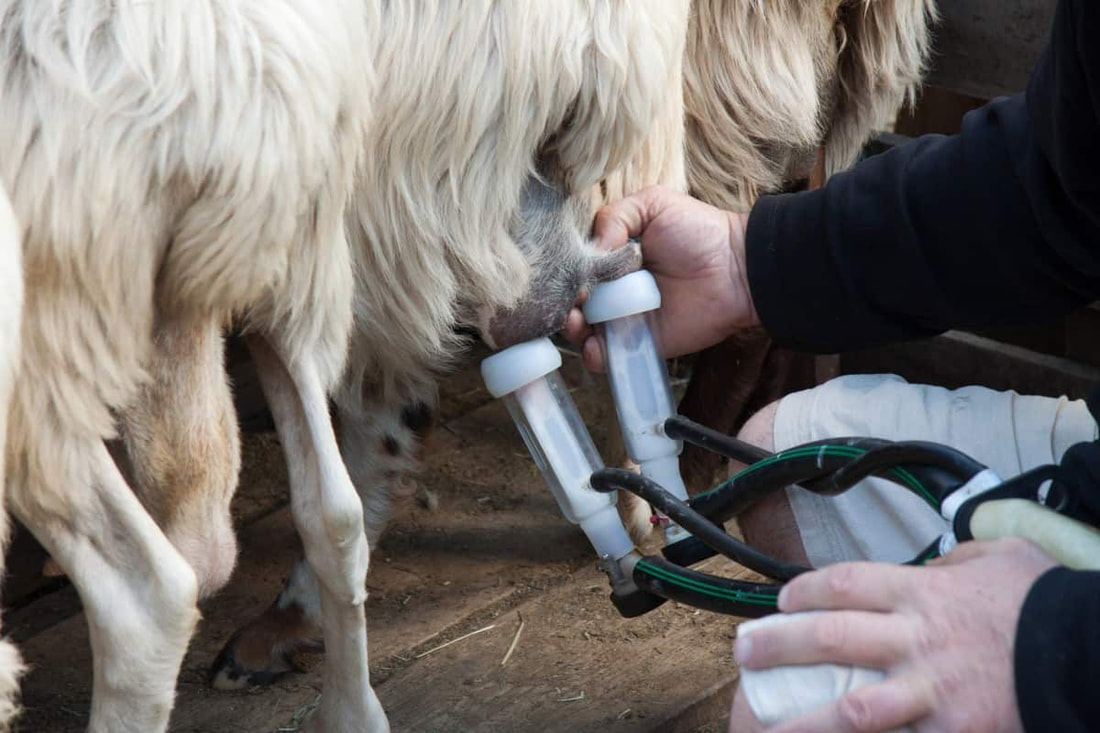
Why am I sharing this?  Because it was only later that I realized that Christ came not to lock the gate, but to open it.

​Instead of herding us back into the pen, He came to lead us out of it.

Yes, really.  The Good Shepherd calls us out of our fouled pens ― away from the fences we have erected around our faith ― to fresh green pastures.
Picture
When Fences Fail

At the time Jesus taught the parable of the Good Shepherd in John 10, the people "understood not what things he spake unto them" (John 10:6).

I really can't blame them; I mean, here we are, two thousand years later, and we still have trouble understanding the Savior's message.

Look at what Jesus said:

   He that entereth in by the door
   [of the sheepfold]
   is the shepherd of the sheep.


As we all know, wolves-in-sheep's-clothing don't use the door; they crawl under the fences or through holes in the wall (this is how we know they are "thiefs and robbers" (John 10:1).

Practice Pointer:  Now, a smart predator is going to ― very first thing, after they've illicitly entered in ― shut the gate behind them.  Why?

They will secure the exit so the sheep can't escape.  That makes it easier for them control and devour the flock once things get underway.

   Woe be to the shepherds of Israel
   that do feed themselves!
   Ye eat the fat, and ye clothe you
   with wool, ye kill them
   that are fed.


(Ezekiel 34:2-3)

But Christ (who is the keeper of the Gate) knocks and enters through the door.  What does the gate do?  Does it close behind Him?  Does it remain open?

   And the sheep hear his voice
   and he calleth his own sheep
   by name . . . 


This is the part we usually quote.  But what, exactly, is the Good Shepherd saying to His sheep?  What's He calling for them to do?

Are we curious?  Look:

   . . . and leaeth them out.

(John 10:2-3)

Whoa!  This seems like a big deal.  The Lord is calling His sheep to leave.  He comes to "lead them out" of the sheepfold.

   Why?
Picture
"I'm Free!  What Are You Talking About, Captivity?"

In the old days, the "law and the prophets" built fences (hedges) around the sheepfold; they were old school.  I'm talking about beautiful, manicured English gardens.

And, like our grandparents who learned to do long division a certain way in 2nd Grade, there's really no use trying to get them to change how to do things, once their training becomes so in-grained they can't imagine another way (which is, perhaps, one of the best arguments against a gerontocracy).

As a general rule, the older we become, the more stuck in our ways we become, resistant to change.  (As a side-note, President Nelson was in his prime (30s and 40s) in the 1950s and 1960s, which might explain his mindset.  For reference, Abraham Lincoln and George Washington both served as President in their 50s.)

For this reason, I wish we had term limits for Church leaders and emeritus-status for apostles.  It would be a big help to move the Church forward to where the Lord needs us to go.  For while we may become wise in our dotage, we may also become senile and unteachable.

Well, anyway, some of those religious hedges grew tall and have very strong roots.  Many of those hedges became dear to our forefathers.  They no longer wanted to leave the pen.

But Christ came and fulfilled the law; He has set us free.  Christ opened the gate!

And yet, having swung wide open the Gate for us, many of us remain in the cozy confines of our pen, chewing the cud of carnal security.

​You see, we often picture ourselves as missionaries and parents who are going out and rounding up the wayward souls who've escaped the safety of the pen (i.e., the Church) ― who have strayed from the covenant path and need to "return" home.

After all, isn't the Church (and its fences) a place of safety?  Didn't the Lord call Zion a "refuge" (D&C 115:6)?  Outside, beyond the warm straw of our covenant-corral, lurk the wolves; we see dark shapes and scary sounds beyond the fence.

But consider:  The wolves are not only "outside."  Who told us they were?  The wolves are also here, among us!

Christ warned:

   
Beware of false prophets,
   which come to you
   in sheep’s clothing,
   but inwardly they are
   ravening wolves.


(Matt. 7:15)

See, those same fences that keep bad things out, can also trap us inside with the wolves.

If Christ is calling to us to lead us out, what do we think the wolves are saying?  "Stay.  Stay here.  This is the good place; the safe place.  Trust us."


Fences fail; wolves get in.  And when they do, we find ourselves at their mercy, unable to escape, thanks to the fences of unbelief we've constructed over the years.
Picture
Where is Christ Leading Us?

I want to look at the following verse in the sense that Christ has come to help us "escape" our prisons of priestcraft and self-righteousness.

   And the saints also
   shall hardly escape;
   nevertheless, I, the Lord,
   am with them.


(D&C 63:34)

This verse implies two things to me:

First, escaping is hard ("hardly escape"); and

Second, escape is possible only because "I, the Lord, am with them."

This tells us we can't escape on our own.  This is not a prison-break of our own devising.  

Because, where will we go once we've left the pen?  Who knows the way?  Leaving the pen without the Shepherd to guide us is more than foolhardy; it is perilous.

   The Lord is my shepherd
   [shall we have another?]
   I shall not want
   [shall we want another?].

   He maketh me to lie down
   in green pastures:
   he leadeth me
   beside the still waters.


(Psalms 23:1-2)

Notice the two things Christ is leading us toward:

   - Food to nourish us ("green pastures"); and

   - Drink to refresh us ("still waters")

Having these two things, we may at last "enter into the rest of the Lord."

   The Lord shall give thee rest
   from thy sorrow,
   and from thy fear,
   and from bondage.


(Isaiah 14:3)

Sounds good, doesn't it?  Well, we have to ask ourselves, what are God's food and drink?
Picture
Milk and Meat

What does God mean when He speaks of milk (drink) and meat (food)?  What does the Good Shepherd feed His sheep?  Jelly beans and chocolate milk?  Tenets and precepts?  Policies and pragmatism?  Tithing?  Rules to live by?

No.  The answer is:

   The Word of God.

As Peter taught:

   As newborn babes, 
   desire the sincere milk
   of the word,
   that ye may grow thereby.


(1 Peter 2:2)

The Point:  Fences make for good neighbors but poor religion.

But leaving the pen DOESN'T mean leaving the Church (or staying, for that matter).


It means, wherever we are, in whatever pen we find ourselves, we heed the Word of God leading us into all truth and love.

So when our leaders speak the word of God, rejoice!  Hold fast the truth spoken by those who hold high office.

And when our leaders speak something other than the word of God, we may safely disregard it (for even Joseph Smith admitted that prophets speak at times as only "a man").
Picture
Pure Religion Defiled

For example, when we hear the Brethren talk about tithing
― seeking to fundraise off of the faith of the widow and poor ― "from such, turn away" (2 Tim. 3:5).

If you're wondering why I bring this up again and again, and why I care so much about this topic, it is because, well, I've read what the scriptures say about priestly abuse, extortion, and oppression.

And so in the spirit of Ezekiel, I will boldly pro
claim that the Church's modern practice of tithing "perverts the gospel of Christ" (Galatians 1:7).

(For more, please read the 10-part series, Thou Hast Made an End of Tithing; the 6-part series, Stewards of God's Grace; the 10-part series, Complications of Temple Worthiness; and the post, Sifting; that will give you a glimpse into why I feel so righteously indignant about this topic.)

In my opinion, discontinuing the practice of tithing and replacing it with free-will offerings would solve many, many problems for the Church.

​If anyone can't imagine such a radical shift, remember that the Church renounced polygamy after having taught it to be an essential and everlasting law (see D&C 131-132).  So I don't think it would be a leap to do the same with the law of tithing.

   The thief cometh not,
   but for to steal,
   and to kill, and to destroy:

   I am come that
   they might have life,
   and that they might have it
   more abundantly.

   I am the good shepherd:
   the good shepherd
   giveth his life for the sheep.


(John 10:10-11)

Jesus, to give us life, died in spiritual childbirth; now this poem will take on new meaning.
Picture
Easter

faded corduroy trousers
worn a week between washing
 
favorite long-sleeved flannel shirt
shedding alfalfa flake from last night’s feeding
 
     three a.m. turns the better side of night
     dark dressing for morning
 
incandescent bulb casting yellow-gray
spokes across back porch
 
boots stiff with hardened mud
waiting to be laced
                                           
     silhouetted horseflesh
     sleep as salt lick
 
clear sky visible through orchard trees
sprouting spring’s uneven puberty
 
trough water a charcoal mirror
scrivening wrinkled stars
    
     Big Dipper stretching toward Polaris
​     unbridgeable distances apart
 
red extension cord raveling from barn door
to hanging heat lamp warming straw
 
ewe's breath wet and weak 
as its crowning creation
                                    
      silence a life sign \\// flowing fetal membranes                 
                                   // now death 
                                   \\
glass bottle capped in rubber nipple
working lamb’s mouth with milk-coated finger ​
Picture
5 Comments

Discerning the Signs and Anti-Signs: Part 11

11/15/2023

2 Comments

 
Picture
Three?  That's All?

Thus far we've seen how to tell whether something bears Christ's Spirit or not.

Now we're prepared to flip that around, and ask:

How can we discern whether something bears the spirit of the Anti-Christ?

Interested?  Clark Burt commented in Part 9: "Another question to ask is: what is Anti-Christ? Is religion Anti-Christ? Is following the prophet Anti-Christ? Are those that teach there is no Christ Anti-Christ? Is it possible that getting caught up in trying to identify a person as the Anti-Christ, causes us to minimize what is Anti-Christ?"

Those are important questions.  The first point I want to make is that, just as there are signs (i.e., fruits) of Christ's Spirit/ light/ word/ power ― (like faith, hope and charity) ― so too, there are "anti-signs" of the Anti-Christ.

Three Anti-Signs, to be exact.
Picture
The Art of Seduction

The Three Great Anti-Signs are quite obvious once we know where to look.

Just as Christ's kingdom is "not of this world" (John 18:36), the kingdom of Anti-Christ is very much of this world.

Ironically, we find the Three Anti-Signs thriving in modern religion, of all places.

The key to unlocking the Anti-Signs is to understand something about secret combinations.

Yes, secret combinations.  And no, I am not a conspiracy-theory-kind-of-guy.

Secret combinations are like a fire; close up, they are bright and hot.  But as we move further away, we lose sight of the flames but can still see the smoke.  Further still, we may not be able to see the billowing clouds of smoke, but we can smell it in the air (like when the Canadian wildfires polluted the air quality thousands of miles away).

Follow your nose; we're going to look at what the Anti-Christ smells like.

Look:

The Nephites did build them up [we're talking about secret combinations] and support them

Why would good, God-fearing people "support" such wickedness?  And how did they "build them up"?

Well, the short answer is money.  That's how we build and support things here in the telestial world.  As Hugh Nibley liked to say, "The Mahan Technique is to convert life into property."

The way the righteous are seduced into complicity with secret combinations is not to get them to sign up as card-carrying-members, but to get them to unwittingly enjoy the spoils down-stream.

beginning at the more wicked part of them

Normally we think of the "more wicked part" as people wearing hooded cloaks and chanting like monks in a circle, sacrificing goat blood on a stone-tiled pentagram in some dank basement (making a caricature of what people who participate in secret combinations are actually like).

But I don't think all those sweet Nephite moms and pops were swearing secret oaths and committing murder.

Instead, I view them as victims of a corrupt system.  They were caught up and trapped in a society that, regrettably, served the rich and powerful.

until they had overspread all the land of the Nephites

Notice that what began as localized wickedness spread over time; it became adopted more widely until, at last, it was just "the norm."  

and had SEDUCED the more part of the righteous

"Seduced" is such a loaded word.  It means, "to entice into sexual activity."

If you want to read a bizarre chapter of scripture, I suggest you check out Ezekiel 23.  In it, Ezekiel compares Jerusalem to a harlot who "bruised the breasts of her virginity" (Ezekiel 23:3).  Her paramour was Assyria and Egypt; she trusted them and had a sordid affair and became "polluted."

Now, here's the point: alarmingly (if you thought that Ezekiel was talking about someone else), Ezekiel uses the same analogy to describe how Israel was unfaithful with . . . wait for it . . . her prophets.

Wait.  What?  How could infidelity be tied to the way the prophets and the people "get it on" (pardon the French)?

Well, the Lord uses the word "seduced."  He said his people were "seduced" by "prophets that see vanity" (Ezekiel 13:9-10).

[Anti-Christ] Practice Pointer:  The way you "seduce" the righteous is simple: get their leaders to preach a path that leads them into "vanity" like the Pied Piper.

until they [the righteous] had come down to believe in their works and partake of their spoils.

(Helaman 6:38)

Oof.  And we haven't even gotten to the Three Anti-Signs yet.
Picture
The Three Anti-Signs

Let me give you three keys that will never rust.

The spirit of Anti-Christ is accompanied by three anti-signs, the dearest desire of all secret combinations:

   to get power
   and gain . . .
   [and] the glory of the world.


(Ether 8:23, 7)

What I find fascinating is the fact that these three signs are also the same signs of priestcrafts:

   Priestcrafts are that men preach
   and set themselves up for a light
   unto the world
["power"],
   that they may get gain
["gain"]
   and praise of the world ["glory"].

(2 Nephi 26:29)

Okay, third time the charm?  A third instance of this unholy trinity pops up in the Book of Mormon at the point the Church of God was broken up among the Nephites.

Specifically, Satan tempted the people

   to seek for power
   and authority
[power],
   and riches
[gain], 
   and the vain things
   of the world
[glory].

(3 Nephi 6:15)

Fourth time the charm?  Because guess what are the defining characteristics of the Great and Abominable Church?

  Surprise!

​   And the angel spake unto me,
   saying: Behold the gold and the silver,
   and the silks, and the scarlets,
   and the fine-twined linen,
   and the precious clothing,
   and the harlots,
   are the desires
   of this great and abominable
   church
["gain"].

   And also for the praise
   of the world
["glory"]
   do they destroy the saints of God,
   and bring them down
   into captivity
["power and authority"].

(1 Nephi 13:8-9)

The question we should ask is whether the signs of the spirit of Anti-Christ are found in the Church today?
Picture
When the Angel Rebuked Joseph Smith

​Several years ago I was invited to speak at Stake Conference.  As is my practice, I didn't write a talk but tried to "treasure up the words of life" beforehand (D&C 84:85).

(And no, I have not been invited to speak since.)

As I stood at the pulpit, with the cameras trained on my shiny bald forehead, broadcasting into two other buildings, I silently prayed for the Lord to fill my mouth.

I opened my scriptures; a thought came to my mind.  I turned to the Pearl of Great Price and read a verse from Joseph Smith-History to the congregation:

"I beheld the same messenger at my bedside, and heard him rehearse or repeat over again to me the same things as before; and added a caution to me, telling me that Satan would try to tempt me (in consequence of the indigent circumstances of my father’s family), to get the plates for the purpose of getting rich.

"This he forbade me, saying that I MUST HAVE NO OTHER OBJECT IN VIEW in getting the plates but to glorify God, and MUST NOT BE INFLUENCED BY ANY OTHER MOTIVE than that of building his kingdom; otherwise I could not get them."

(JS-H 1:46)

Did Joseph get the plates?  Nope.  Not the first time.  Nor the second.  Or the third.  Why not?!

The Lord must have been serious about that "pure heart" business. 

But how easily we find ways to profit from our service to God, hoping to have it both ways; to serve God AND Mammon.

And we call it a "win-win."
Picture
"Objection, Your Honor!"

"Tim!" someone says.  "You're worried over nothing.  You see, the Church is not following the spirit of Anti-Christ because its leaders are "seeking the welfare of Zion."  There's no problem with the apostles and prophets asserting their keys and authority or collecting vast sums of wealth or receiving honors and awards!  Building temples and doing missionary work take money.  They're doing it for the good of the kingdom!"​

Mmm, I would nod, collecting my thoughts.

   My kingdom
   is NOT of this world.


(John 18:36)

Mmm, I would continue to stall, speechless.

   How quick to hearken
   unto the words of the evil one,
   and to set their hearts
   upon the vain things
   of the world
   are the children of men!


(Helaman 12:4)

Mmm, I would wonder to myself:

"How easily the righteous are seduced."
Picture
2 Comments

On Mercy

11/9/2023

2 Comments

 
Picture
Little Red

There are so many wonders to explore in God's garden.

I could spend an eternity getting lost among his roses, picking wildflowers and petting the deer (doctrinally speaking).

But occasionally I'll hear the song of a bird and look up ― and in so doing, I'm reminded of the garden's most impressive feature ―

The Tree of Life.

I confess to being easily distracted by the diversity and majesty of God's infinite wisdom and ways ― but feasting my eyes upon the Tree brings everything into perspective, into balance.

I think you know what I'm talking about ― that feeling.  There's something about Christ that centers our soul while stirring a yearning we didn't know existed.

Climbing the Tree's branches like little children, picking and savoring its fruit, we discover God's love makes us both happy and sad.

Happy, because it is the sweetest thing we've ever tasted; but everything we experience on earth is transitory and incomplete ― a shadow that fleets away as soon as it is spotted.

And bitter, even?  Yes, in a way God's love is that, too.  Not like a spiritual ulcer, but a longing; a longing for those we love to come and to partake of Christ's goodness along side us.

Like Lehi, remember?

For our joy is full only when it is shared.
Picture
Voice Lessons

Lately I've been pondering on repentance, reading Clark Burt's series on the topic.

His blog was the birdsong that made me look up.

While reading his post on Godly Sorrow, he quoted a verse from D&C 128 and a word jumped off the page (or in this case, off the computer screen) and flew directly into my heart.

It pricked my conscience (Psalms 73:21).  Guess which word it was?

   Now, what do we hear
   in the gospel
   which we have received?

   A voice of gladness!
   A voice of mercy from heaven;
   and a voice of truth.


(D&C 128:20)

The word was mercy.

Can you hear it?  Or is it being drowned out by something else?

I craned my ear to listen and stood still, not wanting to frighten the skittish deer.

Was that heaven speaking?  Not in English or French, but in the merciful tongue of God's love language?

I realized something.  I rarely hear the voice of mercy at Church; why is that?  Surely of all places, we should expect to hear mercy there, right?

Well, I've thought about it for several days.  At Church I hear the heavily accented voice of duty, telling us to be faithful (the "or else" is implied), to pay tithing, to think celestial, to stay on the covenant path, to listen to our leaders.  Lots of orders being given, like in the mess hall of the marines (but with less swearing), but little mercy.

So, just to double check, I searched for "mercy" in recent General Conference talks.  What I found surprised me, actually.  The word "mercy" was everywhere!  It was mentioned in so many talks I lost count.

How could that be?  Why was it, in spite of copious references to God's mercy, I had failed to get the sense or spirit of mercy from their messages?

What was lacking?
Picture
A Two-Edged Sword

The word of God is compared to a two-edged sword (D&C 6:2).  Whatever else that means, I think it speaks to the duality of God's nature, which bears a fulness of justice and mercy.

But today I don't want to talk about justice (like Corianton, I am still figuring that one out); instead I want to contrast mercy with judgment.

Is God judgmental?  Sometimes we think of Him as our judge who, at the last day, will render our eternal sentences (I mean, we actually call it the judgment day).

But isn't the spirit of judgment at odds with the spirit of mercy?

Jesus said:

   I judge no man.

(John 8:15)

What?  Not even wicked people?  What does He mean?  Isn't God the judge of both quick and dead?

Jesus said:

   I do not condemn thee.

(John 8:11)

What?  God isn't going to let all those sinners off-the-hook, is He?  I must be misunderstanding.

Jesus said:

   Judge not,
   and ye shall not be judged.


(Luke 6:37)

On the one hand we're told that God and the Holy Ghost are offended (a lot); but the scriptures portray a very different God than Jonathan Edwards' "Angry God." 

​In the Book of Mormon, we read about the Nephite rulers sitting on the "Judgment Seat."  Maybe we've come to think of God that way, too, sitting upon a judgment seat with a gavel in His hand.

But guess what?  God actually sits upon the Mercy Seat.
Picture
The Mercy Seat

In the Old Testament we find a description of the Ark of the Covenant.  The top of it had two angels whose wings met in the middle.

   And there I will meet with thee,
   and I will commune with three
   from above the mercy seat.


(Exodus 25:22)

Isn't it interesting that the physical representation of God's covenant with His people was crowned with, of all things, mercy?

So why is it, in the Church today, we find mercy buried beneath mint and anise and cummin (Matt. 23:23)?  After all, mercy is one of the heavies; it's one of the "weightier" parts of the gospel.

"But Tim!" someone objects.  "That is not my experience.  I find oodles of mercy at Church.  Just oodles."

I cannot argue with someone else's experience, but what I have observed at Church and General Conference is the spirit of judgment drowning out the voice of mercy through a long list of terms-and-conditions.  Anyone who has read the fine print knows mercy isn't free.

Bishop:  "Since you haven't paid a full-tithe I am canceling your temple recommend."

Member:  "But bishop, my sister is getting sealed in the temple next week!  I thought the Church placed family as the most important thing."

Bishop:  "Not more important than tithing."

Member: "But bishop, I'm working three jobs as a widow and am still paying the hospital bills for Suzie's surgery.  I can barely put food on the table."

Bishop:  "If you're struggling with budgeting, I am happy to have the Elder's Quorum President sit down with you and review your expenses.  I see you have a cell phone and are paying for basic cable, which are not necessities.  Tithing is."

[Member pales, feeling tears welling, crushed beneath the weight of mint and anise and cummin.]

Bishop [continuing]: "And I will ask the Relief Society President to help you fill out a food order for the Bishop's Storehouse; that way, the money you've been spending on food can be paid toward your tithing."

Who knew the "Covenant Path" was patrolled by Highwaymen?

You see, we are taught that mercy is extended (if at all) upon conditions.  Which, ironically, contradicts the very meaning of of the word.
Picture
Toll Road​

I met a highwayman

journeying to the Sea.
Pity in his coral smile showed,
so I thought,
as he took my eyes
from me, and much more,
until, blind, in disbelief
I cried,
”You cannot charge a toll
on this straight and narrow road!”

Laughing, he said,
“No living soul
can pass this gulf
without Charon’s fee.
Did you think salvation
would be (or ever could
be) free?” And laughing
cut my throat.

I fell among thieves
who unburdened my boat
as I sailed a forsaken,
tempestuous Sea.
I had no coin
for their hungry purse
as they bound me gleefully
and severed my tender flesh,
until, a eunuch, in agony
I pled,
“I’ve nothing left;
just let me live!”

“There is always more to give,”
they laughing said. “Bodies sink
but corpses float
to greet the devil’s hearse.
Will you buy his token
to pay the final fare
in lovely lilac blood?”
and slit my throat.

I sank
beyond all breath
into the depths
of the cool, calm Sea.
I asked, “Does no one care
what happens to me?”

I heard a voice
and looked up to see
a man dressed beautifully
in fairest silk and ivory pearl.
He stretched his hands in prayer,
smiling down at me,
and kissed my throat.

   “Of course I can help you,”
   Master Mahan said,
   “In death there is much to gain.
   Have you not learned the lesson
   descended down from Cain?"
Picture
"I Call the Prophet To the Witness Stand"

Me: Please state your name for the record.

Zechariah: Zechariah, with an "e", the son of Iddo.

Me: What is your profession?

Zechariah:  I guess you could say I am a minor prophet.

Me:  And in your expert opinion, does the Lord care more about money or mercy?

Zechariah [offended]:  That's not even up for debate.  As I've been trying to tell the Israelites for years:

   Thus speaketh the Lord, saying:
   Execute true judgment,
   and show mercy
   and compassion,

   And oppress not the widow,
   nor the fatherless,
   the stranger, nor the poor.


(Zechariah 7:10)

Me:  Thank you.  And in your opinion, do you find financial policies and practices of The Church of Jesus Christ of Latter-day Saints, as it is called, "oppressive"?

Zechariah:  Let me not say only, but let my brother, Hosea, so testify as a second witness.

Me:  Very well.  I call Hosea to the stand.  Can you tell us, sir, whether the law of tithing, as practiced by the Church today, is merciful or oppressive?

Hosea:  I can.

Me:  And which is it?

Hosea [clearing his throat]:

   O Ephraim,
   what shall I do
   unto thee?
   for your goodness
   is as a morning cloud,
   and as the early dew
   it goeth away.

   For I desired mercy,
   and not sacrifice.


(Hosea 6:4, 6)

Me:  The prosecution rests, Your Honor.
Picture
Bring On the Beatitudes

This is what confuses me: under the lesser law of Moses, mercy was supreme.  Imagine its place, then, in the higher law of the gospel?

But tithing?  It didn't even make Moses' Top Ten.  Neither did tithing make it into Christ's Top Ten Beatitudes, either.

So how did Tithing worm its way to the top and re-write the script?

   Blessed are the tithe-payers:
   for they shall obtain
   a recommend.


(Mammon 5:7)

In reality, the Savior taught:

   Blessed are the merciful:
   for they shall obtain
   mercy.


(Matthew 5:7)

I am using tithing as an example, but you could choose any of the commandments.  How did the gospel become reduced to this, when Paul taught so plainly that even Nephi would have been impressed:

   Not by works of righteousness
 
 [insert commandments a thru z]
   which we have done,
   but according to his mercy
   he saved us.


(Titus 3:5)

This explains, doesn't it, why the voice of mercy is so faint in our meetings; I think we've discovered the reason:

Could it be that we are not preaching Christ's gospel?

Did you know that the phrase "the great plan of happiness" appears only once in scripture (Alma 42:8)?  But "the great plan of mercy" is mentioned three times!  Winner winner chicken dinner.

I didn't notice that until reading Clark's latest on repentance.

   And now, my son, go thy way,
   declare the word with truth
   and soberness, that thou mayest
   bring souls unto repentance,
   that the great plan of mercy
   may have claim upon them.


(Alma 42:31; see also 42:15)

I want to be part of that Plan.  The "great plan of mercy."

​So why aren't we teaching it in the Church?
Picture
"I've Come to Claim Christ, so I May Be Claimed by Mercy"

Not to mislead you, in the spirit of full disclosure, we find in the word of God that there IS a condition for obtaining mercy.

We just saw how Alma taught his son that "mercy may have claim upon them" when their souls were brought "unto repentance."

What does it mean to "claim" something?

Well, something interesting is afoot, because we find the exact same phrase where King Benjamin teaches his people about what it means to be Christians.

   Mercy hath no claim
   on that man . . .
   if [he] repenteth not.


(Mosiah 2:39, 38)

Here we find the heart and soul of the "good news" of Christ's gospel!  Repent (turn to Him) and His mercy saves us.
Picture
Will the Real Prodigal Please Stand Up?

​I read online recently the experience of someone who attended a 5th Sunday lesson at Church.  The lesson was on the Parable of the Prodigal Son.  The teacher compared the Prodigal to those who leave the Church.


The class discussion revolved around reasons why people are weak ("poorly rooted") and don't have strong enough testimonies to stay "faithful." 

Well, the person said "it felt like one big shame fest.  It was demoralizing."

But let's pretend, for a moment, the Lord was not referring to individuals who stray.  What could he have been talking about?

Because to whom, exactly, was Christ speaking when He gave the parable?

The audience reveals a lot about what was going on.  See, the Lord was happily preaching the good news to sinners and sick folk, when along came the Pharisees, challenging Him.

The Lord then gave this pointed parable to them
― to the covenant sons of God who luxuriated in the law, who fed their faith with cornhusks and filled their bellies with falsehood (Luke 15:16; Hosea 7:1).

Now, once we understand the context of what's going on in the story, it turns everything upside down.
Picture
Two Very Different Groups

​Is it possible the parable was an indictment against the prodigal Pharisees?

   Then drew near unto him
   all the publicans and sinners
   for to hear him.


Notice who is "hearing" Him?  These verbs are powerful: we find the bad crowd "drawing near" to Christ.

The sinners wanted to be close to Him; they were His captive audience, turning to "hear" their Savior's voice of mercy.

So what went wrong?  Well, the cool kids showed up in the cafeteria wanting to exact their lunch money:

   And the Pharisees and scribes
   murmured


So we have two completely different groups: on the one hand, the outcast, tattooed, immoral, drinking sinners; and on the other hand, the respectable, comely, law-observing Pharisees and scribes.

So why were the Pharisees bent out of shape?  What in the world did these well-he
eled scribes have to complain about? Look:

   Saying, This man receiveth
   sinners


Ah!  How awful (or should I say, how wonderful?).

What do the Pharisees want?  A God who is 
offended by sinners, who shuns them, and rebukes them, and slays them.

But who was this, the Son of God, who had 
no qualms at all "receiving sinners"?  Unacceptable.  The bad crowd didn't deserve God's mercy.

But it gets worse!  God not only associates with sinners, He actually breaks bread with them; He is friendly with them, he eats with them!

   and eateth with them.

(Luke 15:1-2)

You see, the Church today is pretty much the personification of the Prodigal Son.  Having had the truth, it choose to leave the celestial law of God for the lesser law of obedience and sacrifice.

Who needs mercy when one can live it up in "riotous living" by becoming millionaires (billionaires in the cases of President Nelson and Elder Stevenson)?


You see, what if we saw the Prodigal as a type and shadow of the Lord’s people, collectively?  You know, the very people who broke His everlasting covenant (Isaiah 24:5) and who would reject His gospel (Acts 3:36)?

To them, Christ says, "Come home.  I will embrace you and kiss you on the neck and put a robe and ring on you.  Be done with lesser things."

Let me conclude with this cheery bit: my wife told me today that the Relief Society lesson planned for this coming Sunday is going to be on tithing.

"Really?" I said.  "Didn't you just have a lesson on tithing last month?"

"Yes," she said.

I took a deep breath and wondered to myself, "Can I hear the voice gladness?  The voice of mercy?  The voice of truth?"

Can you?
Picture
2 Comments

Discerning the Signs and Anti-Signs: Part 10

11/2/2023

5 Comments

 
Picture
 Part 1: Discerning the Signs and Anti-Signs
 Part 2: Discerning the Signs and Anti-Signs
 Part 3: Discerning the Signs and Anti-Signs
 Part 4: Discerning the Signs and Anti-Signs
 Part 5: Discerning the Signs and Anti-Signs
 Part 6: Discerning the Signs and Anti-Signs
 Part 7: Discerning the Signs and Anti-Signs
 Part 8: Discerning the Signs and Anti-Signs
​ Part 9: Discerning the Signs and Anti-Signs

​
Getting Lost in the Bright Neon Las Vegas Lights

My favorite color is orange.  On my desk is an egg-shaped palm stone of polished carnelian; it glows with a burnt red-orange hue.  It is so clear, in fact, light passes through it like crystal.

For whatever reason, I find the color calming.  But I also love bright neon orange (I have many T-shirts from Walmart in that color; if you ran into me at Costco, chances are I'll look like a big pumpkin).

Just seeing someone peeling an orange (and smelling it) makes me happy.

But did you know that neon colors are relatively new?  Neon paints have only been around for the last 100 years.

Just think: during the entire history of the world, 99.9% of the population never had the thrill of seeing neon colors.  How drab the world must have been.

Living in the atomic age as we do, in the 21st century, there's a tendency to believe we have "seen it all."

But let me suggest that we have barely scratched the surface of this universe's mysteries.
Picture
Discernment: Seeing Colors in a Colorblind World

The gift of discernment allows us to see truth and "things as they really are" (Jacob 4:13).  As opposed to things as they seem.

This is the great gift and promise of God, to endow us with the power to pierce the veil (i.e., things as they seem) and to behold Him as He really is (see 
Ether 12:19).

People think that parting the veil is the hard part.  If only!  Even more difficult is trying to share the things we've discovered with others (I mean, Ezekiel's wheels and rainbows are a good example).

Jesus had a gift to communicate spiritual truths; He used parables and pithy sayings to teach profound realities.

But it was hard for Him to see his disciples abandon Him over "hard sayings" and spiritual cannibalism (John 6).

Anyway, our naked eyes perceive only the superficial ― the top layer of skin; the temporal topography of our mortality ― whereas the things of God lie beneath the surface, invisible to our "natural eyes."

   Ye cannot behold
   with your natural eyes,
   for the present time,
   the design of your God.


(D&C 58:3)

See? (Pun intended.)  No, that's the point: We do not see; our natural mind stares out the window as if it were night with no street lamps, only able to pick out the occasional flash of headlights from passing cars. 

The irony, of course, is that our natural eyes render us spiritually blind.

The opposite of natural eyes is the "eye of faith."  The scriptures speak about parting the veil "with an eye of faith" (Ether 12:19); this is the way we see God and become His witnesses.

   The veil shall be rent
   and you shall see me
   and know that I am―
   not with the carnal
   neither natural mind,
   but with the spiritual.


(D&C 67:10)

Where can we find a spiritual Geiger counter to measure the invisible?  What can we use as a spiritual microscope to peer beneath the veil?
Picture
The Science of the Spirit

​The gift of discernment makes us spiritual scientists.  No lab coat required.  

Back in 1795, scientist Henry Cavendish (who must have been bored or something) decided to remove all of the oxygen and nitrogen from a container of air.

He discovered something hidden in the jar after it had been emptied of air.

Today we call it argon ― one of a handful of noble gases (not sure what makes them so "noble," but I do know some people who put on aristocratic airs).

The tricky thing about scientists is they are rarely content; they always want to dig deeper.  Explore further.  So Cavendish heated the argon and, lo and behold, he discovered another noble gas: neon.

Well, more than 100 years after Cavendish's discovery, in 1910, a guy named George Claude had the "bright" idea to pump neon gas into a lamp bulb, which produced an eye-popping red-orange light.

The rest is history. 

We are surrounded by spiritual matter; we are awash in it ― and yet our natural senses do not discern it. 

How, then, do we gain the gift to spiritually "see" (and wouldn't that make us all seers who have this gift)?

Of all the eyes we have ("eyes" referring to how we perceive and understand reality) 
― such as the eye of reason and the eye of knowledge ― there is one eye that is better than any other for perceiving and understanding the things of the Spirit.

The eye of faith.  

Notice "eye" is singular in this instance.  It is not our "eyes" of faith.  Why is that?  Well, because our "eye" must be single:


   If your eye be single
  
 [wait for it . . . ]   
   to MY glory,
   your whole bodies
   shall be filled with light,
   and there shall be
   no darkness in you;
  
 [watch what comes next]
   and that body
   which is filled with light
   comprehendeth ALL things.


(D&C 88:67)

Thus we see, as is so often the case when it comes to spiritual gifts, that the gift of discernment is a companion to the gift of faith; they are inseparably connected.

By which we can infer that the reason we are so bad at discerning is because we have, in fact, very little faith.

But please don't take that last statement as a dis; even someone as great as Peter was admonished by the Lord himself:

   O thou of little faith,
   wherefore didst thou doubt?


(Matt. 14:31)​

I don't read those words as a put-down; I read them as saying, "I am with you; just believe. Trust in my love; I've got you, Peter."
Picture
Shield of Faith

My shield of faith is neon orange (Ephesians 6:16).  What's yours?

One of the best defenses we have against deception in these times is our faith in Christ (and, of course, our love for our fellow-man).

I believe one of the reasons the Lord withholds so much from us is because our faith is fragile ("weak" - see D&C 86:6), and so we are unable to accept the "greater things" of God into our current understanding of reality.

Which is to say, anemic faith stunts all the other gifts, hardening our hearts, for God works "according to [our] faith" (2 Nephi 27:23).


So a lack of discernment is likely a symptom of a lack of faith.  A mustard seed in Melchizedek's hand grew into a translated city of holiness; but the same mustard seed in King Noah's hand bore the fruit of decadence, luxury, captivity and death.

What are you doing with your mustard seed?

And, if I may, despite appearances and ample affirmations to the contrary, there is ― in reality ― very little faith found on the earth at this time (I have it on good authority).

   And if it so be
   that they will not believe
   these things,
   then shall the greater things
   be withheld from them.


(3 Nephi 26:10)

By this we learn that for our discernment to grow, our faith must expand; we need to keep an open mind (when I hear "Think Celestial," I think, "If we knew what Celestial really was, there'd be a lot more shaking in our boots and far fewer memes about it on Facebook).

You see, the key is NOT to "Think Celestial"; it is to Live Celestial (by which I mean, to abide in Christ's grace).

What Does it Mean to "Live Celestial"?

Christ's voice (his word) is what inflates our feeble faith, making it stronger than mountain roots and deeper than ocean floors.

His words (the voice of God) breathe confidence into our anxious hearts, causing us to believe all things and to hope all things.

​To Live Celestial, it requires us to believe that "with God, all things are possible."
Picture
5 Comments

Artificial Intelligence

11/1/2023

3 Comments

 
Picture
Artificial Intelligence

​“You might as well baptize a bag of sand as a man . . .”
  ― Joseph Smith (History of the Church 5:499)
 
A keyboard knows
     the feel of my touch

[print:M@N(a==E*E)//%False]

a mouse follows
     my line of sight
     across 1920x1080i
     
     [[^SCREENS
                 S.T.A.R.1NG
                           b@c++k]]

{{PROPHET.id !=(@M0$)//%True}}
 
a microphone listens
     to sounds I make
     when no one hears―
 
                          {{ !&; LIVING
                   @m0nG
     ^LIFE.//LESS.//NESS }}
 
ordinances capturing my essence
    without caring

{{//error%&404//}}

all-knowing algorithms
     powerless
 
     to love

{{HELLO.find ("GOD") ==??}}
{{HELLO.found ("GOD") !=??}}
{{HELLO.father ("GOD") == %?you?%}}
Picture
3 Comments

    Author

    Tim Merrill

    RSS Feed

    Previous Posts

    Archives

    October 2025
    September 2025
    August 2025
    July 2025
    June 2025
    May 2025
    April 2025
    March 2025
    February 2025
    January 2025
    December 2024
    November 2024
    October 2024
    September 2024
    August 2024
    July 2024
    June 2024
    May 2024
    April 2024
    March 2024
    February 2024
    January 2024
    December 2023
    November 2023
    October 2023
    September 2023
    August 2023
    July 2023
    June 2023
    May 2023
    April 2023
    March 2023
    February 2023
    January 2023
    December 2022
    November 2022
    October 2022
    September 2022
    August 2022
    July 2022
    June 2022
    May 2022
    April 2022
    March 2022
    February 2022
    January 2022
    December 2021
    November 2021
    October 2021
    September 2021
    August 2021
    July 2021
    June 2021
    May 2021
    April 2021
    March 2021
    February 2021
    January 2021
    December 2020
    November 2020
    October 2020
    September 2020
    August 2020
    July 2020
    June 2020
    May 2020

    RSS Feed

    Previous Posts
Home
© COPYRIGHT 2019 - 2025
  • Home
  • Poetry
    • Fleeing Egypt >
      • Tower of Babel
      • The Orchard
      • Tithing Settlement
      • Chastity for Churches
      • Sign
      • Cleaning House
      • Elijah
      • Rulers of Sodom
      • Beware
      • Two Churches
      • Beginning At My Sanctuary
      • Toll Road
      • Get it Strait
      • Corporation Sole
      • The Religion of the Circle R
      • Fig Tree
      • Eve
      • New Jerusalem
      • Shemlon's Shore
    • Ascending Sinai >
      • Ark
      • Sin of the Calf
      • An Idol Observation
      • Dew from Heaven
      • I love you, Elder Holland
      • Easter
      • How Sweet
      • Haiku
      • The Barn
      • Patron Saint
      • A Conversation with Brigham Young
      • Mine Testimony
      • The Meadow
      • The Gardens
      • Ice Fishing
      • Without End
      • Forest
      • Continental Divide
      • A Great Sacrifice
    • Promised Land >
      • Lanolin
      • Zion
      • Wisdom
      • Take Up Your Cross
      • Was the Sun the Same
      • Plain and Precious
      • Bridegroom
      • Faith
      • Amos
      • But First
      • Wax
      • Parable of the Piano
      • Repentance
      • Wake Up, Child
      • Cold Storage
      • Covered Wagon
      • Multiply and Replenish
      • Rollercoaster
      • The Baptist
    • Seven Stations of the Cross >
      • Jesus Condemned to Die >
        • Life Signs
        • Fashionable Religion
        • Tithing Declaration
        • A Pretty Important Detail
        • Jesus is All
        • Salt Lake Temple
        • Zion in the Lion's Den
        • High Noon
        • Bookmark
      • Jesus Stumbles and Falls >
        • Unveil
        • But Faith
        • Sifting
        • The Ballerina
        • Credit Declined
        • Prayer Circles
        • Work Out Your Salvation
        • Lovebirds
        • Unrequited
      • Simon of Cyrene Bears the Cross >
        • Proxy
        • Chartres
        • Like the Nile
        • Artificial Intelligence
        • Not Born
        • Parable of the Crossing
      • Women of Jerusalem Weep >
        • With A Price
        • Fields of Asphodel
        • Night
        • Desert Rose
        • Goodbye
        • Spring Snow
      • Jesus Stripped of His Garment >
        • Love Letter
        • I am disquieted
        • Dream
        • Noah's Wife
        • Parable of the Five Sons
        • Eggshell
      • Jesus Nailed to the Cross >
        • This Day
        • Sacred Orientation
        • Sacrament
        • Wrestle with God
      • Burial and Resurrection
  • Blog
    • Previous Posts >
      • 2025 Posts
      • 2024 Posts
      • 2023 Posts
      • 2022 Posts
      • 2021 Posts
      • 2020 Posts
  • About
  • Contact