































Owl of the Desert
  • Home
  • Poetry
    • Fleeing Egypt >
      • Tower of Babel
      • The Orchard
      • Tithing Settlement
      • Chastity for Churches
      • Sign
      • Cleaning House
      • Elijah
      • Rulers of Sodom
      • Beware
      • Two Churches
      • Beginning At My Sanctuary
      • Toll Road
      • Get it Strait
      • Corporation Sole
      • The Religion of the Circle R
      • Fig Tree
      • Eve
      • New Jerusalem
      • Shemlon's Shore
    • Ascending Sinai >
      • Ark
      • Sin of the Calf
      • An Idol Observation
      • Dew from Heaven
      • I love you, Elder Holland
      • Easter
      • How Sweet
      • Haiku
      • The Barn
      • Patron Saint
      • A Conversation with Brigham Young
      • Mine Testimony
      • The Meadow
      • The Gardens
      • Ice Fishing
      • Without End
      • Forest
      • Continental Divide
      • A Great Sacrifice
    • Promised Land >
      • Lanolin
      • Zion
      • Wisdom
      • Take Up Your Cross
      • Was the Sun the Same
      • Plain and Precious
      • Bridegroom
      • Faith
      • Amos
      • But First
      • Wax
      • Parable of the Piano
      • Repentance
      • Wake Up, Child
      • Cold Storage
      • Covered Wagon
      • Multiply and Replenish
      • Rollercoaster
      • The Baptist
    • Seven Stations of the Cross >
      • Jesus Condemned to Die >
        • Life Signs
        • Fashionable Religion
        • Tithing Declaration
        • A Pretty Important Detail
        • Jesus is All
        • Salt Lake Temple
        • Zion in the Lion's Den
        • High Noon
        • Bookmark
      • Jesus Stumbles and Falls >
        • Unveil
        • But Faith
        • Sifting
        • The Ballerina
        • Credit Declined
        • Prayer Circles
        • Work Out Your Salvation
        • Lovebirds
        • Unrequited
      • Simon of Cyrene Bears the Cross >
        • Proxy
        • Chartres
        • Like the Nile
        • Artificial Intelligence
        • Not Born
        • Parable of the Crossing
      • Women of Jerusalem Weep >
        • With A Price
        • Fields of Asphodel
        • Night
        • Desert Rose
        • Goodbye
        • Spring Snow
      • Jesus Stripped of His Garment >
        • Love Letter
        • I am disquieted
        • Dream
        • Noah's Wife
        • Parable of the Five Sons
        • Eggshell
      • Jesus Nailed to the Cross >
        • This Day
        • Sacred Orientation
        • Sacrament
        • Wrestle with God
      • Burial and Resurrection
  • Blog
    • Previous Posts >
      • 2025 Posts
      • 2024 Posts
      • 2023 Posts
      • 2022 Posts
      • 2021 Posts
      • 2020 Posts
  • About
  • Contact


​

A Faith Beyond: Understanding the Gospel's Least-Understood Principle (Part 8)

1/30/2024

4 Comments

 
Picture
Anchors Away

I am a firm believer in the proposition that "truth is manifest in the proving of contraries."  There's usually a bit of truth on both sides of an issue.

So while I take the Lord at His word ("Ye are the salt of the earth") I also wonder, "If we're salt, then why did Lot's wife need to watch her sodium intake?"

What I'm trying to say is the world needs paradoxes and contradictions and even (especially) mists of darkness because they create an ideal environment for us to walk by faith in.  As opposed to 'by sight.'

Navigating the mists of darkness allows us to exercise faith more fully.  So I am thankful for the mists.  I am also not afraid of "strange roads" therein (1 Nephi 8:32) or those who explore them.  Who knows, they may return with quite a tale to tell!  Remember, what one man calls 'strange', another calls 'faith.'  For even God is going to do a "strange work" (Isaiah 28:21).

I share this to point out, a boat that doesn't rock doesn't interest me, for it must needs be anchored in port, going nowhere.

But a boat that is whipped by winds and waves upon the ocean?  There's a boat worth standing in!  I want to have an adventure of a lifetime ― and what greater adventure is there than sailing the uncharted seas of faith and discovering what Christ has hidden in the far reaches of His heart?

Will you set your sextant to the stars with me, looking upwards to the Bright and Morning Star (Rev. 22:16) of what may yet be, leaving the safety of the shore behind?

Or shall we go on, dogmatically viewing the world in black-and-white boxes, blind to God's technicolor Truth?  Everyone these days seems to be drawing lines in the sand, worried about separating the sheep from the goats ― am I the only one over here with the llamas, watching Christ minister to the alpacas?

Let us not allow our faith to become either/or.  Faith will always be found enlarging the pie, not dividing it.

   I am the Lord God Almighty,
   and Endless is my name;
   for I am without beginning
   of days or end of years;
   and is not this endless?


(Moses 1:3)

I like to imagine the Lord's gospel as 'grace unending'; it is a many-sided, splendored thing that defies our desire to stick it in a thimble.

The scary part about being in open waters?  Once we leave the security of solid ground, we find Faith shattering our old beliefs into potshards, weaving new cloth from her sails with which to stretch God's garment across all of creation, covering all people.

   No man also seweth
   a piece of new cloth
   on an old garment.


(Mark 2:21)

So I am going to rock the boat a little today.
Picture
Faith Crisis: Code Blue!

It is clear to me that the Church is having a full-blown faith crisis.

Now, I don't mean the members are in crisis; I am talking about the Church itself.

This may not be breaking news to you.  But it is alarming to those of us who wish to pretend "all is well" in Zion.

Speaking from my own experience (living in Utah), I can report the members are starving.  Spiritually speaking, we're skin-and-bones.

Each Sunday we dress and go to Church, craving Christ's meat, and instead are fed a nursery snack of pretzels and fish crackers.

The situation is worsening.  Many of my friends are leaving the Church like orphans, malnourished.

I think, honestly, that we are reaping the spiritual whirlwind of what was sown in past generations (Hosea 8:7).  The Law of the Harvest has not spared us.

I suspect the cause of this faith crisis is the doctrinal "leaven" (Matt. 16:6) we are weaned upon.  The Church's milk simply lacks the sustenance we require to exercise exceedingly great faith in Christ.  It's like trying to sail a ship in the doldrums, where it is windless (Acts 2:2).

I love the Church and am grateful for all the good in it; and I am not saying the Church's curriculum is determinative of our faith outcomes (Moses was able to spend 40 years in idolatrous Egypt and he still managed to become the Lord's servant).

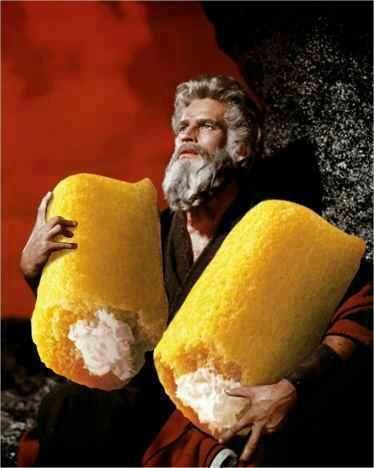
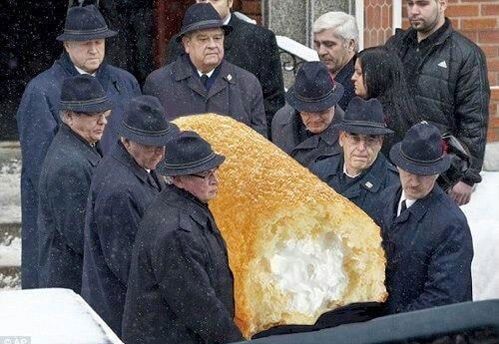
What I am trying to say is, I believe the membership truly desires to feast on Christ's word (the seed of faith planted in our hearts), and yet our meetings are routinely occupied with what Elder Holland called the "empty calories" of spiritual fast food and Twinkies, filled with artificial preservatives ("A Teacher Come From God", April 1998 General Conference).

Hugh Nibley said it much better than I ever could in Zeal Without Knowledge:

"[Members have] zeal without knowledge for sitting in endless meetings, for dedicated conformity, and unlimited capacity for suffering boredom.... Pure zeal tends to breed a race of insufferable, self-righteous prigs and barren minds."

(See?  And you thought I was outspoken; I can't come close to Nibley's natural eloquence.) 

Now, how did this happen?  Why are we spiritually starving in a First World Church?

Let's find the answer ― and more importantly, let's find the solution.
Picture
Faith Crisis: Exhibit 1

I recently read online a story by a member from their mission:

"One day we invited an investigator to come to church.  He was very religious and sat quietly throughout the meetings and at the end I asked him what he thought.  His response still resonates: 'Well, I have been sitting here for 3 hours and have not heard a single word about Jesus Christ!'"

Here are some of the comments that followed:

Comment 1:  
"I have said this before but I think one of the signs of someone being on their 'way out' [of the Church] is when they start to talk about Jesus more."

Comment 2:  "Mormonism is more in line with the gospel of the Pharisees or Islam than it is the teachings of Jesus."

Comment 3:  "When I see a member saying, ‘Our doctrine and teachings focus on Jesus Christ', yeah right.  Is that why I know more about Joseph Smith and Nephi than I do about Jesus?"

Comment 4:  "I was in a stake presidency.  I noticed the same thing.  When I suggested to the stake president that every sacrament talk should tie back in some way to faith in Jesus, he said he’d have to ask the Area Authority 70.  I was completely flummoxed."

*****

These comments are interesting.  They each hint at a larger problem plaguing the body of Christ.

While their experiences may not match your own, I think their comments are sobering.

"Out of the mouths of two or three witnesses."
Picture
"I Object!"

As I said at the beginning, there are many sides to every issue.  The leaders of the Church are (so far as I am aware) sincere and devout men.

One of the things I love about the Church is our expanding canon of scripture.  In it we find:


​​   We talk of Christ,
   we rejoice in Christ,
   we preach of Christ,
   we prophesy of Christ.


(2 Nephi 25:26)

That sounds good, doesn't it?  In a way, I see Christ everywhere in our meetings ― everywhere from our artwork to our hymns to our scriptures to our temples (of course, the same could be said of the Catholic Church and its Christian artwork and hymns and scriptures and cathedrals).

Why, then, do many members feel Jesus is missing from our midst?  
What makes Christ the Cornerstone of a church as opposed to just an ornament?

In 1820 the Lord told Joseph Smith:


   The Personage
   who addressed me
   said that all their creeds
   were an abomination
   in his sight;
   that those professors
   were all corrupt; that:
   "they draw near to me
   with their lips, but their hearts
   are far from me,
   they teach for doctrines
   the commandments of men,
   having a form of godliness,
   but they deny the power
   thereof."


(Joseph Smith History 1:19)

Does this apply to us?  Does it make you question the health-and-safety of the foodstuffs we are fed at Church?  All the testimonies of Girls Camp and Pioneer Trek and Tithing and living prophets and temples and family history work.  (Yikes: maybe we have joined creedal Christianity.)

An observation:  If the words of Christ are absent from our lips, we may safely assume He is absent from our hearts.
Picture
Exhibit 2: My Experience Last Sunday

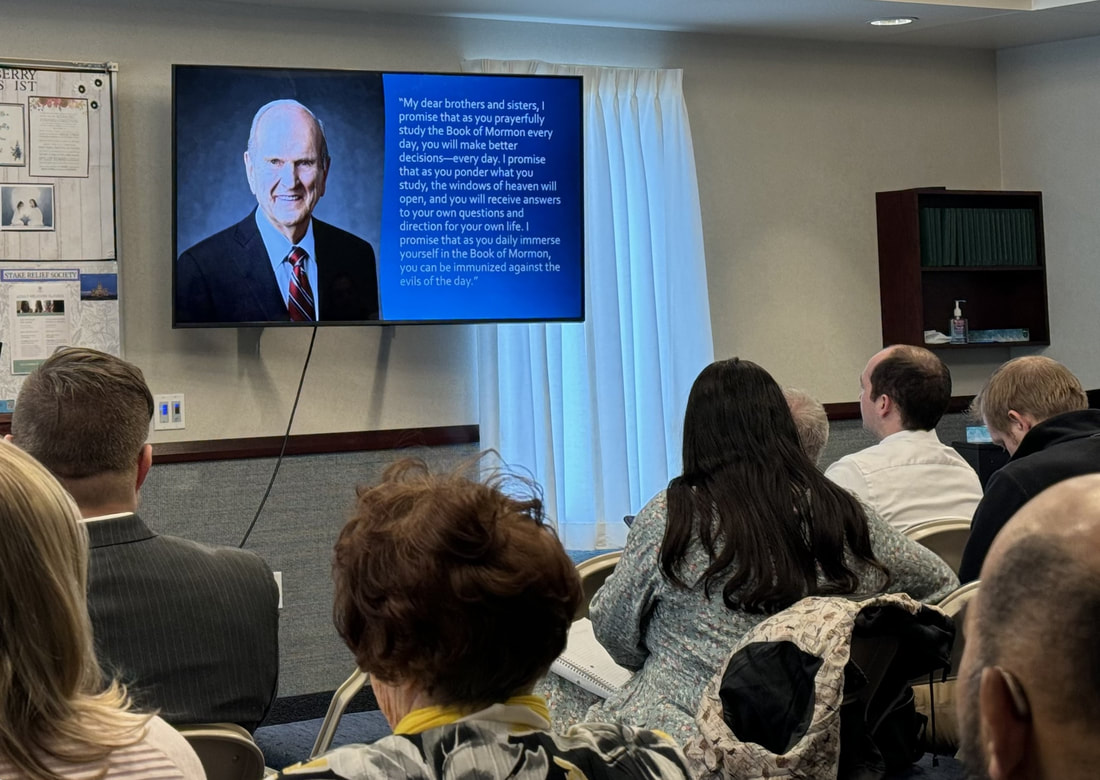
Last Sunday I attended Ward Conference in Lehi, Utah (pictured above) with my friends and neighbors.

All the adults gathered into the Relief Society Room for 2nd Hour.  The Stake representatives presented our Stake goals for 2024:

   1.  Read the entire Book of Mormon this year.  (Okay, good start.  Christ's words can be found in the Book of Mormon.)

   2.  Study the words of President Russell M. Nelson weekly.  (Okay, President Nelson talks about Christ sometimes, so as long as we're discerning . . . .)

   3.  Attend 2nd Hour prepared to discuss what we've learned.  (Okay, it's good to gather and fellowship.)

During the hour-long lesson, we read quotes by President Nelson and watched a video of Elder Bednar and discussed ways to turn our homes into temples.

(To be clear, I have no problem at all quoting the Brethren, the Prophet, C.S. Lewis, the Dalai Lama, Hugh Nibley, Clark Burt ― or Beyoncé for that matter ― if they're speaking light and truth.  I'll take truth from whatever source I find it.  The problem arises when we quote platitudes, truisms, and falsehoods.)

But sitting on the soft-padded Relief Society chairs, I itched to raise my hand because no one was actually talking about, or rejoicing in, or preaching, Christ Jesus.  I had a whole soliloquy going through my mind.

But I constrained myself and bit my tongue, because last time I "spoke up" I received a home-visit from the Elders Quorum Presidency who reprimanded me (I am currently on their naughty list).

Well, the meeting ended and there I was, feeling hungry.  We hadn't "worshipped" God (not by any definition of the word I am familiar with).  No one had mentioned Christ, not directly (although I think someone mentioned the iron rod, so).

I bet if you asked the other members who attended class, they would have thought nothing was amiss.  After all, wasn't Christ implied in all that?

This is it, then: the milk; the way the Church worships God indirectly as the Implied Lord; a deity found in the background, behind our temple worship; standing beside our covenant-keeping; lying among the sundry quotes of the Brethren.  He's there, to be sure, just not prominently or centrally ― unless we're using the full name of the Church (every rule has its exception).

Sort of like He's the "reason for the season" behind our Christmas shopping at the mall.

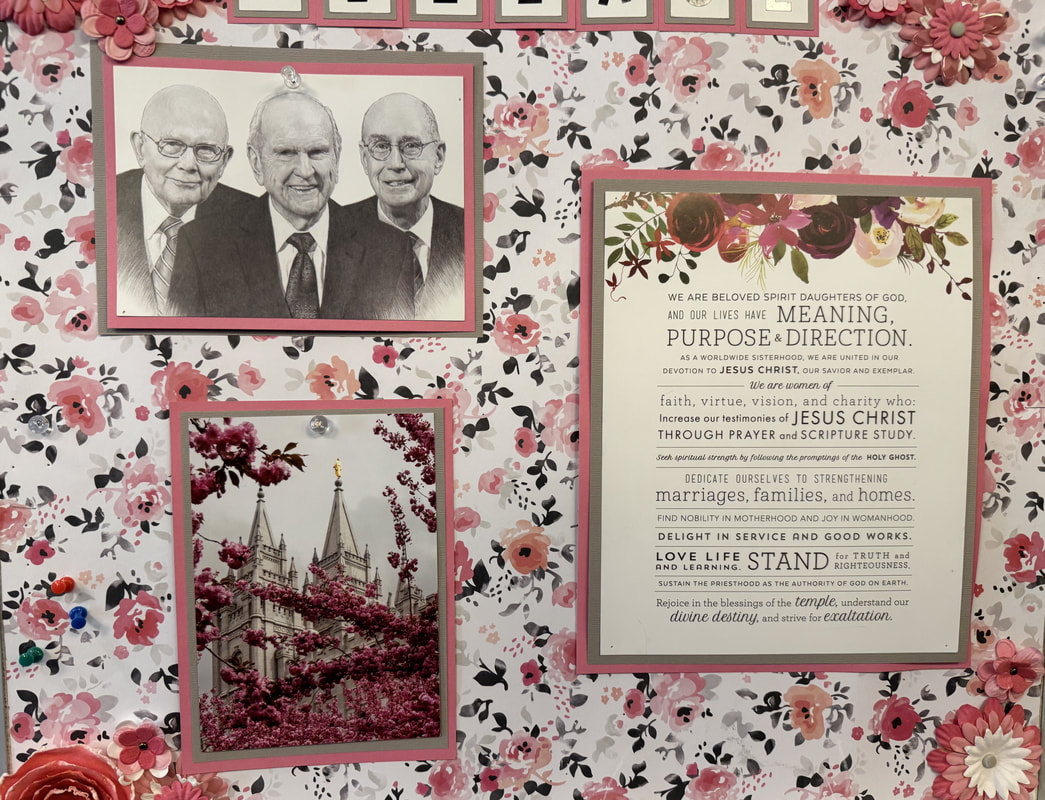
As I left the 2nd hour to gather my children from their classes (the situation is even worse for our youth, with all their "standards"), I took a photograph of the Relief Society bulletin board that I had been staring at for the entire meeting.

I think it illustrates beautifully the god-we-worship: the Implied Lord & His Prophet.
Picture
The Faith of the Judaizers

This is not new.  Two thousand years ago, the early Church grappled with the same issue, to wit: What does faith in Christ look like?

In the second half of the New Testament we encounter the Judaizers.  They were Jews who believed in Christ but who (like us) believed they had to keep the Law in order to be saved.

Paul disagreed.  He argued that Christ was all.  He taught that salvation was found through faith in Jesus.

I sympathize with the Judaizers because they remind me of the old me.  Like Judaizers, many of us today believe in Jesus but also (and here's the catch) in strict obedience to the Law (what we now call 'staying on the Covenant Path').

But imagine what this is doing to our faith!  Ask yourself, how is faith warped by the belief that Christ is only able to save us if we stay on target, minding our P's & Q's?

In other words, can we really say we have faith in Christ when our confidence arises from our obedience to the Law of Works?  No wonder our faith is limping along.

You see, aren't we trying to serve two masters?

Just like the Judaizers, who were committed to Christ AND to Leviticus AND to circumcision AND to following Moses AND . . . you get the idea.

The danger is, at what point does Christ become buried beneath all the extras?

And doesn't this sort of "faith" smell suspiciously of self-righteousness?
Picture
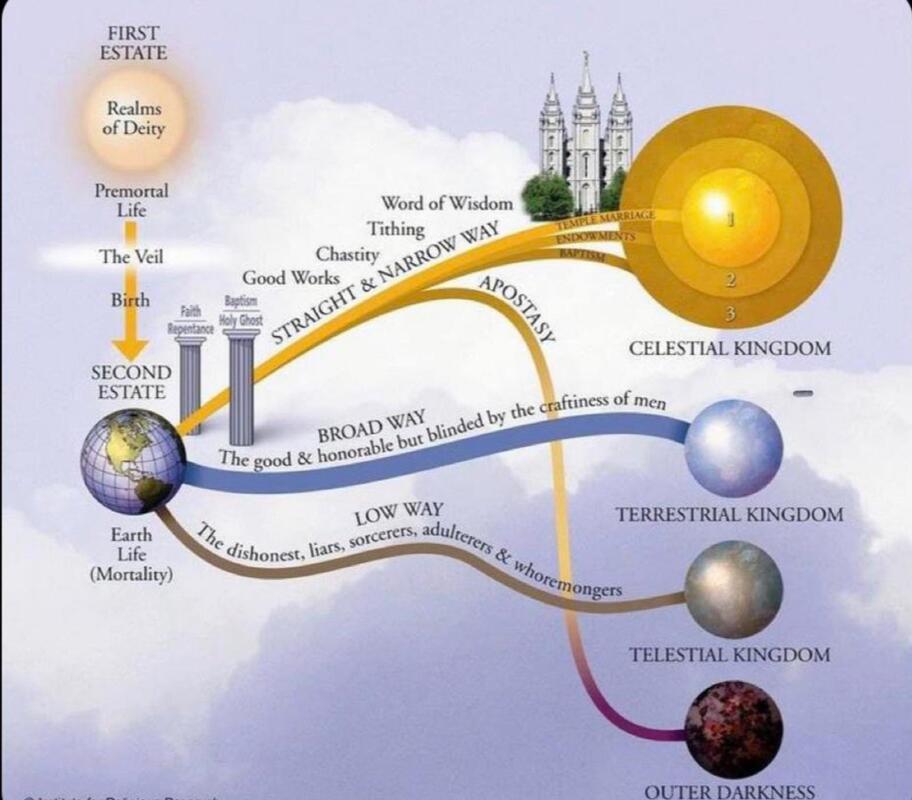
Exhibit 3: The Plan of Salvation

The picture, above, is one I see all the time on Facebook.  Someone depicted the Plan of Salvation.  

Look at the image carefully.  There it is, tithing, our old friend.  And the Word of Wisdom.  Nice to see the whoremongers getting their comeuppance.  And see the large temple perched atop heaven? 

But wait: notice Christ anywhere?  Look again.  Surely the Savior must have a prominent place in the Plan of Salvation, no?

"Well Tim, calm down," someone says.  "It mentions faith and baptism, right there.  So obviously that implies Christ." 

Gotcha.

   *****

A Conversation With An Investigator

Missionary:  "Christ is great, but He's not enough, because in addition to having faith in Him, you must also pay your tithing and avoid cigarettes and never touch meat sacrificed to idols.  Okay?"

Investigator:  "Idols bad, got it."

Missionary:  "Are you willing to live the Word of Wisdom in order to be saved, and to never swear (unless it is to swear-off coffee)?"


Investigator:  "Hold on.  This is getting complicated.  Are you telling me that Christianity means keeping the commandments, or else Christ will be powerless to save me?  Why, then, do I need Christ?"

Missionary:  "You misunderstand.  We need Christ to be saved.  He's our Savior, silly!  It's just that He can't save you unless you follow the rules, too."

Investigator:  "I am confused.  Do you have a list of all the rules I need to obey to be saved?  That seems important."

Missionary:  "Not exactly.  It's in the fine print somewhere.  Honestly, we update our Terms and Conditions from time-to-time, so you've got to stay current.  But you can only go to the highest heaven if you're sealed by the Holy Spirit of Promise into a celestial (but not necessarily monogamous) marriage by someone on earth who holds keys.  It all boils down the sealing authority, really."

Investigator:  "What?"

Missionary:  "Never mind.  Just know that Christ is right up there, near the top of the list.  It's His Church, after all!  Along with the prophet's.  Joint custody, basically.  And families: you want to be with them forever, right?"

Investigator:  "Yes."

Missionary:  "Excellent!  Well, you show your faith in Christ by following His Prophet.  Do whatever the prophet says and you're assured to go to heaven to be with your loved ones.  That's what we teach in primary."

Investigator:  
"So do I follow Christ into heaven or do I follow the Prophet into heaven?  Which is my Lord and Master?"

Missionary:  "What's the difference?!  Anyway, just remember that Christ loves you so He gave us prophets and apostles to tell us how to live the gospel.  Surely everything the Lord does is through His prophet and proper priesthood channels.  Otherwise you get Protestantism!"

   *****

As I said, the Church is experiencing a faith crisis.
Picture
4 Comments

A Faith Beyond: Understanding the Gospel's Least-Understood Principle (Part 7)

1/26/2024

2 Comments

 
Picture
Holy Envy

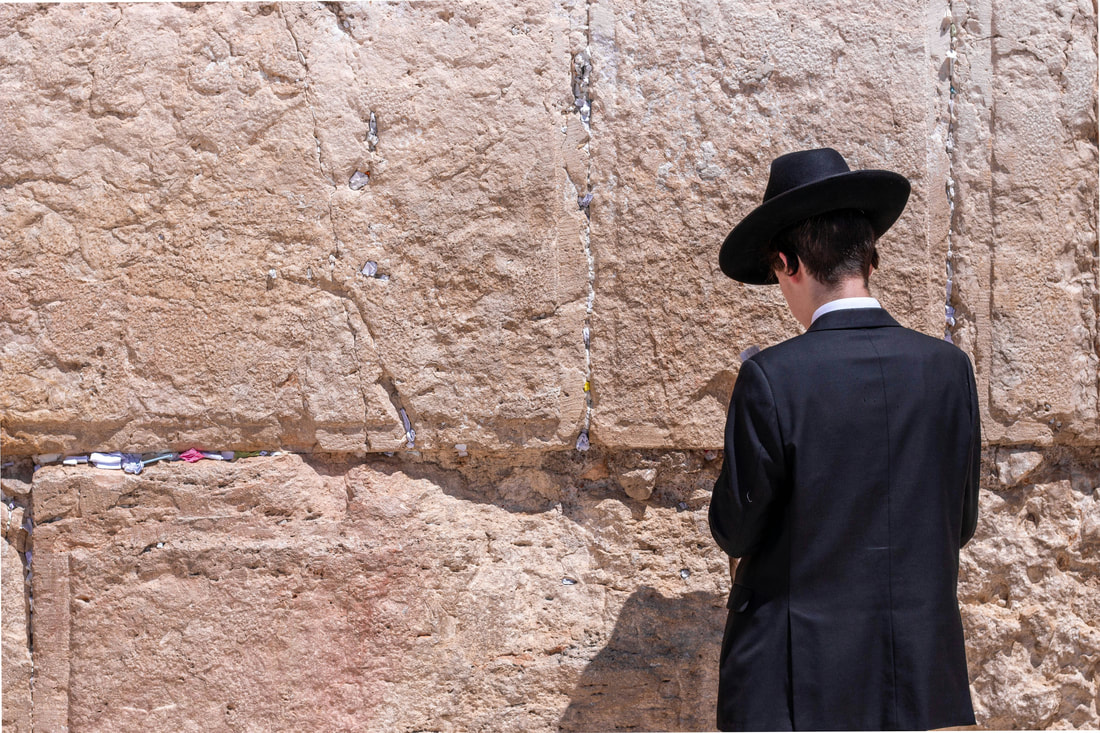
I encountered two examples of counter-cultural faith this week.  One involved a group of Amish workers and the other an Orthodox Jew.

It may surprise you to know that ― even though I give religion a hard time (only the parts I find hypocritical) ― I am impressed by devout people.

You'll find me to be the staunchest advocate for the Eleventh Article of Faith on the block.

So the Amish: I watched a rerun of Treehouse Masters on cable TV (Season 1 Episode 4).  It showed a group of Amish young men helping to build a treehouse in Ohio.

Now, I don't know about you, but if not using electricity in 2024 doesn’t qualify you as a "peculiar people", I don’t know what does!  (If the power went out at my house, and if my phone battery died, you'd see me throw up my arms and give up the ghost.)

It takes strong convictions to buck cultural norms.

Second Example:
 
Yesterday I read the experience of Nate Oman (a member of the Church), who entered into a contract with an Orthodox Jewish Rabbi in Philadelphia.

What was interesting about his story was the fact that, because Nate is considered a Gentile, the Rabbi had to follow a complicated process to consummate the transaction (to make it "halakha").

The parties had to seal their deal using ― wait for it ― the law in Leviticus.  Now that's old school!
 
Something Nate wrote about religious traditions 'spoke' to me.  He said:
 
"There is a temptation for both believers and critics to imagine 'faithfulness' in fundamentalist terms ― [as if] there were some pristine original template for living the faithful life, and "real" religion consisted of unbending adherence to its strictures.
 
"Such fundamentalism, however, is an illusion. The ‘pristine template’ never actually existed; it is always a past constructed after the fact (with the troublesome bits excised from memory).
 
"More importantly, fidelity is always dynamic, a matter of managing allegiance to an evolving tradition that is continually both resisting and accommodating the world.
 
"Even those who purport to be following a fundamentalist path are doing this. The question for a believer is how does one adapt a tradition while accepting its authority and maintaining fidelity to it."

(Nate Oman, "Next Year in Philadelphia", Thoughts from a Tamed Cynic, edited for punctuation and clarity.)

Question: 

You may have noticed that both of these examples of counter-cultural faith involve traditions that hearken back to an earlier time, trying to preserve and honor what was.

But let's flip it around:  What would a counter-cultural faith look like if we faced forward, toward an unknown future, at a world that has not yet been?
Picture
Faith in Zion

Sometimes I wonder if Zion has eluded us because we're stuck in the past.  I mean, it's good to learn from the past, of course, but should we let the past dominate our present?

We do NOT honor God by having faith in our forefathers; we honor God by having faith in our Father.

Our knowledge of the past is incomplete; the record is fragmentary.  All we know about it (since we were not alive) is subject to interpretation and re-interpretation.

Does that sound like a solid foundation to you?  No?  Because reliance upon a historical narrative is the very definition of a "sandy" foundation (3 Nephi 18:13).

I see danger in hitching our faith so tightly to what has been that we become blind to what may be.

For if there's one thing I've learned (remember, I graduated from college as a history major), it's that the past is a sea of shifting sand, easily manipulated, molded and reshaped by current perceptions and self-driven agendas.

But God is not a creature of the past.  He resides equally in the future:

   I am Alpha and Omega,
   the beginning and the ending,
   saith the Lord,
   which is, and which was,
   and which is to come,
   the Almighty.


(Revelation 1:8)

If we took a composite of the past, present, and future ― and wadded them up into One ― we'd get YHWH (transliterated in the Bible as "I AM").

The name of Jehovah is curiously temporal (or maybe I should say, atemporal).  It denotes, above all else, the fact He is timeless.

(I would point out, by the way, that you and I are also self-existing timeless beings, or "gnolaum") (Abraham 3:18).

And THIS was the divine attribute that Jehovah chose to emphasize when He introduced Himself to Moses, saying:

   I AM
   THAT
   I AM.


(Exodus 3:14)

I point this out to say, Faith is a creature of THAT I AM (as opposed to what was).
Picture
A Living Faith

You see, many of us think "having faith" means believing and behaving and dressing like our ancestors.  We model our lives after them.

But why?  Why do we think previous generations get to direct our faith when they failed to bring heaven to earth?  After all, we wouldn't take steering lessons from the captain of the Titanic.  So why would we continue to drive the Good Ship Zion toward the iceberg?

Using a historical narrative as the authoritative, "objective" standard for our faith is foolhardy because what we believe about the past is subjective.

We've seen how the Church's historical truth-claims need to be regularly reconstituted to withstand scrutiny.  I think the Church narrative our children will be taught (post-internet age) will look quite different than the traditional version we grew up with.

And that's okay.  We do not worship an historical God or Christ: our faith is in the Living 'I AM'.

Thus we see, our narratives are contingent; they are being recapitulated as we speak.  For each generation invariably reinterprets and wrestles with the historical record (which is something even religious professionals can't agree on).

And with our eternal lives at stake, do we really want to tie Faith down with the capricious cords of historiography?  So remember: the past is a memory, and has only the authority we grant it.  

Faith will forever transcend yesteryear; she looks beyond what has been towards what may yet be.
Picture
Faith vs. Fundamentalism

After saying all that, please don't misunderstand me: I love history.  I respect our elders and their sacrifices.  And most of all, I treasure the sacred records they left behind.

But I am realistic about their shortcomings.  I search the scriptures for truth, meaning, and enlightenment ― but not for literal historical accuracy.

In the LDS tradition we're told that many "plain and precious parts" (1 Nephi 13:29) were stripped from the scriptures.  But we should realize that this is actually a universal problem ― one that applies to history in general.

Just take the Deuteronomists, for example, to illustrate my point.  We see some of the mischief that a school of authors can cause by wreaking havoc with history due to their theological biases.

We are prone to do the same today.  The Last Charge Meeting is one example.  We revise and create narratives to justify our particular claims to authority; but is that wise?

Now, I bring this all up to make the point that Faith is not found in our history books but in our dream journals.  She swims among firmaments for which time is rendered mute; her wings stretch eternally toward worlds yet unborn, flying to heights our histories could never have imagined.

This is why, doctrinally-speaking, I am not a fan of fundamentalism.  Because fundamentalism is fundamentally one-sided.  Its focus is lopsided on Alpha and how things were.  Fundamentalists want to return to the old ways; Faith wants to ascend to the higher ways.

Faith views historical precedent as illustrative and educative ― but not controlling. 

Faith prefers to blaze new trails and enter into new covenants.  Hence, "the NEW and everlasting covenant."  She is 'everlasting' because she belongs to THAT I AM; she is 'new' because her shape is the substance of things not yet seen, flowing like water and time to places heretofore undiscovered.
Picture
Leap

I wrote this post so we would not be unsettled by the novelty of God's grace.

Do not be surprised when God's arm is revealed among the nations; for as earth-shattering as it was when the gospel went to the Gentiles, so too we shall see the Father's work accomplished in unexpected ways ere this cycle's end.

Unfortunately, on social media I see many Church members bunkering down.  Resistant to change (and polishing their muskets).

But listen, entrenchment will prevent us from going out and meeting Christ upon the field of faith.  The world is changing (as it always has), and I expect we will see it accelerate.  But look for God's hand in it.

Look for miracles among those we think undeserving; watch for blessings to be poured out in places we least expect.  For God is no respecter of persons or churches: only they who are meek and lowly of heart shall be acceptable to the Lord (Moroni 7:44).

Above all, hold fast to Christ THAT I AM with all four of your heart-chambers, waiting patiently upon the Lord to lead us to greener pasture.  Zion shall be a city of counter-cultural faith that resembles nothing we've yet seen:

   For since the beginning
   of the world
   have not men heard
   nor perceived by the ear,
   neither hath any eye seen,
   O God, besides thee,
   how great things
   thou hast prepared
   for him that waiteth
   for thee.


(D&C 133:45)
Picture
Dew From Heaven

​​Time is no great
preserver of truth:
it unspools an oily ink
upon the faceless deep
​
Where eternity bleeds
through each beginning
and obsidian days 
swallow newborn night

We huddle
behind curtained firmament
braiding promises impossibly
into reality

Where veil can be pierced
upon carnelian-churned tides
spreading God’s garment
we wait

At fourth watch
witnessing
dry land appear
this side of immortality

Seeped through
like dew before sunrise:
the power of choosing
the power of creation
Picture
2 Comments

A Faith Beyond: The Gospel's Least-Understood Principle (Part 6)

1/23/2024

2 Comments

 
Picture
Part 1:  A Faith Beyond
Part 2: A Faith Beyond
Part 3: A Faith Beyond
Part 4: A Faith Beyond

Part 5: A Faith Beyond


Wake Up Call

Imagine Lehi preaching Sunday School to the youth in your ward.  Do you think he'd be able to get their attention away from their phones?

   Awake!  Awake
   from a deep sleep,
   yea, even from
   the sleep of hell,
   and shake off
   the awful chains
   by which ye are bound.


(2 Nephi 1:13)

The "sleep of hell" doesn't sound very restful, does it?  What is he referring to?  What Ambien has placed us in this stupor?

In the next verse, Lehi cries with the passion of a loving parent trying to perform spiritual C.P.R. on his sons:

   (1) Awake!
   and (2) Arise.


(2 Nephi 1:14)

Well, I am happy to report a lot of people are "awakening."  I have witnessed it.  Some of us are rubbing the sleep from our eyes like babes, yawning.  Others have kept vigil for many years, waiting for the rest of us to wake up (my thanks to you).

So now we're awake, what does it mean to "arise"?  What does the Lord intend for us to do?

   (1) Awake,
   and (2) Arise
   from the dust,
   O Jerusalem . . .


When we get out of bed in the morning, what's the first thing we do?  We get dressed!
   
   . . . and (3) put on
   thy beautiful garments
   O daughter of Zion . . .


Zion doesn't have a closet full of clothes to choose from; she's not a clothes horse.  She has a single garment.

It's not a t-shirt or a toga; she is going to be draped in something altogether different than cotton or twill.

Zion will be clothed in the covenants "woven" by her Eternal Father from the foundation of the world, arrayed as a Bride on her wedding day.

   that the covenants
   of the Eternal Father
   which he hath made
   unto thee, O house
   of Israel, may be
   fulfilled.


(Moroni 10:31)

So its time to 'Say Yes to the Dress!'
Picture
An New Garment

Make no mistake: Zion's wedding garment looks nothing like the fancy ballroom dresses we typically see on a bride's special day.  Zion prefers to dress-against-type lest she be mistaken for a Lord-and-Lady of the Gentiles (Luke 22:25).

Her wedding gown is not sewn from satin but is made from sackcloth (Mosiah 11:25).  It bears no frills; in fact, it is surprisingly martial in appearance ― like she's about to go to battle (D&C 109:73-74).

And her accessories?  No Armani scarves or Gucci white gloves (she's not afraid to get her hands dirty).  There is nothing Victorian about her.  We'll find her sporting two-edged swords (Psalms 149:6), sickles (D&C 4:4) and rods (Exodus 4:2).

The fact she rides upon a winged horse?  That's a nice touch, if I may say so (Habakkuk 1:8).

You see, Zion is a huntress.

In case we missed the symbolism, the Bride Zion doesn't sit down to the Lamb's feast, waiting to be served by servants.

No, Zion chased, caught, and cleaned the food herself.

To summarize: 

  - Zion awakens
  - Zion arises
  - Zion arrays herself
  - Zion goes hunting 

And what, precisely, is she hoping to fetch before her nuptials?  Wild boar?  Game hens?

   Let's ask Enos.
Picture
"I went to hunt . . . "

I often approach gospel principles sideways, as one would a wild animal ― slowly and with an outstretched hand (Alma 13:21).

Maybe that's how Enos tracked his dinner when he "went to hunt beasts in the forests" (Enos 1:3).

Like a skittish deer, some things in life are difficult to capture, like "the joy of the saints" (Enos 1:3).

I've heard people say to never shop at the grocery store on an empty stomach; I think the opposite advice applies to going to Church.  "My soul hungered" (Enos 1:4).

For if there is one thing that draws Faith out of the underbrush, it is a growling stomach; she can smell a healthy appetite a mile away (Matt. 5:6).

In the 21st Century we've become far-removed from the raising and processing of meat.  It's so much easier to buy our pork at the market cleanly-butchered, wrapped in cellophane packaging and labeled "FDA inspected and approved."

But Faith is old-fashioned.  She requires the shedding of blood.  She is, above all else, a living sacrifice.

We must each obtain her with a handcrafted arrow.


   And I said:
   Lord, how is it done?

   And he said unto me:
   Because of thy faith
   in Christ, whom thou hast
   never before heard nor seen.

   Wherefore, go to,
   thy faith hath made thee
   whole.


(Enos 1:7-8)

So we see, Enos found faith in the wild, and dressed her.
Picture
A Living Faith

But does anyone want a wild animal in their home?

Imagine the pandemonium of a racoon racing across our living room, rummaging through our porcelain Precious Moments dolls with its creepy hands.  Get the gun!


No, the only wild animals that are welcome in our homes are dead ones: shot, stuffed, and placed by the fireplace as a trophy.

Here's the point:  Ironically, a dead faith is quite often chosen over a living one.  Think of raising horses (even domesticated ones).  There is so much feeding and watering and getting a hoof-to-the-head once in a while.  A living faith is a headache.

Better a nice, brag-worthy rack of antlers mounted on my wall.

When I was growing up, one of my chores was to clean out the chicken coop in the barn.  Do you know what that smells like?  How awful it was when the woodchips covered in chicken droppings flew into my face as I shoveled the floor and cleared out the nests?

Give me a nice chicken cordon bleu on my dinner plate, slathered in sauce, any day of the week.

So it is with faith: it brings all the messiness of a living thing.  She creates quite a stink.

Which is why, I think, it is quite practical for churches to want a neater (stuffed) (dead) faith.

And that is precisely what I was taught as a youth to be: to behave myself as a stuffed teddy bear, as it were.  A pleasant-looking, orderly, dead-thing; a good member of the Church who (as I've heard it said of children) should "be seen and not heard."
Picture
Tiger Faith

If Zion is a huntress, then Faith is the wild animal she seeks.

​I assume you've been to the zoo.  I've taken my children many times to Hogle Zoo in Salt Lake; on my honeymoon we stopped at the San Diego Zoo.  I love zoos!

And here's the thing: at the zoo I can wander among the wild animals fearlessly.  They don't frighten me at all!  Why is that?

Whereas, Faith really puts the fear of God in you.

Ask yourself:  What difference is there between admiring a captive tiger at the zoo ― trapped behind glass windows ― and encountering a hungry, wild tiger out in the jungle, face-to-face?

I think you see where I am going with this analogy.  Religion "makes it safe" for us to walk among the hungry lions, right?  Instead of joining Daniel in the lion's den, we watch from the comfort of air-conditioned corridors in the Feline Exhibit.

Our churches thus serve as a zoo for faith, offering a domesticated, sedated version that won't bite or get too close.

We stand behind a silk curtain (by which I mean, priesthood), so we won't get eaten and consumed.  I'm talking Pillars of Smoke, Veils, Liturgies, Rites, Conferences, Interviews . . . lots of ways to not get blinded by the light (Exodus 20:18-19).

In a way, Owl of the Desert has been my attempt to take us on a safari.  To seek Faith in her natural habitat.  For years I've tried to lead us away from the "tame" Faith of "carnal security."

I've sounded my shofar, hoping we would free Faith from her captivity.

Because we all sense something is not quite natural, or right: which is why, I think, movies like Chicken Run and Madagascar and Finding Nemo and Free Willy are so popular.  We instinctively know (down to our toenails) that freedom is better than captivity.

​Because Faith is a wild creature of the formless, unseen realm; a spiritual unicorn ― the Pegasus upon which Zion flies to greet her Bridegroom in the Clouds.

Do we find any Pegasuses (Pegasi?) at the zoo?
Picture
A Great Sacrifice
a poem

Sacrifice

dining downwind
 
    of mink farms
    on the Champs-Élysées
      
first let’s say
grace:
 
Lord,
we thank thee for
 
   mammon’s breasts

    j’adore
 
overflowing
     with curdled milk &
     money

their skins bloody
& runny

     merveilleux
such an elegant evening

dressed in white
ceremonial clothing
(so the fur is faux?)
 
     cacuminal

   here comes an appetizer
   mmm fresh-caught cod
   taken al fresco
 
     carry on
     carrion


    Now comes the Supper
    of the Great God.
Picture
2 Comments

A Faith Beyond: The Gospel's Least-Understood Principle (Part 5)

1/19/2024

2 Comments

 
Picture
Part 1:  A Faith Beyond
Part 2: A Faith Beyond
Part 3: A Faith Beyond

Part 4: A Faith Beyond


A Conversation with the Apostle Paul

Me:  Thanks Paul for writing so many great books.  I was bummed when I got to the end; any sequels planned?

Paul:  Thanks, but it wasn't just me; I had a terrific ghost writer, you know!  A Holy Ghost writer.

Me:  Well, you helped me understand the gospel better than anyone.

Paul:  Really?  And what is the gospel, in your opinion?

Me:  Well, for one, the gospel means we are no longer captive to the law, thanks to Christ.

Paul:  Let's pause there.  I find it interesting you'd begin with the Law.  But since you brought it up, you should know, "I delight in the law of God" (Romans 7:22); in fact, "the law is good" (1 Tim. 1:8).

Me:  What?  That surprises me to hear you say that.  Aren't you the one who said the law was our "schoolmaster to bring us unto Christ" (Galatians 3:24).  We've graduated, right?  We don't need a schoolmaster after we've matriculated.  That's like saying my high school principal gets to tell me how to live my life in my 40s.  Isn't the law irrelevant to Christians?

Paul:  [shaking his head]  I see you need to repeat Summer School.  Slow Learner?

Me:  [Shrugging]  Lazy, perhaps.

Paul:  For starters, "the law is NOT made for a righteous man, but for the lawless and disobedient" (1 Tim. 1:9).  Are you implying you've outgrown the law because you are righteous?

Me:  Is that a rhetorical question?  Clearly I am not a 'righteous man.'  How could I be ― I'm a Christian!  Wasn't that the whole point of your epistles?

Paul:  [Poker-faced]  But if you're not righteous, what makes you think the law doesn't apply to you?  How could you have matriculated if you failed your final exams?

Me:  I guess I don't understand.  Are you saying God can't award diplomas to dunces?  Well, put like that, it doesn't seem fair to all the hard-working, bookish boys and girls who burned the midnight oil to get Straight A's.

Paul: [nodding]  Let's keep an open mind.  We need to ask ourselves why God gave us the law in the first place, knowing we'd be unable to live it ― and knowing the works of the law could never save us.
Picture
Me:  If I understand the question, you're asking what role, if any, the law plays in the gospel plan.  Is that correct?

Paul: [nodding]

Me:  Okay, 
I guess I would say that God gave us a law so that "under the law every mouth may be stopped: for by the law is the knowledge of sin" (Romans 3:19-20).

No one is going to earn their way into heaven based on their good works, right?  "Not of works, lest any man should boast" (Ephesians 2:9).  A kindergartener is not going to brag about how good they are at basic sums and subtraction in a room full of college math professors.  The law keeps us humble, I suppose.

Could it be the law serves as a mirror that reveals our shortcomings, exposing our sinful hearts?  We "all have sinned, and come short of the glory of God" (Romans 3:23).


I recall our friend William Tyndale said something brilliant, "We are sinners not because we break the law; we break the law because we are sinners."

The law reflects our fallen nature; it reveals our powerlessness to save ourselves ― not even through good works, ordinances, or covenant-keeping (sorry, Covenant Path).

Isn't that the reason we reach for a Savior; isn't that the way the law acts as a "schoolmaster to bring us unto Christ" (Galatians 3:24)?
Picture
Paul:  You're on the right track, but I'm not sure you understand this mystery yet; not fully.

For is not God just?  How, then, can we be freed from a law we've broken or failed to keep?  Wouldn't that be unjust?


Me: [uncertainly]  Isn't that the whole point of the gospel; the good news?  I thought Christ fulfilled the law so we wouldn't have to keep it anymore.  He saved us from the law, not in the law.  Right?

Paul:  For argument's sake, let's say Christ removed the yoke of the law from our necks: what did He replace it with?

Me:  [sweating a bit]  I remember Him saying His yoke is "easy" and "light" (Matt. 11:29).  Is that what you mean?

Paul:  Yes, but what exactly is Christ's yoke? 

[After no response]  I'll tell you: a yoke is a law that joins ("seals") two things together.

What law seals us to Christ?

Because there are always laws.  "All kingdoms have a law given ... and unto every kingdom is given a law.  
That which breaketh a law, and abideth not by law, but seeketh to become a law unto itself ... cannot be santified by law, neither by mercy, justice, nor judgment" (D&C 88:35-37).

Me:  Yes, I am beginning to see: the Law of Moses is a yoke that can't be shared with Christ; we must lay it down and pick up another.  Our cross-yoke?  So we are not left lawless, after all.  Instead, we've exchanged the old law for a new one.  Christ's law.

Paul:  And what is Christ's law-yoke?

Me:  Umm, didn't Christ give us the Sermon on the Mount and all that stuff?  Is that the yoke you're talking about?  We're supposed to live the higher law.


Paul: [laughing heartily]  Tim, Tim, my dear foolish boy, are you quite daft.  Think about what you're saying.  You're telling me that ― having failed to live the lesser law ― (I mean, just take one look at you) ― you think you are capable somehow of living the higher law?

How exactly can you walk when you haven't even learned to crawl?  How will you skip right to advanced calculus when you haven't even mastered simple multiplication and long division?  Is it because, you think, you're a teacher's pet?

Me:  [sheepishly]  Well, I'm stumped.  I guess I am fuzzy on the details of how Christ delivers us from the demands of justice and of the law.

Paul:  Acknowledging your ignorance is a positive step.  And don't worry, I want to help you.  Let me "make known the mystery of the gospel" (Ephesians 6:19) unto you.  May I?

Me:  Of course.  Fire away.
Picture
Paul:  To make this as simple as I can (we'll start with two-plus-two) ― [raising his index fingers on both hands] ― there are only two laws you need to worry about.

Me:  Just two?  What are they?

Paul:  
The first is (1) the "Law of Works," also called "the works of the law" (Romans 9:32).  This law produces spiritual death.

The second is (2) the "Law of Faith" (Romans 3:27; 3:31).  There are many more names for them, but they're all referring to the same thing: the same eternal reality.

You'll find the Law of Works produces darkness in all its iterations, just as the Law of Faith brings light in whatever form she takes.

But please don't misunderstand me: I am not talking about absolutes; it is not so simple as "good vs. evil," for we cannot have light without darkness, and vice versa.

Here are some examples:


2 Cor. 3:6:

(Dark) The letter of the law
   vs.
(Light) The spirit of the law


Romans 13:8, 10, 14:

(Dark) The law of the flesh
   vs.
(Light) The law of love

Galatians 6:2, 13:

(Dark) The law of circumcision
   vs.
(Light)  The law of Christ 

2 Nephi 2:27 and James 1:25:

(Dark) The law of captivity
   vs.
(Light) The law of liberty

D&C 119:4 and 105:29:

(Dark) The law of tithing
   vs.
(Light) The law of consecration
Picture
Me:  But wait, didn't James say "faith without works is dead" (James 2:20)?  How can the Law of Faith and the Law of Works be opposed?

Paul:  Simple: there is no genuine Faith without works in her wake; but there are works performed without faith.

​Anything done in faith is a good work; on the other hand, anything done without faith is a dead work.

The work itself is not determinative; the question is the presence (or absence) of faith.

For example, many people pray to God without faith (without "real intent") and "it profiteth them nothing, for God receiveth none such" (Moroni 7:9).  So you couldn't make the blanket-statement, "Prayer is good."  Because only prayer that is offered in faith is "good."

Me:  That seems harsh.

Paul:  But Christ said, "If ye will have faith in me ye shall have power to do whatsoever thing is expedient in me" (Moroni 7:33).

What does He mean, "expedient IN ME"?  What is the One Thing We Most Need power to do?  What thing is more expedient than any other?

Me:  [?]

Paul:  [sighing]  You're not ready yet; but don't fret, we will get there.

​For now, did you notice the connection of "faith" to "power" in that verse?  It reminds me of something Joseph Smith taught, "Faith is the first great governing principle of power.... Without it, there is no power, and without power, there could be no creation" (Lectures on Faith 1:24).

Me:  Doesn't the devil have power, too?  Does this mean Satan has faith?

Paul:  Yes, but not the kind of faith that lifts or exalts others.

Now, m​y boy, I want you to listen carefully.  I've been leading up to this main point:  Understand that there are two forms of righteousness, each flowing from its mother-law.

The devil's power derives from the Righteousness of Works; and the Savior's power from the Righteousness of Faith.

The Righteousness of Works is the "righteousness" (or power) of the Pharisees; they chased after it.  They built priesthoods around it.  The constructed temples in its name.

Under the Righteousness of Works, they wielded great power and dominion over the souls of men (D&C 121:39).


And then, on the other hand, there is "the righteousness of God ... being witnessed by the law and the prophets; even the Righteousness of God which is by faith of Jesus Christ unto ALL and upon ALL that believe" (Romans 3:21-22).

Did you notice the "righteousness of God" is not through works?  So you see it, at last: the Righteousness that only comes of faith (in Christ, that is), which is the only righteousness that endures at the last day, approved and received of God ― whilst the "righteousness" of our works (even good ones) shall be consumed as dross.  "All our righteousnesses are as filthy rags [referring to the Righteousness of Works]; and [shall] fade as a leaf" (Isaiah 64:6).

Me:  Why can't we combine them?  I mean, why can't I rely on the Law of Works to grind the sausage while, at the same time, relying on the Law of Faith, too?  Isn't that what people do already?  It seems like that's what our churches teach: the Righteousness of Works mixed with a cherry-on-top of Faith.

Paul:  Yes, sadly.  But know this: you must choose which righteousness you will wear; for they are mutually-exclusive.  You cannot wear your aprons of authority over the red robes of Christ.

Me:  But if I must choose, I'll take the Lord's, obviously.  I mean, why would anyone choose their own filthy rags of righteousness over Christ's pure linen?

Paul:  They do it every day.  You've done it yourself, many times 
― whenever you've acted in your own strength, and not in the faith of Jesus Christ.
Picture
Me:  But what does it actually require to have faith in Christ? 

It seems like a lot of us are running around using His name without faith.  I see it all the time at Church.

Paul:  That is an excellent question.  Faith (saving faith) is found "in his blood" (referring to Jesus) who "declares His righteousness for the remission of sins" (Romans 3:25).


Whose righteousness does Christ declare?  Not our's, oh no.  He "declares His righteousness for the remission of [our] sins."

You will not find His blood mingled with your sweat and tears and effort, for He walked the winepress alone.  "I have trodden the winepress alone; and of the people there was none with me" (Isaiah 63:3).

Neither will you find His blood sprinkled among "the doctrines of devils or the commandments of men" (D&C 46:7).  That is why you may safely throw the Handbook in the trash, for it was written with ink drawn from the Law of Works, and preaches the Righteousness of Works.

Me:  [stunned]  What're you trying to do?  Get me in trouble!  And yet . . . how I long for this gift of faith you describe, that transcends the legalism and captivity of the Law of Works.  How I long, instead, to don the yoke of faith in Christ.

Can you tell me how? 
How do I put on this yoke of faith?  How do I cover every pore of my leper-skin in "the blood of the everlasting covenant" (Hebrews 13:20) by faith?

Does it merely mean 'believing' Christ is our Redeemer?  Does it require being baptized?  What can I do to experience this great faith?

​Paul:  [soberly]  The Lord has called unto you many times, my son, and in divers places, whispering into the quiet corners of your spirit His everlasting words: "Repent all ye ends of the earth, and come unto me, and be baptized in my name, and have faith in me that ye may be saved" (Moroni 7:34).

Me:  I was baptized, at least.  That's a good start, isn't it?

Paul:  
You were baptized.  Really?  With fire (Matt. 3:11)?
Picture
2 Comments

A Faith Beyond: The Gospel's Least Understood Principle (Part 4)

1/12/2024

2 Comments

 
Picture
Part 1:  A Faith Beyond
Part 2: A Faith Beyond
Part 3: A Faith Beyond


"Ello Gov'nor, Can I 'Ave Some Mo'?"


Faith has gone missing; will you help me search for her?

The authorities will want a recent photograph.  What does Faith look like in 2024?  How would you describe her to a police sketch artist?

Is it just me, or does Faith seem to get lost a lot?  She is always going where we least expect ― "boldly going" where no man or woman has gone before:

   Having boldness
   [why boldness?]
   to enter in . . .
   [why was she not welcome?]
   by a new
   [what made it "new"?]
   and living
   [what makes Faith "living"?]
   way.

(Hebrews 10:19-20)

So where has Faith gone now?
Picture
An Objectionable Faith?
​
The principle of Faith is a childlike, wild thing.

She runs around with bramble bushes in her hair; she's the kind of girl that hides from the schoolmistress.  She looks nothing like the respectable m
annequin we hear about on Sundays, sitting primly in the pews, stationary and static and (most importantly) submissive to authority.

For Faith is a remarkable, revolutionary thing: an agitant who regularly threatens our traditions and firmly-held beliefs.

So let me begin with the main point of this post, which is to suggest the possibility that (more often than not) enmity exists between Faith and organized religions.

That sounds backwards, right?  The idea may sound odd because we've been taught our whole lives that faith is the heritage of religious peoples (and atheists are the faithless ones).

We point to our temples, synagogues, mosques, and chapels as signs of our faith!  So how could they be opposed?

Well, how much faith did Jesus find among the Pharisees?  They attended church every week.  They fasted and paid tithes.  And yet they did NOT have faith?

Is it possible religion and Faith are NOT the bosom bedfellows we've been told they are?

Ask yourself:  Why did Jesus find fault with the Pharisees (see Matthew 23)?

And if we look at it in the reverse, why did the Pharisees resent the Faith that Christ espoused?

Ah, we've stumbled upon something interesting.  Was it because Jesus's living Faith exposed their religious hypocrisy and dead works?  Was it because Jesus's faith could not be controlled, neither quelled, by their religious authority?


It's makes me wonder why ― what with Christ refusing to kow-tow to the Sanhedrin's authority ― why Christendom prefers the sort of faith that bows to creeds and clings to the priests' cloth?

After all, we saw how Jesus wouldn't sit still long enough for the authorities to ensnare and trap Him (until His hour was come, and He voluntarily gave Himself into their hands).

Prior to that, Jesus had an uncanny ability to slip past and evade their councils.  He wasn't about to let the leaders clip His wings (as they famously tried to do with the blind man Jesus healed on the Sabbath, whom they "cast out" in John 9).

   Then they took up stones
   to cast at Him:
   but Jesus hid himself,
   and went out of the temple,
   going through the midst
   of them, and so passed by.


(John 8:59) 

How frustrated the priests were with Him!  For Jesus's faith was something they could not own; His faith they could not dissect and disassemble and sell off in parts as a catechism to the masses, for personal gain or glory.

Jesus's faith utterly destroyed their priestcraft.
Picture
Forest

A forest is a beautiful place.
 
     Aspiring pines
      arrowheads spun
       toward evergreen skies
        colors vibrantly true―
         sturdy sequoias
          wrapped in rabbit-scent.
            Stillness felt through skin
             was how God meant
              the sunrise.  
                          It cannot stay.  
                        
               Ecosystems decay.
 
              Snakeskin resin
             weeping white
            powderpost beetle
           spending its larvae
          in decomposing furred host―
         detritus eaters clusters
        of clotted shadow.
       Hunger a carpeted ghost.
                      This I know:
 
 A forest is a beautiful, deceiving place.
Picture
Most Wanted: Dead (Not Alive)

The point I am trying to make is simple: Faith is bad for business; she cannot be used to make money.  Mammon is flummoxed!


How will we pay the bills to heat our chapels?  What coin will we have for our clergy, or to build temples?  How will we bankroll the missionary department?

You see, the irony is that Faith risks bankrupting our churches ― and the one thing Mammon must avoid at all costs is financial insolvency (even if it means our moral bankruptcy).

Babylon long ago solved this conundrum by charging a fee to  "lease" religious rites and privileges to its members who (here's the catch) must pay their dues in order to have full access to salvation.

The Covenant Path, we find, is leased to the faithful; it does not belong to them.

The secret all along, as Master Mahan learned, was to find a way to make faith transactional.  This explains, I think, Nephi's conniption at the way churches operate today:

   (1) The Gentiles "have built up many churches" (2 Nephi 26:20).
  
   (2)  These modern churches "preach up unto themselves" (well that's certainly an interesting way of putting it) (2 Nephi 26:20).
 
   (3)  Churches offer certain services to their members in order "that they may get gain" (2 Nephi 26:20).  Well, that explains a lot!

   (4)  Whereas, true disciples of Christ will be pounding the pavement sharing the good news: "Come unto me all ye ends of the earth, buy milk and honey WITHOUT MONEY and WITHOUT PRICE" (2 Nephi 26:25).

   (5)  Saying so (#4) makes churches very uncomfortable.  In fact, the churches have developed elaborate justifications for their priestcraft, calling evil good and good evil.  They tell those who don't pay tithing to "depart . . . out of the houses of worship" (i.e. temple) (2 Nephi 26:26), declaring them unworthy.

   (6)  By contrast, true disciples of Christ boldly declare, "Nay; but the Lord hath given it FREE for all men" (2 Nephi 26:27). 

   (7)  Free?  No, no; the churches will claim, "I am the Lord's" (2 Nephi 28:3), and thereby exact tithing from the poor in exchange for blessings only they (the churches) can bestow; thus "they rob the poor" (2 Nephi 28:13).

   (8) The way the churches will ensure their coffers are fed is through doctrinal pay-to-play (payola), saying: "Come unto me, and for your money you shall be forgiven of your sins" (Mormon 8:32).

Unto all these churches the Lord says:

   (9)  "Wo, wo, wo be unto them, saith the Lord God Almighty" (2 Nephi 28:15).

So what would happen to Nehor's bottom-line if we exercised genuine Faith?  Would it destroy our churches?

Is Faith powerful enough to 
shake the foundations of the earth?  Is she mighty enough to topple the pillars of priestcraft to dust?

How can Faith ever be wrestled into submission when she fears not what man can do, having authority that comes directly from God (Moroni 8:16)?
Picture
Plan B

Our churches will not give up without a fight.  What cannot be claimed or tamed must be quenched and conquered. 


Because Faith, left unharnessed by the religious elite, is simply too dangerous to the creeds of Christendom.

The Church of Jesus Christ of Latter-day Saints has an uncommon creed, but a creed nonetheless.  We call it the Church Handbook.

When I read the Handbook, I am struck by how we've turned the 
gospel into something resembling a British Royal Dinner with an elaborately set table governed by strict etiquette, attended by the sort of folks who speak with a cultured accent and quote from the Bible Dictionary smartly between dainty sips of soup (using a dedicated spoon for the task, nary an elbow in sight), "Faith comes by righteousness."  (Yes, our own, to be sure.)

Reading the Handbook allows us to navigate the swishing gowns and cummerbunds of those in authority, telling us how to mind our P's and Q's.  It transforms Church into a sort of reenactment ball from a Jane Austen novel.

("Which hand must I take the sacrament with?  Who is the presiding authority that receives the emblems first of all?")

No wonder we are loathe to get our spiritual clothes dirty on Sunday by slurping hungrily straight from the bowl of God's grace.  Why, we'd be deemed uncouth and out-of-order, no better than the scullery staff.

"Cheerio!" we say, smiling, with our manicured nails beneath white gloves holding our dance cards, nodding to the chamber music.

The Point:  The Handbook is not written so we may exercise faith to move mountains, but operates quite to the contrary, to ensure the mountains remain just-where-they-are, thank you very much.

Picture
2 Comments

A Faith Beyond: The Gospel's Least-Understood Principle (Part 3)

1/6/2024

2 Comments

 
Picture
Part 1: A Faith Beyond
Part 2: A Faith Beyond


In each post of this series, we are highlighting an aspect of faith; at some point we will begin assembling the pieces together to create a portrait of the first principle of the gospel.

Faith's DNA

If you saw me right now sitting at my computer, you'd see me in Old Navy pajama pants, wearing wool socks (it is 21 degrees outside).

You'd take it all in at a glance, wondering at my poor sense of fashion ― but that's as far as your eyes will take you.  You won't think,  "What's going on with Tim's Chromosome Pair VII; is everything okay with his Histone Cluster H2A?"

The reason is simple: we observe the exterior; the shell; the outmost layer of existence.  In this mortal coil, all we can do is judge books by their covers.

But even with our 20/20 vision, we remain blind to the unseen; for we simply cannot, with our natural eye, peer into the invisible spiritual realm.

"Out of sight, out-of-mind."  That sums up our life here-on-earth.

To dig deeper we will need microscopes and spectrometers to help us delve into what is hidden beneath the surface (that is, we will require faith to behold the mystery-that-lies-within-the-temporal).

As we learned in high school chemistry, everything we observe in the natural world is not what it appears ― the barstool, my elbow, that red rose ― what we see is simply the manifestation (the expression) of unseen, smaller, constituent parts.

A thing's form (or substance) is observed by the reflection of light.  So although there is an entire universe beneath the skin, we see only the outside-of-things because light cannot travel through opaque matter.

In other words (to make a spiritual analogy), we see only so far as we can perceive light traveling through something.

Reflection vs. Refraction

Water has the ability to refract (to turn) light.  Water is not opaque, but neither is it entirely translucent.  So a beam of light shot through a glass of water will bounce around and end up coming out the other side in a novel way, because the water bends (refracts) the light's course of travel.

I want to suggest that Faith is spiritual refraction.  It changes the course of light as a refractor, creating new possibilities and even new realities.

For Faith is God's forge of creation.
Picture
"Faith is the Substance of Things . . . Not Seen"
​
Imagine trying to tell Solomon about deoxyribonucleic acid (commonly known as DNA).

"Okay, Solomon, you're a pretty smart guy, so let me explain a mystery.  There are these, umm, building blocks ― yes, little tiny building blocks that are invisible to the eye (no, no, not like midichlorians from Star Wars; you're getting us off track).  These DNA rope-strands spiral around each other in a helix and make up all organisms on earth, including you.  Hey, you still with me?"

Before we would have a chance to explain base pairs and guanine and thymine, Solomon would have us locked in the loony bin.  
​
In a way, Faith acts like spiritual DNA ― the foundational makeup that governs the expression of spiritual matter into the temporal world.  You see, there's a reason you have green eyes and I have hazel eyes; you are blond and I am bald.  These things are generated by the genes we inherited from our parents (and you and I have excellent parentage: we are created in the image of God!).

Among all the "genetic" (spiritual) gifts we inherited from being in God's likeness, the one that makes us most like Them is the ability to create new life through the exercise of faith.

For Faith is a principle of power by which the Gods organized and framed the worlds (this is why I call faith "the forge of spiritual creation").

   Through faith we understand
   that the worlds were framed
   by the word of God:
 
 [notice the recipe?  It takes two ingredients: "faith" and the "word"]
   so that things which are seen
   were NOT made of things
   which do appear.


(Hebrews 11:3)  

"By this we understand that the principle of power, which existed in the bosom of God, by which the worlds were framed, was faith."

(Lectures on Faith, 1:14-15)

Now, we're probably thinking of the physical creations of God, like planet earth (His footstool) or little baby Suzy (His tabernacle).  But think instead for a moment of faith being the catalyst for creating spiritual worlds.

In other words, faith to call forth kingdoms.  Like telestial and celestial kingdoms.

Jesus spoke more about one thing than any other: "The kingdom of heaven is like. . . (Matt. 13:31)."  The kingdom of heaven is like this and this and that.

Why did Jesus care so much about describing His kingdom, which is not of this world?  I get it: His kingdom didn't exist here on earth.  So where was it?  He prayed "Thy kingdom come" ― but come from where?  Come from outer-space like an asteroid colliding with the earth?

Is it possible Jesus was saying His kingdom (the kingdom of heaven) was still unfinished, without form, and uncreated in the ultimate sense?  That it was still a spiritual creation, awaiting instantiation into elemental form?  And for it to exist, to exist here on earth, we must fashion it from our collective faith, so this place becomes a celestial kingdom?

Practice Pointer:  Every kingdom is crafted by the composite faith of its citizens.

That was a mouthful, but so saying:

   Hell is often the result.
Picture
Welcome to the Telestial Kingdom

Have you ever wondered what makes the telestial kingdom . . . telestial?

Whenever someone wants to describe the kingdoms of glory, they turn to D&C 76.  Which is, yes, an awesome revelation ―  but it doesn't answer very many questions (certainly not the nuts-and-bolts of how the kingdoms operate).

D&C 76 is focused on a different issue: the breadth of God's loving atonement, which redeems all men and women in glory (save perdition).

So in D&C 76 we get categories of people and where they end up; which is nice, I guess, to know where Hitler and Ted Bundy go.  

But I know murderers already; I don't need to wait for the next life to associate with them ― we've got the good, the bad, and the ugly all right here, right now.

To understand the Telestial kingdom, picture one great traffic jam of spirits; an intersection of cars crashing into one another as each person asserts their right-of-way, unyielding.

You see, here on earth, there is no unified vision; nobody seems to be paying much attention to God's traffic control devices.  Everyone is using their faith instead to create a world that is better for . . . themselves.

This is one of the hallmarks, actually, of a telestial kingdom:

   Every man walketh
   in his own way . . . 
   in the likeness of the world.


(D&C 1:16)

Here in hell, we "see" the substance of a world cobbled together from the hodge-podge of people's desires (competing desires, mind you).

With agency to pursue their faith's desire, we see, as a result, the train wreckage of people pitting their faith against one another.

And what do we see?  What do people desire here?  The answer will invariably tell us what kingdom we're in.

For faith is a condition of all kingdoms.  The expression (manifestation) of our faith into the physical creation is proof of where we are.
Picture
Faith in the [Prosperity] Gospel

Here on earth, what we've created is pretty impressive.  It's a monument to Satan's dominion; a testament to the devil's plan.

Long ago, Satan had the bright idea to save everyone so none should be lost.  Sounds good, doesn't it?

But if we read the fine print to Satan's business plan, we see how he's going to accomplish his purposes: with gold and silver, with priests who oppress, with armies and navies he'll run things his way.

So we'll have to cut out from the budget all the blubber: you know, the charitable giving, the freedom to work from home, the company Christmas party.  But don't worry: he'll offer his employees generous perks. 


What we see behind the curtain of Satan's proposal is the prosperity gospel (for he is its chief architect) whereunder he (and his apprentices) gets the honor . . . for a price.

His sons are doing a bang-up job, too, at preaching his prosperity gospel (his plan), which is to fly high on someone else's dime, all the while appearing their benefactor, reaping honor and wealth and praise whilst doing "God's work." 

Isn't it nice to contribute to God's work in a way that personally profits you, too? 


Satan:  Have faith . . . to get that cushy job promotion you deserve!

Satan:  Have faith . . . and become rich so you can retire young and enjoy your grandchildren; you've earned it!

Satan:  Have faith . . . and be recognized for your righteousness as a mission president or something important, where you can really make a difference!

You see, Satan WANTS US TO HAVE FAITH!  But the catch?  He wants us to have faith in all the wrong things; to seek for all the wrong gifts.

He wants us to have faith, primarily, in ourselves.
Picture
Conditions of a Kingdom Are . . .

Under Satan's plan, we see religions using the Faith of their adherents to build Babylon (the way Egypt used Hebrew slaves to build their pyramids).

Churches in the telestial kingdom grow into multi-national magisteriums, transforming the priesthood into gubernational offices, amassing untold wealth that is controlled by a select few, preying upon the widow and poor.

Nephi saw what would become of us:

   And their works are in the dark;
   and they say: Who seeth us,
   and knoweth us?  Surely,
   your turning of things
   upside down shall be esteemed
   as potter's clay.


(2 Nephi 27:27)

That last bit was interesting: what did Nephi mean about potter's clay?  Well he was referencing Isaiah 29:16:

   You turn things upside down,
   as if the potter were thought
   to be like the clay!

   Shall what is formed say
   to the one who formed it,
   "You did not make me"?

   Can the pot say to the potter,
   "You know nothing"?


(Isaiah 29:16, NIV)

Like the ashtray I made in 2nd Grade for my parents (nevermind they didn't smoke); picture the ashtray back-talking its Maker: so it is in a telestial kingdom, with the creations thinking themselves wiser than their Creator, placing their faith in something other than Him.

Remember this:  All kingdoms of glory operate upon the faith of those belonging to them.

Broadly speaking (if I may make some crude generalizations):


1.  The Telestial kingdom describes people who exercise their faith to the detriment of others.

2.  The Terrestrial kingdom is where people exercise faith harmlessly ― without prejudice to others (they "deal justly").

3.  The Celestial kingdom describes the quality of people who exercise faith to their personal detriment in order to better the lives of others.

When we're told to have "faith in Jesus Christ," we are talking not only a faith in a historical individual, but also in what that individual stood for: a faith that mirrors His celestial Spirit, willing to lose its life in love's fire so others may be reborn.
Picture
2 Comments

A Faith Beyond: The Gospel's Least-Understood Principle (Part 2)

1/3/2024

2 Comments

 
Picture
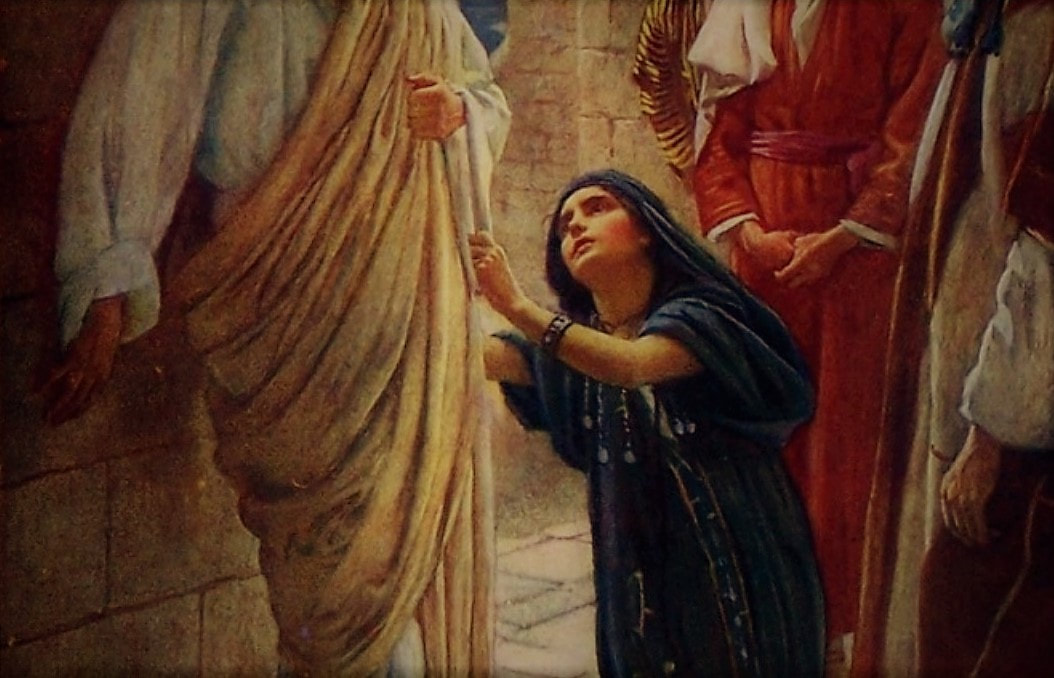
"O Woman, Great is Thy Faith"

In the New Testament we read about a woman from Canaan.  She wasn't a member of the Church or even the House of Israel.  She was a foreigner, a stranger.

A nobody, really.

Well, that's not quite right: she was somebody.  She was somebody's mother.  But a Syrophoenician gentile (Mark 7:26) nonetheless.

​   And behold
   a woman of Canaan
   cried unto him, saying,
   Have mercy on me, O Lord,
   thou Son of David;
   my daughter is grievously
   vexed with a devil.


(Matthew 15:22)

All we know about her (besides being an outsider) was that she had a daughter in need.  And she turned to Christ for help in her distress.
​
   But he answered her
   not a word.


Oof.  The silent treatment?  Really?  That's right: Jesus completely ignored her.  Which was impossible, when you think about it, because the woman was causing such a scene.

   And his disciples came
   and besought him, saying,
   Send her away;
   for she crieth after us.


It appears the apostles were annoyed with the woman.  They appear dismissive of her needs.  The Twelve were busy, after all, so who can blame them for wishing she'd go away?

Sick-and-tired of her raising a ruckus, the Twelve implored the Lord to "do something" about it.  "Call Security!"

   But he answered and said,
   I am not sent
   but unto the lost sheep
   of the house of Israel.


Well, this just got interesting.  We need to unpack this juicy morsel; how mysterious it is.
Picture
"Only Sheep Need Apply"?

First of all, 
it's important to note that Jesus spoke these words directly to his disciples ― not to the woman (there's nothing in the text to indicate she heard him say it).

But what strikes me most about this statement is how utterly legalistic is sounds.  Is the Lord shrugging His shoulders, saying, "Sorry, my hands are tied; she's a Canaanite.  Nothing I can do for her"?

Because His statement is, on its face, ridiculous.  I mean, just a few chapters earlier, we saw Jesus healing the Roman Centurion's servant (Matt. 8:5-13).

Last time I checked, the Centurion was not a "lost sheep" of Israel.  He was a gentile, too!  So the Lord has already disproven His statement by prior action.

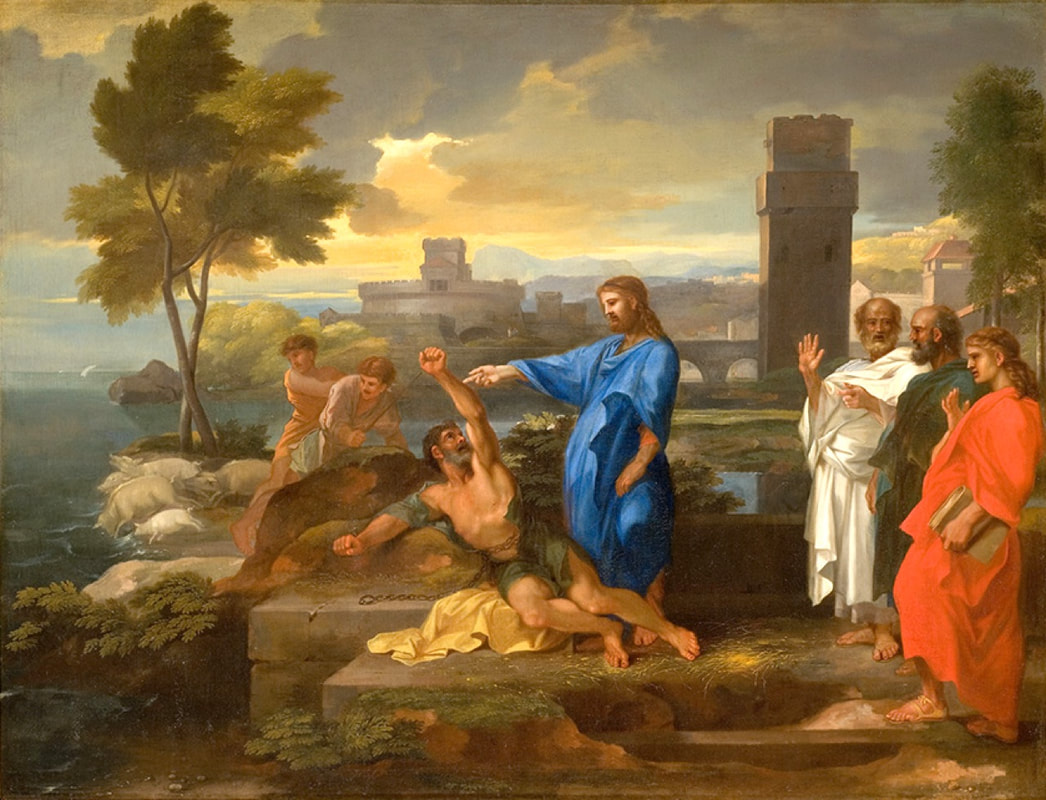
And what about the time Jesus cast out devils from the Gadarene man who lived among the tombs, sending Legion into the sky-diving pigs (Luke 8:26-33)?

So again and again, Jesus went out of His way to show compassion to the gentiles.  Were the apostles paying attention?

Did a single disciple take issue with the Lord's seemingly xenophobic statement about being sent to the lost sheep of Israel only?  Or did they bite?

If Christ was testing them, they utterly failed.

No one chimed in, "Lord, sir, not to disagree, you know, but remember last week in Decapolis, when the demoniac attacked us, and you healed him?  Can I just get some clarity on what you mean, viz-a-viz your jurisdiction?"
Picture
"She Fell At His Feet"

The Canaanite woman was watching the scene unfold and knew something was up.  Summoning her courage, she barged in and "fell at his feet" (Mark 7:25).


   Then came she
   and worshipped him,
   saying, Lord, help me.


She's entirely out of order!  Those poor apostles didn't know what-for.  She had no appointment, no references.  No status.  Not even a little money to offer Judas to sweeten his purse.  And absolutely no assurances she followed any of the proscriptions of the Law of Moses.

What entitled her to walk right up to God, into His personal space?  As if He were her personal Savior?

It was unseemly, especially now that Christ had apparently declared her unworthy of His ministration.

I can picture the Twelve (who so often acted as Jesus's bodyguards, doing crowd-control) reaching out to remove the troublesome woman, but Christ turned them aside as He spoke to her directly:


   But he answered
   and said, It is not meet
   to take the children’s bread,
   and to cast it to dogs.


Well, there's a speedbump if ever I saw one.  Might as well give up.  I mean, after having ignored her in the first instance, now Jesus calls her a "dog"?  Ouch.

But we've hit a wall; no use taking it up with management: the Lord Himself has spoken.  Jesus just announced a Rule.  A law.  A standard.  Good luck going against that.

When the Lord declares "IT IS NOT MEET" to take bread promised to the children and "cast it" to dogs, it's over.  Full stop.  End of story.

   Or is it? 

How many of us turn around at the first speedbump? 
If I had been this poor woman, I probably would have felt crushed; even hurt.  Would those words have caused me to turn around and go home?  "Well daughter, I tried.  I really did.  What can I do?  God said no."

BUT HE DIDN'T!  Re-read what Christ said.  Not once did He reject her, or refuse her.  Not once.  He never said no.

We give up too easily.  Faith is a creature who discovers her true strength when pressed out of measure; she thrives in extremities, along the margins.  Look for her among the exceptions: she shines brightest next to flickering hope.

Picture
Faith Fights Forward

Notice the curious verb Christ used: "to cast."  It bespeaks thoughtlessness, waste, uselessness; it reminds me of salt having lost its savor that is "good for nothing but to be cast out" (Matt. 5:13).


We throw away junk; someone discards something ("casts it") when they esteem it to be of little or no worth.

Cast aside.  Like how His disciples treated this woman, right?  But wait.  Doesn't the Father feed the fowls of the air, who sow not, neither do they reap, nor gather into barns: yet heavenly Father feedeth them?  So why can't He feed dogs?

Jesus is teaching something profound here, but not the thing we think.


   And she said, Truth, Lord:
   yet the dogs eat
   of the crumbs which FALL
   from their masters’ table.


Oh hoh!  Now we have a game-on.  Notice how the Canaanite woman subtly changed the verb?  With deft sleight of hand, she created space for a loophole (enough, I think, for tender faith to take root).

You see, instead of taking the bread from the children and feeding it to the dogs, she implies it would be harmless (and, in fact, would not deprive the negligent children one whit) if they, themselves, allow crumbs to "fall" unwanted.

Picking up the discarded crumbs from the floor would be a virtue, even (call it frugal), because we don't want to let any of the Father's food go to waste.

I can see her raising her eyes to meet the Lord's, holding His gaze, saying, "I may not be a child, true; and I may not have a seat at the table, that is correct: but I am not asking you to take anything away from them; but, perchance, if I catch the crumbs the children don't appreciate nor desire, they don't lay claim on those, do they?"


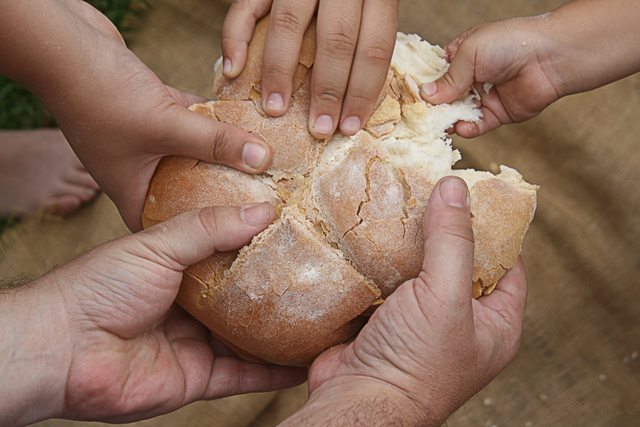
The wordplay on "crumb" (other translations render it "scraps") is clearly an allusion to the Lord's supper (the sacrament).

That's the dinner table they were discussing: the Old and New Covenants.  In a way, this story prefigures the entire message of the New Testament: Christ (the bread of life) came to offer Himself for the lost sheep of Israel.  His flesh and blood are the children's meat, rejected (they craved McDonald's nuggets instead), and so they cast Christ aside.

Who will pick Him up?

The (1) sacramental and (2) dispensational overtones in this exchange are astounding.
Picture
   Then Jesus answered
   and said unto her, O woman


As I read this story, I wonder if this is the first time He really stops and "sees" her; sees into her soul, I mean.

   O woman, great is thy faith

Why does He call her faith "great"?  What was it that made it so great?  How did she wrestle a blessing from where none was waiting? 

   Be it unto thee
   even as thou wilt.
   And her daughter
   was made whole
   from that very hour.


(Matt. 15:22-28)

The Point:  Did you see the difference between how the disciples reacted to the Lord's words and how the woman responded to the Lord?

When the Lord told the disciples He was called only to the lost sheep of Israel, they took it at face value.  They didn't plead, implore, or reason with the Lord.  They showed no great concern for the woman.


In other words, they didn't exercise faith.

Let me be clear: the disciples heard, believed, and accepted what the Lord said.  And yet (!) they didn't exercise faith.  Why not?

Lesson Learned:  Faith peers beyond the letter of God's word and sees into its Spirit.

We saw how the Canaanite woman sought to honor God's word while at the same time giving voice to His innate goodness and expansiveness and graciousness.  She found a way beyond mere obedience to embody His Spirit in a more excellent way.  This was her faith.

Practice Pointer:  Too often, I think, we take something we read in the scriptures or hear over the pulpit, and think, "Well, that's that.  The Lord has spoken."  But do we not remember that His "words never cease" (Moses 1:4)?

So faith does not sit back, resting upon what God has said (which is just the launching point).  No, faith looks forward and listens for what God may yet speak, like this Syrophoenician woman (see, Article of Faith 9).

Are we more like the disciples in this story, or are we like the Syrophoenician woman?

Jesus said:

   Many shall come
   from the east and west

   [these are the last people we'd expect; they are outsiders who are not members of the Church; those we accuse of not being "children", who we think have no right in how God's affairs should be arranged]
   and shall sit down with
   Abraham, and Isaac, and Jacob
 
 [how dare they!  They aren't "children of the prophets."  They haven't entered into the covenants I have in the Temple]
   in the kingdom of heaven.

   But the children of the kingdom
   shall be cast
   
[there's that verb again . . .]
   into outer darkness.

(Matt. 8:11-12)

How funny it is that Jesus did not mention adulterers, drag queens, murderers, whoremongers, democrats, or Hollywood movie producers, as those who are "cast into outer darkness."

No, outer darkness is reserved for "the children of the kingdom" who apparently do not like to comingle or associate with us "dogs."
Picture
2 Comments

    Author

    Tim Merrill

    RSS Feed

    Previous Posts

    Archives

    November 2025
    October 2025
    September 2025
    August 2025
    July 2025
    June 2025
    May 2025
    April 2025
    March 2025
    February 2025
    January 2025
    December 2024
    November 2024
    October 2024
    September 2024
    August 2024
    July 2024
    June 2024
    May 2024
    April 2024
    March 2024
    February 2024
    January 2024
    December 2023
    November 2023
    October 2023
    September 2023
    August 2023
    July 2023
    June 2023
    May 2023
    April 2023
    March 2023
    February 2023
    January 2023
    December 2022
    November 2022
    October 2022
    September 2022
    August 2022
    July 2022
    June 2022
    May 2022
    April 2022
    March 2022
    February 2022
    January 2022
    December 2021
    November 2021
    October 2021
    September 2021
    August 2021
    July 2021
    June 2021
    May 2021
    April 2021
    March 2021
    February 2021
    January 2021
    December 2020
    November 2020
    October 2020
    September 2020
    August 2020
    July 2020
    June 2020
    May 2020

    RSS Feed

    Previous Posts
Home
© COPYRIGHT 2019 - 2025
  • Home
  • Poetry
    • Fleeing Egypt >
      • Tower of Babel
      • The Orchard
      • Tithing Settlement
      • Chastity for Churches
      • Sign
      • Cleaning House
      • Elijah
      • Rulers of Sodom
      • Beware
      • Two Churches
      • Beginning At My Sanctuary
      • Toll Road
      • Get it Strait
      • Corporation Sole
      • The Religion of the Circle R
      • Fig Tree
      • Eve
      • New Jerusalem
      • Shemlon's Shore
    • Ascending Sinai >
      • Ark
      • Sin of the Calf
      • An Idol Observation
      • Dew from Heaven
      • I love you, Elder Holland
      • Easter
      • How Sweet
      • Haiku
      • The Barn
      • Patron Saint
      • A Conversation with Brigham Young
      • Mine Testimony
      • The Meadow
      • The Gardens
      • Ice Fishing
      • Without End
      • Forest
      • Continental Divide
      • A Great Sacrifice
    • Promised Land >
      • Lanolin
      • Zion
      • Wisdom
      • Take Up Your Cross
      • Was the Sun the Same
      • Plain and Precious
      • Bridegroom
      • Faith
      • Amos
      • But First
      • Wax
      • Parable of the Piano
      • Repentance
      • Wake Up, Child
      • Cold Storage
      • Covered Wagon
      • Multiply and Replenish
      • Rollercoaster
      • The Baptist
    • Seven Stations of the Cross >
      • Jesus Condemned to Die >
        • Life Signs
        • Fashionable Religion
        • Tithing Declaration
        • A Pretty Important Detail
        • Jesus is All
        • Salt Lake Temple
        • Zion in the Lion's Den
        • High Noon
        • Bookmark
      • Jesus Stumbles and Falls >
        • Unveil
        • But Faith
        • Sifting
        • The Ballerina
        • Credit Declined
        • Prayer Circles
        • Work Out Your Salvation
        • Lovebirds
        • Unrequited
      • Simon of Cyrene Bears the Cross >
        • Proxy
        • Chartres
        • Like the Nile
        • Artificial Intelligence
        • Not Born
        • Parable of the Crossing
      • Women of Jerusalem Weep >
        • With A Price
        • Fields of Asphodel
        • Night
        • Desert Rose
        • Goodbye
        • Spring Snow
      • Jesus Stripped of His Garment >
        • Love Letter
        • I am disquieted
        • Dream
        • Noah's Wife
        • Parable of the Five Sons
        • Eggshell
      • Jesus Nailed to the Cross >
        • This Day
        • Sacred Orientation
        • Sacrament
        • Wrestle with God
      • Burial and Resurrection
  • Blog
    • Previous Posts >
      • 2025 Posts
      • 2024 Posts
      • 2023 Posts
      • 2022 Posts
      • 2021 Posts
      • 2020 Posts
  • About
  • Contact