













































Owl of the Desert
  • Home
  • Poetry
    • Fleeing Egypt >
      • Tower of Babel
      • The Orchard
      • Tithing Settlement
      • Chastity for Churches
      • Sign
      • Cleaning House
      • Elijah
      • Rulers of Sodom
      • Beware
      • Two Churches
      • Beginning At My Sanctuary
      • Toll Road
      • Get it Strait
      • Corporation Sole
      • The Religion of the Circle R
      • Fig Tree
      • Eve
      • New Jerusalem
      • Shemlon's Shore
    • Ascending Sinai >
      • Ark
      • Sin of the Calf
      • An Idol Observation
      • Dew from Heaven
      • I love you, Elder Holland
      • Easter
      • How Sweet
      • Haiku
      • The Barn
      • Patron Saint
      • A Conversation with Brigham Young
      • Mine Testimony
      • The Meadow
      • The Gardens
      • Ice Fishing
      • Without End
      • Forest
      • Continental Divide
      • A Great Sacrifice
    • Promised Land >
      • Lanolin
      • Zion
      • Wisdom
      • Take Up Your Cross
      • Was the Sun the Same
      • Plain and Precious
      • Bridegroom
      • Faith
      • Amos
      • But First
      • Wax
      • Parable of the Piano
      • Repentance
      • Wake Up, Child
      • Cold Storage
      • Covered Wagon
      • Multiply and Replenish
      • Rollercoaster
      • The Baptist
    • Seven Stations of the Cross >
      • Jesus Condemned to Die >
        • Life Signs
        • Fashionable Religion
        • Tithing Declaration
        • A Pretty Important Detail
        • Jesus is All
        • Salt Lake Temple
        • Zion in the Lion's Den
        • High Noon
        • Bookmark
      • Jesus Stumbles and Falls >
        • Unveil
        • But Faith
        • Sifting
        • The Ballerina
        • Credit Declined
        • Prayer Circles
        • Work Out Your Salvation
        • Lovebirds
        • Unrequited
      • Simon of Cyrene Bears the Cross >
        • Proxy
        • Chartres
        • Like the Nile
        • Artificial Intelligence
        • Not Born
        • Parable of the Crossing
      • Women of Jerusalem Weep >
        • With A Price
        • Fields of Asphodel
        • Night
        • Desert Rose
        • Goodbye
        • Spring Snow
      • Jesus Stripped of His Garment >
        • Love Letter
        • I am disquieted
        • Dream
        • Noah's Wife
        • Parable of the Five Sons
        • Eggshell
      • Jesus Nailed to the Cross >
        • This Day
        • Sacred Orientation
        • Sacrament
        • Wrestle with God
      • Burial and Resurrection
  • Blog
    • Previous Posts >
      • 2025 Posts
      • 2024 Posts
      • 2023 Posts
      • 2022 Posts
      • 2021 Posts
      • 2020 Posts
  • About
  • Contact


​

The Deeper Magic: Perfection and Progress

5/26/2023

2 Comments

 
Picture
Don't Be Perfect.  Really, Don't!

You're perfect.  Don't believe me?  By the end of this post I hope you'll see why.

Today we're going to explore a more meaningful way to view (and talk about) perfection.  I am passionate about this topic because we've all experienced the toxicity that accompanies Sunday School lessons on "perfection." 

"But wait, Tim!" someone says, "Jesus told us to be perfect, didn't He?"

Oh yes, He did.

   I would that ye should be perfect
   even as I, or your Father
   who is in heaven is perfect.


(3 Nephi 12:48)

But apparently we fumbled the ball when we began to equate "perfection" with "flawlessness."  Are they the same?

What if we have inadvertently used the Lord's words to create a Petri Dish for scrupulosity?

Has our "worthiness" fixation spread from the bishop's office like cancer, crippling our faith in Christ as we reorient the gospel to be about becoming "perfect" people?

And so our lessons and talks are filled with spiritual botox and collagen fillers; we spend our money on plastic surgeons to impress the angels with our face-lifts and tummy-tucks.  ("I'm a perfect tithe payer!  So can you be, too!  God must love us obedient tithers!")

No big deal, right?  Well, it is sort of a huge problem; have we seen the hefty price tag on perfectionism?

I wonder if our quest to achieve some Greek-inspired ideal of "perfection" speaks more to our own sense of self-righteousness than it does to receiving the image of Immanuel in our countenances.

(And yes, I did that for alliteration, but also because Immanuel means = God With Us ("I'm good enough with God"); whereas the spirit of perfectionism is the opposite ("I'm not good enough even with God")).

So let's address the following:

   1.  What is "perfection"?

   2.  What did Christ mean when He asked us to "be perfect"?

   3.  How do we actually, you know, become "perfect"?

Easy, right?
Picture
"Words are a source of misunderstanding"

How does the dictionary define perfection?  "The quality of being free from all flaws or defects; faultless."

So is that the standard our Savior expects us to meet?

The word perfection comes from the Latin perfectus and perficio (they sound like Harry Potter spells).  The words mean "to finish; to bring to an end."

Okay, so already we are seeing that the modern connotation of "perfection" is completely different than what it was 1000 years ago when the monks were scribbling in Latin in their illuminated manuscripts.

Whose definition is correct?

Does God have "flaws"?  If we apply the Latin meaning to God, is He "finished"?

The Greek word used in the New Testament manuscripts, which is translated as "perfect," is actually "teleos" ― which means "to be complete."

So is that what Christ actually meant?

   Be ye therefore [complete],
   even as your Father
   which is in heaven is [complete].


(Matt. 5:48)

Maybe instead of asking if we're perfect, we should start asking if we're "complete."

(As an aside, the popular interpretation as to why Christ added himself to the Perfect-List when He appeared to the Nephites in the Book of Mormon, that it was because He had received his resurrected body, doesn't add up.  Do we really think Christ was talking about the "completion" of having a glorified body when we'll all be resurrected, regardless?)
Picture
Philosophical Perfection 101

Let's ask the greatest philosophers who have ever lived what it means to be perfect.

   Plato.  Perfection is excellence is every aspect.

Hmm.  Would Christ himself satisfy this definition, when we're told "he hath no form nor comeliness; and when we shall see him, there is no beauty that we should desire him" (Isaiah 53:2).

Plato was all about beauty.  So hard pass here; it doesn't appear that Christ was telling us to "be excellent" (sorry Bill and Ted!).

   Aristotle.  I think we're getting warmer with Aristotle, who taught perfection comes in three forms:

   1.  That which is complete and contains all requisite parts.

   2.  That which is the greatest good that nothing of the kind could be better.

   3.  That which achieves its purpose.

We'll come back to #3 because it is tickling my senses about "fulfilling the measure of our creation."

   Thomas Aquinas.  The great Christian theologian Thomas Aquinas spent a lot of ink on this subject.  He boiled perfection down to its essence:

   1.  There is perfection found in a thing itself ("its substance"); and

   2.  There is perfection found in a thing that serves its purpose.

​Take the example of a hammer. 

   (1) There might be a hammer that is, in itself, a perfectly crafted hammer that could not be improved upon.  It is forever the best and brightest hammer that could ever be created.  (You're welcome, Mjölnir.)

   (2) But wait!  What if you needed a wrench for the job at hand?  In that case, who cares if your mighty hammer won all the beauty contests?

Thus a thing can be perfect and utterly useless.
Picture
The Paradox of Perfection

Now we're going to go down a rabbit's hole for just a moment.

We encounter a problem (or, I should say, a paradox) when we think of perfection in terms of God.

Why?  Because the greatest perfection is imperfection!  (I love philosophy.)

This paradox was described by Empedocles, who argued that in order for a thing to be "perfect" it must necessarily have the attribute to be improved upon (to progress).

Take the example of the hammer.  We might think we have a perfect hammer, but that precludes any improvement to its design.  It means we can never, ever, ever, ever grow beyond that exact hammer. 

In other words, we're stuck with the hammer as-it-is forever, and that would render the hammer imperfect.

This begs the question: is perfection achieved when a thing reaches its pinnacle; or is the quality of perfection found in a thing having no pinnacle because it can progress eternally!

Confused?  As Karel De Gucht explained, "You cannot have perfection without imperfection because one of the most impressive qualities of a person is their ability to improve.  That means something cannot be perfect unless it can also get better.  So if it is perfect, it must also therefore be imperfect at the same time."

LDS cannon has a unique perspective on this idea; we are taught that God is perfect but He is also "added upon" with glories upon glories, forever without end, which we call "eternal increase."

God doesn't remain the same, static being (though we are told he "changes not") because He is, in fact, increasing in His glory and kingdoms.

Think of it this way: I was 28 when I became a father.  I was the same person before-and-after my daughter's birth ― same name, same weight, same social security number ― and yet I was not the same person anymore because I had a new child, a new role, a new responsibility.

So while I was the same, I was different. 

If God continues to increase, then His perfection cannot refer to a static, unchanging quality.
Picture
Perfection as a verb, not a noun

Take another look at this verse:

   And above all things,
   clothe yourselves
   with the bond of charity,
   as with a mantle,
   which is the bond
   of perfectness and peace.


(D&C 88:125)

In the post Three Years of Tough Love, I wrote:

"This verse holds a key, I think.  It explains what Christ meant when He told us to "be perfect" even as our Father in heaven in perfect (Matt. 5:48).

"The verse teaches us that the particular kind of perfection we're seeking is found in the "bond of charity" (which it equates with "perfectness").

"Not Greek-perfection, no, but Christ-perfection.  What is that?"

In seeking to answer that question ("what is Christ-perfection"), Ben made a comment to that post which got me thinking.

Ben said:

"What makes a church "true"?  Is it as true as saying, This apple is true, or this cheesecake is true?  Well if the apple fulfills the measure of its creation, maybe that makes it "true"? Cheesecake, well that's an entirely different animal I suppose as so many out there are cheap imitations.  But a true church: [how] does it fulfill the measure of its creation?"

I want to suggest that keeping the Celestial Law is nothing more or less than a thing "fulfilling the measure of its creation" (see, D&C 88:25).  

Could it be as simple as that?

Are we "perfect" when we fulfill God's purposes for us?

Thought experiment:  Now that I am craving cheesecake, let's take the example of a chef.  Is a "perfect" cook someone who makes Michelin-starred meals?

Well, that can't be right, because no matter how "good" their filet mignon is, isn't there always the possibility (in a universe of infinite variety, worlds without end) that someone will come along and make it better?

So we miss the mark when we think of "perfection" as something being "the best."  After all, when we have eternities upon eternities ahead of us, how dare we claim we've peaked! 

In order for us to judge something to be "the best" (say, the best pepperoni pizza) in the entire universe throughout all time, it presupposes two things:

   (1) We have arrived at the end of all things forever so that nothing comes after; and

   (2) We have sampled every pizza in existence across all worlds and all possible worlds.

(I think we're beginning to see why God calls things "good" and not "the best.")

Because you could round up all the cows on earth ― all the cattle that roam upon a thousand hills ― and tell me, "I've sampled all the milks; this one is best; this cow produces the perfect milk," and I'll say, "Sorry, this milk may be the best one here, now ― but I'm going to create a cow in the next life that produces the creamiest chocolate milk anyone has ever dreamt of; and then, just when you think it's perfect, I'll cross-breed it with a dulce de leche steer and blow your mind."

   It's a promise. 
Picture
A Better Way

Considering the infinite variety and diversity of God's creations (worlds without number!), how arrogant are we to believe anything we have, or are, or do, can be the best?  Our search for perfection is a fool's errand.

​Going back to our Michelin Star chef, a better way for us to approach perfection, I think, is to not focus on the food but on the act of serving each other a delicious meal. 

A mother or father preparing food to feed their hungry children fulfills the measure of their creation, regardless of whether it is frank-and-beans or asparagus in a hollandaise sauce or cold cereal from a box.

When we focus on the food ("the object"), rather than on their sacrifice ("the action"), we start to debate what parents should-or-shouldn't-be feeding their children; this invites contention as we disagree on what is "best." 

Imagine parents arguing at the park over which kind of juice they should give their children, until battle-lines are drawn between those that think it is okay to give their kids high-fructose-corn-syrup Sunny D, and those who think it has to be 100% orange juice, and others who demand it be full of pulp to "build character." 


God must shake his head when we bicker and when we create unsustainable and unreachable standards of perfection.

Give your kids juice!  Or milk!  Or water!  Who cares?!

Because we don't fulfill the measure of our creation based on our beverage selection; we fulfill it when we love each other.
Picture
Charity is the Bond of Perfectness

God is love.  His children are made of the same stuff as Him; we are designed for charity ― we are built to be vessels that carry the pure love of Christ to the furthest reaches of the galaxies, to every creature under heaven.

​While we might have faith to move mountains, and give our bodies to be burned, and though we have all knowledge and speak in tongues and understand all mysteries  . . . if we have not charity, we are nothing. 

Ouch.  Nothing?  Is that too harsh?

Well, if the measure of our creation is to love, then not having charity is like being a hammer when the Lord designed us to be a wrench.  We're something, alright, but nothing God can use.

The culminating and highest expression of who we are is manifest in, and only in, our love.

So we're left with the million-dollar-question: Why does God ask us to love?  How are we made "perfect" in love?  What's it all for?

Ah, I am glad you asked.  In the following parable, The Ballerina, I hope you will sense the answer.
Picture
The Ballerina

Ruby was better at ballet
   than most.

At festival she danced
   her masterpiece.

The judges nodded approvingly
   and she hoped to win.

She sat in the audience
   while other performers took their turn

And witnessed Sarah dance
   as Ruby had never dreamed

Possible.  Marveling at Sarah's skill
   Ruby knew she could never match

Such perfection!  Her face flushed―
   what had all her work and training been for

Knowing she would never reach such heights herself?
   Ruby looked to the right and left at others watching

Politely in the auditorium.  Their faces showed
   they were oblivious to the level of beauty

Sarah displayed, her gift all-but-wasted
   on their untrained eyes.

The music ended and Sarah's feet rested.
   Ruby's resentment transformed

Into joy as she gave a standing ovation
   in worshipful tear-stained awe.

Her years of training and sacrifice
   had not led her to being the best

But to appreciate the genius of she who was―
   as only a fellow artist could.

Ruby grew to womanhood
   and remembered this lesson:

Practicing to become like Christ
   was not about being the best, oh no―

But to behold His infinite genius and grace
   as only a fellow artist can.
Picture
2 Comments

The Deeper Magic: Translation and Tarrying

5/25/2023

3 Comments

 
Picture
Relevant or is it Extraneous?

The first time I encountered the idea of the inhabitants of the New Jerusalem being translated was in John Pontius' book The Triumph of Zion.

It was 2016 (maybe I'd been living under a rock) and I was reading John's book at the local Taco Bell during my lunch break between court sessions.

It took me a long time to warm to the idea.


Why?  Because the whole notion of there being another box to check depressed me.  I was resistant because there seems to be so many spiritual "hurdles" already: "Get your baptism of fire; get the priesthood; get your calling and election; get your second comforter. . . ."  Get, get get.  

*Sigh*  And now I was supposed to "get" translated?  Come on.
​
So I tucked the idea away.  Years went by; I occasionally pulled the idea out and looked at it, wondering if a Zion people needed to undergo a change similar to Enoch's city?

I suppose my reluctance was finally (grudgingly) set aside because who can argue with the fact that the residents of the latter-day Zion will actually walk with God; and wasn't Enoch and his people translated when they walked with God?

   And Enoch and all his people
   [so this wasn't just for the spiritually-elite, super-righteous folks]
   walked with God,
   and he dwelt
   in the midst of Zion;
   and it came to pass
   that Zion was not, 
   for God received it
   up into his own bosom;
   and from thence went forth
   the saying, ZION IS FLED.


(Moses 7:69)

But don't worry: despite all that, translation is optional.  Let me explain.
Picture
Why Translation?

​Initially I was reluctant to write about the doctrine of translation (we're talking about Enoch and the Three Nephites here, not turning French into Chinese) for two reasons:

   (1) Uninitiated.  It goes without saying, I am not translated (hey, why are none of you surprised?!).  I'm just an average pony running in this telestial derby we call life, so who am I to speak about the principles of "tarrying"?

   (2) Uninterested.  Some of you may find the subject to be esoteric, wondering how this knowledge will help us be better disciples here-and-now?

Response:  These 
are valid objections.  It never ceases to amaze me how gung-ho we are to learn the meaning of Ezra's eagle, or where the Lost 10 Tribes are located, or when the Big Earthquake will hit, or how to obtain the third heaven ― when none of that matters! 

​(Don't feel bad; we are all guilty of looking beyond the mark.  Welcome to the club).

Practice Pointer:  The measure of a thing's value is in its ability to increase our capacity to love one another. 

I have no desire to itch our curiosity if we're just going to return to business-as-usual.  
So let's run the doctrine of translation through the gauntlet:

​What about it makes us more charitable?
Picture
Keep Your Arms . . . in the Ride at All Times

Remember the Sons of Mosiah?

Whatever possessed them to go on a mission to reclaim their Lamanite brothers and sisters instead of chilling at the castle waiting to become king?


   They were desirous
   that salvation
   should be declared
   to every creature,
   for they could not bear
   that any human soul
   should perish.


(Mosiah 28:3)​

Unlike the 14-year mission to the Lamanites the Sons of Mosiah served, those who become translated beings have no release-date; they're on the clock until the world ends.

Which sounds awesome, right?  Sign us up!  I bet the angels have a great retirement plan and get to eat in Kolob's cafeteria for Taco-Tuesdays.

But before we get too excited, I think we should count the cost (Luke 14:27-28).  Have we really considered the toll on their mental and spiritual health, "sorrowing for the sins of the world" (3 Nephi 28:9)?

The role of translated beings is to minister to and make intercession for a fallen people.  Watching the 10 o'clock news, I'm guessing they are perpetually heartbroken.

So it's easy to think of these angels as supermen and superwomen who never bleed, who never catch a common cold, 
who never have to take medication for high cholesterol.

But guess what?  There's a trade-off.  Their ascent to a terrestrial state necessitates a descent of a commensurate amount.  They "suffer pain [and] sorrow . . . for the sins of the world" (3 Nephi 28:38).

Look, I can barely manage to juggle the headaches that accompany having a regular family and a few friends ― imagine carrying a cross so big it extends over the "sins of the world."
Picture
Be Careful What You Wish For

Did these ministering angels of flaming fire (D&C 7:6) understand when they enlisted that they would be walking in the Savior's footsteps by taking upon them "the pains . . . of the people" (Alma 7:11)?

Yes.  Yes they did.

But why, then?  Why did they choose this particular path, filled with so much sorrow and suffering?  What possessed them to jump head-first (!) into the lion's den?

Let me rephrase that question: Why do you want to become a savior on Mount Zion?  What would cause you to jump between the hungry lions and your loved ones?


   And they were cast
   into a den of wild beasts

   [and that's just referring to my Elders Quorum]
   and behold they did
   play with the beasts
   as a child with a suckling lamb,
   and received no harm
.

(3 Nephi 28:22)

No harm, Mormon?  Okay, sure; but I would wager their ministry stretched their hearts from here to heaven, and that's gotta hurt.
Picture
Do's and Don'ts of Translation

First ─ and this is the important part to remember ─ people are not translated because they're righteous.

No, really.  When people flatter the Relief Society President by telling her, "Watch out Sister Jones or you might be translated," they entirely miss the point.


We shouldn't think of translation as a status conferred on some few, super holy individuals.  Adam and Peter and Joseph and Isaiah were good men, but they weren't translated.  Neither were Rebekah or Rachel or Ruth.

Which begs the question, why were Moses, Alma, John, Nephi and Enoch translated?

Ah, now we're beginning to see that translation is not the rule, but the exception.  In order to be translated, we must be translated for something.  It is quite simple: translation is reserved for those who need to keep their bodies to minister to those on earth (who, yes, have bodies themselves) throughout future generations of time.

Joseph Smith taught this doctrine as plainly as humanly possible:

"Translated bodies are designed for future missions." (TPJS, 191; HC 4:425).

So before you head to the recruiters office, you better formulate a business plan for what, precisely, you'd like to be translated to do.
Picture
To "Tarry"

Second 
─ and here we'll find there's absolutely no pressure ─ translation is always elective (like shop class or jazz band) and is never mandatory.

Translation is not part of the core curriculum required to graduate to the Celestial Kingdom.

So does it even matter, if it is not necessary?  Fair question.

The Lord faults none of us who wish to "speedily come" unto Him after we die (3 Nephi 28:2).  In fact, He hallows that desire with a formal beatitude:


   Blessed are ye
   because ye desired
   this thing of me;
   therefore, after that ye are
   seventy and two years old
   ye shall come unto me
   in my kingdom; and with me
   ye shall find rest.


(3 Nephi 28:3)

That sounds good to me!  Those who love the Lord surely want to be with Him again.  Sooner the better.

So why would anyone want to delay that happy reunion?  Why would any of us volunteer to extend our tour of duty in the deserts of Afghanistan until the Second Coming?


To the Three Nephites the Lord said:

   More blessed are ye. . . .
   and all this will I do
   because of the thing
   which ye have desired of me,
   for ye have desired
   that ye might bring
   the souls of men unto me,
   while the world shall stand.


(3 Nephi 28:7, 9)

The "fulness of joy" the Lord promises them (3 Nephi 28:10) comes with a steep price. 

That unspeakable joy is accompanied by unspeakable anguish, for opposition is balanced upon the blade's edge.


So is it worth it?  Do we choose A or B?  That's entirely a personal decision, and one we should take up with the Lord.
Picture
John the Beloved

​In 1834 Oliver Cowdery wrote to his friend W. W. Phelps and recounted some of what the angel instructed Joseph on the hill Cumorah during their tutoring sessions.

"[When] all things are prepared, the Ten Tribes of Israel will be revealed in the north country, whither they have been for a long season."  (Messenger and Advocate, vol. 2, no. 13, p. 200.)

Wait a minute: what do the 10 Tribes have to do with John?  Well, quite a lot, actually.

Levi Hancock recorded that on June 4, 1831 Joseph said, "John was to tarry until Christ came.  He is now with the ten tribes preaching to them and when we can get ready for them they will come." (Autobiography, 1803-1836.)

Do we see a theme emerging?  The Ten Tribes are waiting on us.  Why aren't we ready?  (Or maybe I should be asking, why are the Ten Tribes ready when we're not?)

Well, they've had help:

   Q. What are we to understand
   by the little book
   which was eaten by John,
   as mentioned in the 10th chapter
   of Revelation?

   A. We are to understand
   that it was a mission,

   [ah, now we see why John needed to be translated]
   and an ordinance,
   [ah, now we see how he was translated]
   for him to gather
   the tribes of Israel;
   behold, this is Elias,
   who, as it is written,
   must come and restore
   all things.


(D&C 77:14)

This may sound confusing, because we've all been taught that Joseph Smith (not John) was the restorer-of-all-things (see, D&C 132:40, 45).

Okay, let's not get distracted; for now, remember that in the context of D&C 77 John = Elias.  This is important because we read:

   The angel ascending
   from the east

   [this is referring to John]
   is he to whom is given
   the seal of the living God
   over the twelve tribes of Israel;

   wherefore, he crieth
   unto the four angels
   having the everlasting gospel,
   saying: Hurt not the earth,
   neither the sea, nor the trees,
   till we have sealed the servants
   of our God in their foreheads.

   And, if you will receive it,
   this is Elias which was to come
   to gather together
   the tribes of Israel
   and restore all things.


(D&C 77:9)

Is it crazy to suppose that just as we needed a Restoration through Joseph Smith, the Ten Tribes also were given a Restoration wherever they are?

Or that just as we received the record of the Book of Mormon regarding the descendants of Lehi, the Ten Tribes had restored a record of the Lord's ministry to them?

Jesus said to the Nephites:

   I go unto the Father,
   and also to show myself
   unto the lost tribes of Israel,
   for they are not lost
   unto the Father,
   for he knoweth whither
   he hath taken them.


(3 Nephi 17:4)

I wonder if their Restoration is going any better than ours.  Because it gives new meaning to the Savior's words when we consider a parallel Restoration occurring among the Ten Tribes:

   And then shall the work
   of the Father commence
   at that day, even when
   this gospel shall be preached
   among the remnant
   of this people.
 
 [that's our Restoration]

   Verily I say unto you,
   at that day shall the work
   of the Father commence
   among all the dispersed
   of my people, yea,
   even the tribes
   which have been lost.

   [that's their Restoration]

(3 Nephi 21:26)

One final verse to shed a light on this mystery, describing the return of the Ten Tribes:

   And they who are in
   the north countries
   shall come in remembrance
   before the Lord;
   [these are the Ten Tribes]
   and their prophets

   [not our prophets, no; these are "their" prophets]
   shall hear his voice,
   and shall no longer
   stay themselves;
   and they shall smite the rocks,
   and the ice shall flow down
   at their presence.

   And an highway
   shall be cast up
   in the midst of the great deep.

   And they shall bring forth
   their rich treasures

   [their treasures, not ours; could this refer to their sacred records?]
   unto the children of Ephraim,
   my servants.


(D&C 133:26-27, 30)

Practice Pointer:  We're going to see there are three main groups which converge in establishing Zion-on-earth, and they each have translated beings helping things along.  They are:

   (1) The Ten Tribes (John); and   

   (2) The Lamanite remnant and latter-day Saints (Three Nephites); and

   (3) Enoch's City (well, all of them).

Each of the three groups has a dispensation (an appointment) granted them in the Restoration of All Things preparatory to the earth receiving the presence of the Father.
Picture
Enoch's People

Don't you love Eliza R. Snow?  (I sometimes wish she had been President of the church instead of her brother.)  Eliza was a prophetess who had many spiritual gifts, including the gift of tongues and prophecy.  She wrote a hymn that was published in 1856.  In it she taught doctrines she had received from Joseph Smith.

The hymn appeared in the LDS Hymnal until 1912, so an entire generation of Church members had these ideas as part of their cannon.  What does this have to do with Enoch?  You'll see:

​1.  Thou, Earth, wast once a glorious sphere
Of noble magnitude,
And didst with majesty appear
Among the worlds of God.

2.  But thy dimensions have been torn
Asunder, piece by piece,
And each dismember’d fragment borne
Abroad to distant space.

3.  When Enoch could no longer stay
Amid corruption here,
Part of thyself was borne away
To form another sphere.

4.  That portion where his city stood
He gain’d by right approv’d;
And nearer to the throne of God
His planet upward mov’d.

5.  And when the Lord saw fit to hide
The "ten lost tribes" away,
Thou, Earth, wast sever’d to provide
The orb on which they stay.

6.  And thus, from time to time, thy size
Has been diminish’d, till
Thou seemst the law of sacrifice
Created to fulfil.

(LDS Hymns: Sacred Hymns & Spiritual Songs for The Church of Jesus Christ of Latter-day Saints (Liverpool: England, 1856.)

I give it as my opinion that the Lost Ten Tribes were taken north ─ that is, far (!) north ─ and they are not presently on the earth-as-we-know-it, but shall be rejoined at a future day similar to Enoch's city ("planet") so the earth may be RESTORED as she was in the beginning, preparatory to her receiving her crown.

At their return, the earth shall open to receive them, causing water to flow down at their presence, irrigating the deserts so they may blossom as a rose, and Zion shall be birthed.
Picture
Metatron

​In the apocrypha we read:

"And the Lord said to Michael: Go and take Enoch out from his earthly garments, and anoint him with my sweet ointment and put him into the garments of my glory.  And I, Enoch, looked at myself, and was like one of his glorious ones" (Secrets of Enoch, 22:8)

"My spirit was translated, and it ascended to heaven; and I saw the holy sons of God and with them the Head of Days" (1 Enoch 71:10, 11).

"And the Lord called Berebel who was skilled in writing down all the works of the Lord.  And the Lord said to Berebel: Take a book from the deposit and give a pen to Enoch, and explain to him and dictate the books to him.  So the angel taught Enoch all the works of the heavens and the earth and the sea and all the elements and time-periods and commandments and instructions and he wrote down all the signs" (Secrets of Enoch 10).

"Hear, Enoch, for not to my angels have I told my secret, nor have they understood my creating, which I tell thee today.  For I alone used to go about the invisible things, and I conceived the thought of placing foundations and of creating a visible creation" (Secrets of Enoch 24:3-5).

"The Metatron [Enoch] said: God made for me a throne modeled after the Throne of Glory, I being clothed upon with glory and Light [Zohar] and beauty and mercy like that of the throne of thy glory.  And he caused me to sit upon it, and a herald proclaimed in all the firmament of firmaments, saying, Enoch is proclaimed as a divine King!" (BHM 5:174).

"This is about the Elect; receive my parable about them; and my Great Holy One will come out of his dwelling-place, and the God of the Age shall walk upon the earth, even upon Mount Zion, and he will appear in the power of his might from the heaven of heavens.  And all shall be afraid, for great trembling and fear shall seize them, and the mountains shall be shaken down and dissolve and the earth shall be rent" (Gizeh 1:3).

The above quotations I took from Hugh Nibley's work, Enoch the Prophet.  Let me conclude with Brother Nibley's words:

"Once established in her place, Zion serves as a sort of bridgehead, preparing the way for the return of Enoch’s Zion, when the two shall fuse. "And it shall come to pass in those days that the elect and holy children will descend from the high heavens, and their seed will become one with the children of men" (1 Enoch 39:1)."

I can't wait!
Picture
3 Comments

The Deeper Magic: Sealing and Seals

5/23/2023

0 Comments

 
Picture
An Introduction to "Seals"

Who wants to be an angel?  Any of you ready to be translated?

Isn't it interesting how angels travel light; they carry no purse or scrip (sorry millionaires), so what do they think is important enough to keep in their knapsacks? 

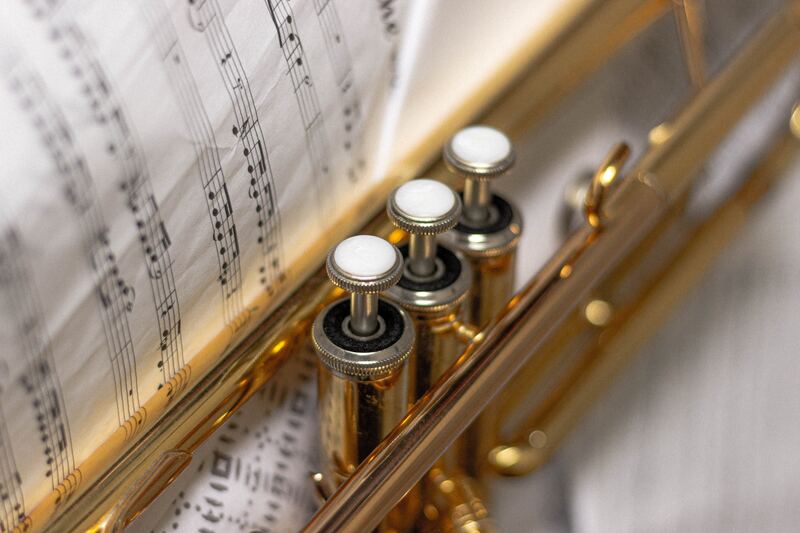
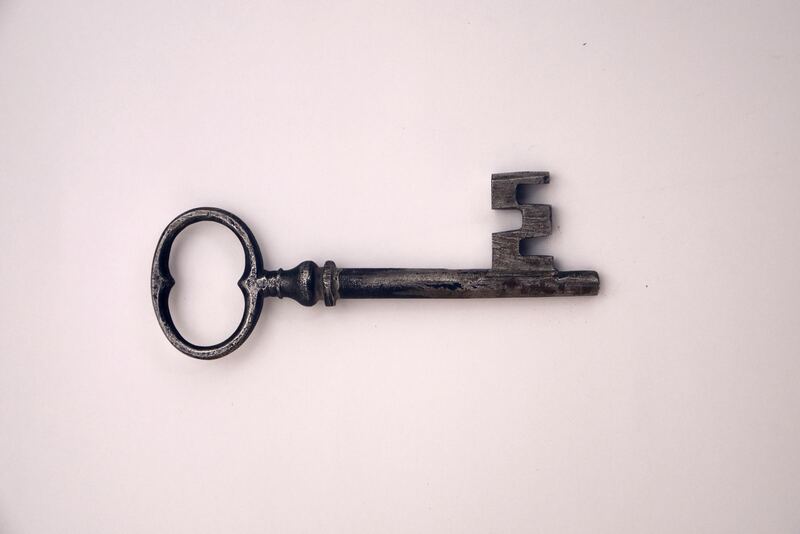
Angels carry in their hands trumpets, vials (bowls), and keys. 

These symbols represent the "seals" of their stewardship, or in other words, their sealing power.

   - Trumpet.  Take the symbol of a trumpet ─ it is the insignia of one who speaks the word of God and who can bind (seal) on earth as in heaven. 

   - Vial.  A vial holds the blessings or judgments of God. 

   - Key.  Keys unlock or lock bottomless pits and gates and doors.

Today I'd like to attempt to clarify a few things about the sealing power because it is not what we generally suppose. 

After all, most of us picture the Prophet having the sealing authority and then delegating that authority to temple workers who seal happy couples for time and for all eternity on their wedding day at an altar in the Pocatello Temple.

But hold on.  What if the sealing power came not by "the will of man; neither by father nor mother; neither by beginning of days nor end of years; but of God; and it was delivered unto men by the calling of his own voice, according to his own will" (JST Genesis 14:28-29)?

How would it change our understanding of the sealing power if we didn't picture a pyramid structure (hierarchy) in which the President sits at the top and chooses who his authority trickles down to?

Because, here's a curve ball: our current teachings about the priesthood after the order of the Son of God don't add up when we consider the context of the new and everlasting covenant given to Enoch WHEN ADAM WAS STILL ALIVE AND KICKING.

So is it possible we're missing something?

The way we administer priesthood authority while ignoring the "voice of God" is like trying to bake a cake without flour or cookies without butter.

Not very appetizing.
Picture
A Sealer is a Seer

Does holding the sealing power make one a seer or vice versa?

For argument's sake, let's say Enoch was 308 years old when Adam died at the ripe old age of 930.  
How old was Enoch when he received his endowment from God? 

   Enoch was twenty-five years old
   when he was ordained
   under the hand of Adam;
   and he was sixty-five 
   and Adam blessed him.


(D&C 107:48)

What is the difference between:

   (1)  Ordination by the laying on of hands.

   (2)  Receiving the "blessings" of the Fathers.

   (3)  Being called by God's own voice.

How did Enoch receive his calling and election?  How did he obtain the sealing power when he was "but a lad" (Moses 6:31)?

In the Book of Moses we learn "the Spirit of God descended out of heaven and abode upon him [Enoch]" (Moses 6:27) and he received his spiritual endowment:

   And the Lord said unto Enoch:
   Anoint thine eyes
   with clay,
   and wash them,
   and thou shalt see.   

   Behold my Spirit is upon you,
   wherefore all thy words
   will I justify.


(Moses 6:35, 34)

It was by God's own voice ─ just as it says in JST Genesis 14!  And "from henceforth came the saying abroad in the land:

   A seer 
   hath the Lord
   raised up
   unto his people.


(Moses 6:36)

Was Adam jealous?  Did Adam march down to Enoch's bishop and demand he pull his temple recommend for being out-of-order?

   Nope. ​
Picture
"Windows of Heaven"

The point of that lead-up discussion about the priesthood was two fold; first, we're going to circle back around to Enoch in the next post when we discuss translation; and second, I wanted to loosen up our minds a bit to introduce some concepts that may be new to some of us.

I failed to mention in the last entry that "signs" are given at the opening and closing of seals (see, 
The Deeper Magic: Signs and Seasons.)  

But I want us to ignore the Seven Seals from the Book of Revelation for a moment (they get all the press) because we first need to talk about seals in general terms.

I am using the word "seals" 
―​ but the word itself is not important, just the idea.

​There are seals placed between this world and others (think of them as windows between kingdoms) that pertain to the translation of the spiritual to the temporal and of the temporal to the spiritual.


When the scriptures talk about the "windows of heaven" they are referring to these intersections (convergences or junctions) between worlds (kingdoms).  The opening of seals allow movement between this word and the spirit world, for example, or between the spirit world and the Celestial Kingdom.

We'll see in the course of this series that the doctrine of sealing is closely related to the doctrine of translation.


Through seals (think: windows) a person may pass through either physically or spiritually ─ but so may blessings or even a document (such as John's parchment from D&C 7).

The primary function of seals is to allow for the exchange of grace.


The sealing power is nothing more or less than having the keys to open or shut a seal.
Picture
A Primer on the Sealing Power

You may be wondering if we can open seals on this side of the window, or does it require someone on the other side?  The answer is, Yes.


For example, a seal opens when you receive your calling and election. 

When a seal is opened, it begins "a time."

Now that we have our calling and election, we're on the clock; tick tock (don't worry, there won't be a test).  All "times" will eventually end, but they are of various durations (sort of like dispensations).

Using the example of receiving one's calling and election, we are placed upon a path to progress onward ("press forward") in order to make our calling and election "sure" while the window (seal) is open.  We could even call this the "covenant path."

The example we generally use for the sealing power is marriage.  Picture a happy couple on their wedding day.  The opening of the seal is important because through the opened channel (window) the couple may receive blessings, privileges, vows, oaths, connections, associations, conversations, and so forth. 

Practice Pointer:  Don't forget the principle of reciprocity.  Remember: windows go both ways; meaning we receive grace for grace (D&C 93:12).

You see, if the window were one-way, we would merely be acted upon.  But because we are agents unto ourselves, we can influence the order of heaven by our faith on this side of the window.

Now, going back to our happy couple, they must press forward and secure the promises before the seal closes (what we might call receiving the "more sure word of prophecy"). 


In other words, the opening of a seal is a promise being extended (an opportunity) by the Lord.  But windows open and windows close.  The appointed time between those two events may be called "a time," or a day, a generation ─ or even a dispensation, depending on the context.

But for now, just remember that there are OCD angels who record the opening and closing of seals, because all things are done in order and a faithful record is kept in heaven.
Picture
Broken Seals

Now we come to the crux of the matter.  What happens when we fail to secure the promises?  For example, if our happy couple becomes disenchanted with each other and divorce.  What happens to that seal?

Well, it's fairly common for seals to be broken.  But all is not lost!  The day of grace may have passed, but as we circle back around, another opportunity will come.  The Lord always extends another chance and his hand of mercy is always outstretched.

But, yeah, there's no way to put it gently: we beefed it.


   Wherefore he broke
   my covenant,
   and it remaineth with me
   to do with him
   as seemeth me good.


(D&C 40:3)

Definition Time:  The two most common ways we "break" a seal are when we:

   (1)  Receive grace but do not return grace in kind; and/or

   (2)  Attempt to force open a seal using brute force ("the arm of flesh") instead of the Lord's way.

I think this deserves further explanation: 

   1.  We break a seal when we receive grace, but do not return grace (we become black holes in which grace cannot escape the event horizon of our selfish pride).

   2.  Instead of waiting upon the Lord and seeking blessings through faith in Him, we use the crowbar of our own strength attempting to pry open the window (think of Lucifer), causing it to shatter.  


The Lord said "they have broken mine everlasting covenant,"  but how?  What did they do?  "Every man walketh in his own way" (D&C 1:16).

Whereas the glory of God is always reciprocal.  A seal, in other words, opens a space for two (or more) things to be united; but the sealing occurs only if those two (or more) things share in each other's grace (light and truth); this is the Glory of God.  This is how we become "one" with each other and Him.

(Unless, of course, we're talking about the flip-side of the sealing power, which is the power to "loose" on earth and in heaven; that is, to sever the link between two (or more) things so that they are "cut-off" from each other 
─ which means they cannot share grace between them.)
Picture
The Doctrine of Agency

Here's the important part: How soon (or long) it takes for another opportunity to come around after we've broken a seal depends upon several factors, but one of them is our faith (repentance) and desire.

We have the ability to expedite the renewal of a seal more than we think.  So never give up or lose hope, because Christ will never give up on us.  His charity never ever faileth.


For many of us, we're waiting around for God to do something, like we're living life sitting in a boat being carried out to sea by the tide.

Sure, we watch the shoreline shrink as we're pulled out to sea, and so we hope and wait for the tide to turn.  "Come on, God, send me a favorable wind! Don't you see I'm adrift?"

In this way we're waiting to be "acted upon" rather than picking up our oars and rowing, or jumping out of the boat and swimming back to shore.

Meanwhile, as we're counting our remaining provisions in the boat, hoping they'll last until the wind turns, we sit in the boat and are lulled to sleep by the ocean's hypnotic tides; we become accustomed to the monsters of the ocean that surround us, all slime and spines, jelly and teeth ─ awful things we begin to think of as normal ─ and bit by bit we lose our humanity in the water's cold, dark depths.

And God is calling us, "Hey, wake up; you've got two arms and two legs; you've got agency, so use it!"

To become agents unto ourselves means we become co-creators with God, standing ("walking") with Him against the tide of entropy.

The Lord responds to our faith!  We determine, in large measure, which seals are to be opened.

   For behold, I am God;
   and I am a God of miracles;
   and I will show unto the world
   that I am the same yesterday,
   today, and forever;
   and I work not
   among the children of men
   save it be according to their faith.


(2 Nephi 27:23)
 
The seals placed between the temporal and the spiritual worlds are watched over by those who hold “keys” with which to administer the blessings.  What son asks his father for a fish and receives a serpent?

So my friends, knock on those seals. 

   Pound on them. 

And keep knocking.
Picture
Blessed to Curse?

Nephi's experience of receiving the "sealing power" from God is interesting.

   Blessed art thou, Nephi
   [the Lord pronounces a blessing]
   for those things
   which thou has done . . .
 
  [he has returned grace for grace received]
   
   Behold, thou art Nephi,

   and I am God.
   Behold, I declare it unto thee
   in the presence of mine angels,

   [notice the formal covenantal language: an oath sworn by the voice of God before angelic notaries]
   that . . . I give unto you power,
   that whatsoever
   ye shall seal on earth
   shall be sealed in heaven;
   and whatsoever ye shall loose
   on earth shall be loosed
   in heaven;
   and thus shall ye have power
   among this people.


(Helaman 10:6-7)

But no one ever reads the next part, in which the Lord gives VERY INTERESTING HYPOTHETICALS of the appropriate use of the sealing power.

   (1)  
If ye shall say unto this temple it shall be rent in twain, it shall be done (Helaman 10:8).

Whoa.  Things got serious, fast.  Why in the world would the Lord START THE LIST with using the sealing power to destroy the temple?  Isn't it supposed to be his house?  Then why is He getting bids for its demolition?

   (2)  If ye shall say unto this mountain, Be thou cast down and become smooth, it shall be done (Helaman 10:9).

Can anyone explain why mountains are always in need of moving?  Anyone?

   (3)  If ye shall say that God shall smite this people, it shall come to pass (Helaman 10:10).

Hold on!  Where are all the warm fuzzies about using the sealing power to marry newlyweds in pretty dresses with tiered cakes and garter-throwing?

Why is the Lord focused on Nephi using the sealing power to smite?

Well, these were just hypotheticals, right?  I'm sure Nephi had better uses for his super-sealing powers.

   O Lord, let there be a famine
   in the land, to stir them up
   in remembrance of the Lord
   their God, and perhaps they
   will repent and turn unto thee.

   And so it was done,
   according to the words of Nephi.
   And there was a great famine
   upon the land.


(Helaman 11:4-5)

Yikes, I'm not liking this new brand of sealing power.  Bring back the bouquets of lilies and roses!

But just so you know we're not proof-texting things here, consider the example of Elijah, the sealing-prophet-in-chief:

   And Elijah said unto Ahab,
   As the Lord God of Israel liveth,
   before whom I stand,
   there shall not be dew nor rain
   these years,
   but according to my word.


(1 Kings 17:1)

   Double Yikes!

Practice Pointer:  The sealing power is a mirror.  It seals and binds according to the hearts of the people.  If we're wicked, the sealing power calibrates accordingly, and we get famines and droughts.

And let's not forget this whole Dispensation began with this gusto-draining-whopper:


   To them is power given
   to seal both on earth
   and in heaven

   [so far so good, right? Sealing those happy couples in the temple?  No.]
   the unbelieving and rebellious
   Yea, verily, to seal them up
   unto the day
   when the wrath of God
   shall be poured out
   upon the wicked.


(D&C 1:8-9)

So how do we see the sealing power being wielded today?
Picture
0 Comments

Sifting

5/19/2023

4 Comments

 
Picture
Looking for Faith in All the Wrong Places

After spending the past week pondering the doctrine of translation of Enoch and John (for the next entry in the Deeper Magic series), this morning I felt impressed to share a brief post on something completely unrelated.

To wit, to make the point that our faith is best reflected in the way we spend our money.

Last weekend I took my family to tour the Open House of the new Saratoga Springs Utah Temple.  I loved it; I ogled the stained glass windows and the stair steps made from three different kinds of marble inlaid with brass. 

In every room I entered I felt transported to another world.  Sitting in the Celestial Room with my family, I never wanted to leave. 

   It felt like heaven.

And that, my friends, is the snare.  What a great trap it is!  Satan knows if he can get us to feel comfortable and elevated emotion in luxurious surroundings ― and (here's the key) to equate the tranquility of opulence and wealth with the Spirit of God ― then our faith-impulses will begin to resonate with the Great and Spacious Building more than the humble stables in which straw mangers and our Savior are found.

If a grand display of wealth indicated "Holiness to the Lord," then the Catholic Church and its cathedrals beat us to the punch more than a thousand years ago. 

Yesterday I ​read an extremely interesting and perceptive commentary from a woman who shared her views on the Open House of the Saratoga Springs temple.  I encourage you to read it.  (Abby Hansen, "Why Bishop Waddell's 60 Minutes Response Felt So Wrong," Exponent II, May 17, 2023.)
Picture
[When your portrait is photo-bombed by a rowdy crowd]

Sanctuaries

​It's impossible not to see a fulfillment of Moroni's words as we read headline-after-headline in the news about the Church's finances.  Or do we turn a blind eye?  Worse, do we seek to justify the Church's actions?

   Why have ye built up churches
   unto yourselves to get gain?


(Mormon 8:33)

Here's the thing: the sleight-of-hand skills needed to convince a group of Christians that hoarding $179 billion is actually godly and a good thing requires Master-Mahan-level expertise.

How do we justify it?  A rainy day fund?  Joseph in Egypt's 7-year famine?  Standing independent of every other creature under heaven holding Apple Stock?

Nope.  The only way to pull off the greatest doctrinal heist of all time (making the switcheroo with God and Mammon) is to "trample" or "transfigure" the holy word of God, to the point we use scriptures to justify the very thing those scriptures forbid!

   Why have ye transfigured
   the holy word of God?


(Mormon 8:33)

Isn't it interesting how Latter-day Saints take great pride in our Temples and their stunning beauty?  We adorn them with the finest craftsmanship and materials as if they were Ritz Carlton luxury hotels, with gold leaf and crystal chandeliers and hand-cut carpets, and call it the House of the Lord (as if Jesus requires Five Star accommodations).

   Ye do love money,
 
 [there's the root of all evil]
   and your substance,
   and your fine apparel,
   and the adorning of your churches. . . 


(Mormon 8:37)

But the real question is why we consider these grand edifices to be a sign of our faith?  How is being rich a mark of our righteousness? 

Think about it: the hallmark of our religion is a gold-plated statue of an angel atop a luxurious building who I AM LITERALLY QUOTING telling us that is bad, bad, bad.  In a great irony, we have enrobed Moroni in gold as a symbol of our faith, which is not to care for the poor, but to lavishly dot the earth with fine sanctuaries.

   I know that ye do walk
   in the pride of your hearts. . . 
   and your churches,
   yea, even every one,
   [well, I guess that includes us]
   have become polluted.


(Mormon 8:36)

I never understood until now what "an embarrassment of riches" means.  I am embarrassed.
Picture
Real-World Financial Implications of the Way Tithing Impoverishes a People

Isn't the quality of our faith demonstrated in how we care for the widows, elderly, orphans and poor?

After all, James taught that "pure religion" is simply taking care of the needy:

   Pure religion
   and undefiled before God
   and the Father is this,
   To visit the fatherless
   and widows in their affliction,
   and to keep himself unspotted
   from the world.


(James 1:27)

Look at that last part, to keep ourselves "unspotted from the world."  Well, the SEC scandal involving the Church and Ensign Peak demonstrates that the Church has NOT prioritized keeping itself "unspotted from the world" ― I mean, it invited Mammon up to its penthouse suite to engage in heavy petting.

   Why do ye . . . get gain,
   and cause that widows
   should mourn before the Lord,
   and also orphans to mourn
   before the Lord?


(Mormon 8:40)
​
Forgive me for preaching to the choir, but why is it that Utah is dead-last in the nation in saving for retirement?  Why did our parents and grandparents sacrifice their golden years, worried about making ends meet as they lived from social-security-paycheck-to-paycheck, scrimping to serve missions in old age, and taking out reverse-mortgages to put food on the table in their 80s, after having spent a lifetime of paying tithing to enrich a Church who stores tithing in its digital silos?

   Look! The wages
   you failed to pay
   the workers who mowed
   your fields are crying out
   against you.
   The cries of the harvesters
   have reached the ears
   of the Lord Almighty.


(James 5:1, NIV)
Picture
The Sifting is Underway

I promised to keep it brief, and this is about as brief as I can be. 

I am going to conclude by sharing a poem I wrote this week in light of all these things, which captures my feelings and the strivings of the Spirit in me.

Sifting

​​​Growing tall
scattered among wolfsbane
betwixt nettle
    and loathsome vervain
 
the Wheat waited.
Feeling the early frost they knew
the Harvest followed morning
dew: soon the scouring of weeds
​and diseased grain
     ―everything wicked and profane 

would wither beneath a silvery sun
uprooting each and every one.

And the Wheat waited.
Until Harvest day arrived at last
and they beheld the troublesome chaff
float away on a late summer's breeze
only to be plucked by birds
who lay concealed 
     among the orchard trees.

The field was theirs at last
(naught but Wheat remained)
and they rejoiced beneath
the rustling of wings
awaiting their reward
foreordained
     now the sifting had occurred.

Harvest time was come
and the Wheat danced
in the evening light
glad they had not succumbed like chaff
     when clouds gathered overhead.

Puzzlement filled their ranks
as fire filled the field with flame.
How could this be─
     the Tares had all fled!

The Lord to them explained:
Ye who knew the ease of wealth
amid your worldly cares;
     what reason had ye
     to believe
​     ye were not
     the Tares?
Picture
4 Comments

Three Years of Tough Love

5/17/2023

2 Comments

 
Picture
Three-Year Mission to Seek Out New Life and New Civilizations

Happy anniversary, Owls; three years ago we began this journey together.

The traditional third-year anniversary gift is leather (looking at you, Elijah's girdle, 2 Kings 1:8), but in modern times it has become customary to give crystal.

When I think of crystal, I am reminded of John's vision of the New Jerusalem:

   And he shewed me a pure river
   of water of life, clear as crystal,
   proceeding out of the throne
   of God and of the Lamb.

   And on either side of the river,
   was there the tree of life,

   [does this mean the tree's trunk split upon each bank for the water to pass under it?]
   which bare twelve manner of fruits. . .
   and the leaves of the tree
   were for the healing of the nations.


(Revelations 22:1-2)

So my hope for us is to receive the clear crystal waters that nourish the roots of God's family.  Owl of the Desert is my modest attempt to spread the word of God through poetry and prose, trying to trumpet the good news of God's unending and eternal love.

I have made new friends through this effort who have greatly blessed my life.  I love you and I bring you the love of the Stake Presidency. . . . uh, wait a minute.

Three years!  I went back and counted 273 blog posts and 67 poems during that time.  We've covered a lot of ground and a variety of topics, but at the end of the day all of them have been about only one thing:

   Charity.  The pure love of Christ.

My first blog, "A New Earth" was posted on May 16, 2020 during the height of COVID and the government shut-downs.  Back in 2020, during those challenging times, I wrote:

"The only way we'll arrive at the New Earth is to live the New Commandment."  The commandment is still new, I think; it hasn't become old because we haven't kept it yet (if we had learned to love like Christ, Zion would have descended already).

          A new commandment
          I give unto you,
          that ye love
          one another
          as I have loved
          you, that ye also love
          one another.


(John 13:34)

So it's time to return and report on how we're doing living the Lord's law of love.  Have we grown in unity and brotherhood and sisterhood over the past three years? 

   That is the true measure of success.
Picture
Biting My Tongue Makes it Bleed

Over the years, you may have noticed I have become more bold.  I suppose it's because we all sense our mortality and I don't know how much longer I have been allotted here on earth, or when the internet will catastrophically go dark forevermore.

So I try not to mince words as I thrust in my sickle while the day lasts.  We have a fleeting window in which to communicate across continents and to hold one another through a web of digital rainbows.

It may surprise you that I frequently bite my tongue (figuratively-speaking); yes, despite appearances I really do try to remain circumspect and temperate in what I say.

The reason for this ― trying to mind my P's and Q's ― is because as an ambassador of the Lord Jesus Christ I don't want to say or do anything that might reflect poorly on Him (neither do I want to offend the tender Owls who are new here).

But as far as I can tell, signs that the love of men is waxing cold continue unabated (yes, even in the Church).

What can we do?  And how much time is left in which to do it?
Picture
"The Bond of Perfectness"​

I made the mistake in college of asking Heavenly Father for the gift of Charity.  I wanted His love to flow through my veins like blood.

I didn't know what I was asking for.  Now I realize the only way to be clothed in the robes of Charity is to undress ourselves of everything else (yes, everything) that we might put on Christ's skin (garment), slain for us in the Garden to cover our nakedness.


   And above all things,
   clothe yourselves
   with the bond of charity,
   as with a mantle,
   which is the bond
   of perfectness and peace.


(D&C 88:125)

This verse holds a key, I think.  It explains what Christ meant when He told us to "be perfect" even as our Father in heaven in perfect (Matt. 5:48).

The verse teaches us that the particular kind of perfection we're seeking is found in the "bond of charity" (which it equates with "perfectness").

Not Greek-perfection, no, but Christ-perfection.  What is that?  Moroni told us that if we "love God with all our might, mind and strength, then is his grace sufficient for us, that by his grace we may be perfect in Christ" (Moroni 10:32).

We're talking about a mantle of love that can't be bought off-the-rack; one we cannot be given by mortal hands
― for the garment of the holy priesthood is obtained at the edge of a knife's blade; one that is bloodied and tailor-made for us by Christ himself.
Picture
A Field of Diamonds

Once upon a time when I was a young newlywed my father gave me a priesthood blessing and told me that one day I would look back at my life, over all of the trials that would be part of my journey 
― all the heart-wrenching anguish we experience as part of this fallen world, as if walking over hot coals and shattered glass, drawing blood from our bare feet ― and lo, looking back I would see only a field of diamonds.

Now in middle-age 
― bald with a root-beer belly, five children and a mortgage, trying to balance paying the bills with seeking first the kingdom of heaven while juggling changing the oil in my car with filling the oil in my lamp ― I can say that my father's promise has been fulfilled.

Looking back, I see diamonds; I see the cut gemstones the Lord placed along the path leading to the Tree of Life, glowing with His inner-light and glistening in the blood of those who had passed by barefoot (having removed their sandals upon holy ground); and I recognize how those trials changed me. 

I am no longer 
the man whose feet bled; in some areas I've softened and in others I've hardened; the Savior's object was not to give me shoes but to transform my soles, and soul, so that I might become a new creature molded in His image.

As a father and as a son, thinking of Isaac upon the stone altar beneath Abraham's knife, I think perhaps I am beginning to understand at last what it was all for.


I no longer crave escape nor deliverance ― simply love.  Whether in life or in death, the only riches worth having is that found in the everlasting arms of God's Love.

I have learned that the love of God cannot be bottled or tamed; it is always changing, churning ― like living waters.  It can become hard as ice or soft as drifting snow; it can seemingly evaporate without notice, only to return as a blinding blizzard.

God's love is liquid and air and ice.

But like living waters flowing through the earth’s veins, love always returns in the end to the place it belongs; no matter how it was spent ― no matter what shape it takes ― love always finds its way home.

   To God.
Picture
Heaven is Here

One of the first blogs I wrote back in 2020 was about shifting our perspective on heaven, where we don't view heaven as a place we go after we die, but something we create here on earth.  After all, earth was, and will be again, Eden (2 Nephi 8:3).

"The Garden of Eden is the Holy of Holies, and the dwelling of the Lord . . . and Mount Zion [is] the center [or] navel of the earth" (Jubilees 8:19).

While it is convenient to think of this world being blown up in a ball of flames at the Second Coming, rendering our choices here-and-now as largely irrelevant whilst the righteous are raptured ―  the fact of the matter is we have real skin in the game; we aren't spared from the destructions of the Second Coming but are delivered from them as we create pockets of heaven on earth, literally.  These are "holy places" we are to stand in, which the scriptures describe as being a "refuge from the storm" (D&C 115:6) for the righteous.

So my dear friends, there is a better world out there, but I'm not talking about the afterlife; it is the one we build here on earth, together ― a dwelling place worthy of the gods, for which words are wholly inadequate, waiting for them who love God and who love as God. 

What's holding us back?

Well, Nephi can tell us.  Nephi knew as much about the last days as anyone; he used Isaiah to give us an insider's-view of the end times. 

But when Nephi quoted Isaiah 49, he made a fascinating emendation in his record.  Here is what Isaiah wrote:

"Listen, O isles, unto me; and hearken, ye people, from far; The Lord hath called me from the womb; from the bowels of my mother hath he made mention of my name" (Isaiah 49:1).

Okay, now look at the major revision Nephi made (highlighted):

"And again: Hearken, O ye house of Israel, all ye that are broken off and are driven out because of the wickedness of the pastors of my people; yea, all ye that are broken off, that are scattered abroad, who are of my people, O house of Israel. Listen, O isles, unto me, and hearken ye people from far; the Lord hath called me from the womb; from the bowels of my mother hath he made mention of my name" (1 Nephi 21:1).

He added an entire sentence!  And what a beefy-bunch of meat it is for us to chew, tough as beef jerky that imperils our root canal.  The crux of it comes down to this: what causes the Lord's people to be "broken off" and "driven out"?  Nephi says it's "because of the wickedness of the pastors of my people."

Well, what was Nephi talking about?  Could it be, for example, the way the latter-day Church continues to amass authority and wealth in a manner incompatible with the pure love of Christ?

Could it be the way the Church makes a mockery of God's love by enshrining a managerial corporate structure as a priesthood-equivalency?

Could it be the way the Church pollutes the holy word of Christ by preaching precepts that are antithetical to charity (see, e.g., "Divine Love" by Elder Russell M. Nelson, Ensign, February 2003; see also, Elder Dallin H. Oaks on "Same-Gender Attraction")?

This is why I've spent so much time over the past three years speaking about authority and priestcraft and inequality and priesthood and keys ― because the way we love each other determines the kind of world we can create. 

And Zion cannot be built but by a celestial love.

The scary thing is Nephi uttered a dire warning to those who invoke priesthood authority but who aren't following the Lord's law:

   The Lord hath forbidden this thing
 
 [i.e., priestcrafts]; wherefore,
   the Lord God hath given
   a commandment that all men
   should have charity,
   which charity is love.
   
   And except they should have charity
   they were nothing.

 
   But the laborer in Zion
   shall labor for Zion;
   for if they labor for money
   they shall perish.


(2 Nephi 26:30-31)

As I watched the 60 Minutes exposé on TV about the Church's finances, detailing the elaborate lengths Church leaders took to conceal its wealth from the members by deceit, fraud, and lying ― I thought of Jacob's words:

   Wherefore, their treasure
   is their god.
   And behold, their treasure
   shall perish with them also.


(2 Nephi 9:30)
Picture
A New Day is Dawning

In 1820, Joseph Smith was told to join no churches.  He was 14 years old.

Ever since, we've been asking the same question: "Is the Church true?"  But this question is poorly constructed; it reflects a spiritual immaturity.  The whole notion has a spirit of sectarianism that was deeply rooted in the religious establishment of nineteenth century America.

So it is understandable that Joseph would ask it, being a creature of his culture and time (as we all are).  But we're not 14 years old anymore.

Childhood crushes shouldn't dominate the landscape of an adult, mature love.

The Lord showed through His condescension and mercy that He can work through compromised institutions, corrupt leadership, and craven communities.  The Savior's gift is to draw good from imperfection, to make things work together for good even when His ingredients are lackluster. 

God ministers in chapels that preach falsehoods; He comforts in homes filled with contention; He blesses the honest-hearted seekers of truth even when they are surrounded by mists of darkness and the errant traditions of men.

In other words, instead of asking, "Is the Church true?" we could start asking, "Is the Church loving?"


   And none doeth good,
   for all have gone
   out of the way.


(D&C 82:6)

These words apply to me as much as anyone else (which is why, when the Lord tells us to "speedily" repent (D&C 109:20), I try to be as Usain Bolt, but instead of spandex I wear sackcloth). 

   And my vineyard
   has become corrupted
   every whit.


(D&C 33:4)

But it's okay! 


We don't need another church ― we need to connect with the Church of the Firstborn.  So rather than lamenting the faulty foundation of earthly institutions built on sand, we can work to draw down the church of heaven (you know, the one built upon the rock of our Redeemer).

Remember, the whole point of the Restoration (before it became hijacked by banking collapses, polygamy, ambitious men, and wealth-colonization) was to fulfill the everlasting covenants of the Father.

   And this is mine
   everlasting covenant,

   [no, we're not talking about marriage]
   that when thy posterity
   shall embrace the truth,

   and look upward
   [where are we looking?]
   then shall Zion look downward,
  
 [where does Zion come from?]
   and all the heavens shall shake
   with gladness, and the earth
   shall tremble with joy
  
 [a new earth being born].

   And the general assembly
   of the church of the firstborn

   [which church?]
   shall come down out of heaven
   [where is this church?]
   and possess the earth
   and shall have place
   until the end come

   And this is mine
   everlasting covenant

   [no, still not marriage, you horn-dog].

(JST Gen. 9:22-23)

The Lord is working with, and among, all peoples, faiths, and traditions, to bring about His Zion, calling His sheep who can hear His voice.

And we're part of it!
Picture
The Full Stature of Christ

Paul told us that we are children who need to grow up spiritually (whereas Christ told us we are adults who need to become like little children; an illuminating paradox).  To assist in our maturation, the Lord gave us apostles and prophets and evangelists and pastors and teachers and parents and friends and grandparents and uncles and aunts and Mr. Fred Rogers (see, Ephesians 4:11).

So the good news is we're surrounded by helping hands in the nursery of life.  As we come unto Christ, Paul taught, the community of believers become "edified" and united in their love for one another (Ephesians 4:12).  We matriculate when:

   We all come in the unity
   of the faith, 
   and of the knowledge 
   of the Son of God,
   unto a perfect man,
   unto the measure and stature
   of the fulness of Christ.


(Ephesians 4:13)

Looking at that verse, what is perfection, according to Paul?  Is the "fulness of Christ" something we attain unto individually, or is it achieved collectively, when the entire body of Christ come together to do the will of their Father?

The challenges and tribulations we face before the Second Coming are going to require more than just "holy men" and holy women; it will require "holy communities" comprised of those whose hearts are knit together in love. 

Strangely, most of the discussions I see going on is still concerned with who-and-what-is-right (as if this were still 1820) 
― so much so that I worry we're missing the bigger picture, which is: a Zion people will need to be able to govern themselves (following the Lord's revelation, of course).

This will require compromise and common consent instead of running to the nearest authority-figure to settle our disputes.

Picture the angelic police hauling us down to the Station for a line-up, making us stand shoulder-to-shoulder.  Do we think the Lord is looking at our denominational affiliations?  Or is He looking for those who love?  Because disciples of Christ are known not by their titles and offices and priesthood, but by their love.


   By this shall all men know
   that ye are my disciples,
   if ye have love one to another.


(John 13:35)

Would we stand out in a line-up?

Zion will require us to prioritize people over traditions; we will need to choose love over doctrine; and to outgrow our tribalistic-view of others being good-or-bad based on whether they hold the same beliefs as we do.

Why?  Because i
t's going to burn.  I'm not talking about jalapeño-level-heat; not even serrano-chile-hot ― we're going see the Lord turn the spiritual Scoville Scale all the way up to Carolina-Reaper-levels (see, Matt. 13:30).
Picture
​Infants on Thrones

Heaven is full of weirdness, so it should not surprise us that Zion will be weird too.  I don't think Zion will resemble our comfortable churches and temples because Joseph Smith indicated we're going to be in for a surprise:  "Now I make this declaration, that those things which John saw in heaven, had no allusion to anything that had been on the earth previous to that time."

(Let that sink in; it means we're going to encounter novelties in Zion, so keep an open-mind; it will take us outside of our comfort zones.)

"John saw curious looking beasts in heaven ― he saw every creature that was in heaven.... I suppose John saw beings there of a thousand forms that had been saved from ten thousand times ten thousand earths like this; ― strange beasts of which we have no conception ― all might be seen in heaven. 

"The grand secret was to show John what there was in heaven: John learned that God glorified himself by saving all that his hands had made, whether beasts, fowl, fishes, or men."

(Joseph Smith, History, 1838–1856, volume D-1 (1 August 1842–1 July 1843), p. 1523.)

Let's take an example of something that is perplexing: the fate of children who die before the age of accountability.  If we were in Sunday School, the discussion would end with the hopeful refrain, "They are saved through the atonement of Jesus Christ."

Okay.  But is it more complicated than that?  Are these children married in heaven or single?  Because "in the resurrection the angels neither marry, nor are given in marriage (Matt. 22:30).  But we believe they go to the Celestial Kingdom, right (see D&C 137:10)?

Reconcile these ideas with what Joseph Smith taught:  "But as the child dies so shall it rise from the dead, and . . . will never grow — it will still be the child, in the same precise form as it appeared before it died . . . but possessing all the intelligence of a God.  Children dwell in the mansions of glory, and exercise power, but appear in the same form as when on earth.  Eternity is full of thrones, upon which dwell thousands of children, reigning on thrones of glory, with not one cubit added to their stature."

(History, 1838–1856, volume E-1 (1 July 1843–30 April 1844), p. 1978, The Joseph Smith Papers.)

Oh boy.  That sounds a bit messed up; it throws a monkey wrench in the doctrinal teachings on marriage and the new and everlasting covenant, doesn't it?

My point is not to freak anyone out with images of infants on thrones wielding God's knowledge and power, a la Alia in the novel Dune.  It's that we need to become more broad-minded than we currently are if we expect to be part of Zion.
Picture
President Kimball

Years ago I was invited to co-author a chapter for the book, 
Presidents of the Church.  I spent a lovely summer in the Church History Library and in the BYU Special Collections researching the extraordinary life of President Spencer W. Kimball.

In 1978, President Kimball inaugurated a new day in which all races could receive the priesthood and their temple ordinances.  In other words, President Kimball brought us a little closer to heaven (some view the change as being about the priesthood, but what they don't understand is that it was always about love).

Read these words from Official Declaration 2:

"As we have witnessed the expansion of the work of the Lord over the earth, we have been grateful that people of many nations have responded to the message of the restored gospel, and have joined the Church in ever-increasing numbers. This, in turn, has inspired us with a desire to extend to every worthy member of the Church all of the privileges and blessings which the gospel affords."

The point I want to make is that while, yes, bringing about Zion is the Lord's work, we are fellow-laborers with Him in this; so how can we be more proactive in inviting heaven down?  I sense that the Lord expects us to approach Him boldly with our anxiously-engaged initiatives to make the desert blossom as a rose.

What is surprising is the fact the Lord doesn't unilaterally send thunderbolts from heaven to knock some sense into us (or the leaders of the Church).  In 1978 the Lord didn't cram His will down our gullets.  Since He's not overbearing, He waits patiently upon us to approach Him and to plead with Him with firm minds and hearts filled with real intent in shaping a better future. 

Here's the point: the 1978 revelation would not have occurred but for President Kimball's insistence and faith with the Lord and (the real challenge) with his Brethren. 

As I researched the legwork it took for President Kimball to prevail upon the Brethren, it became apparent that the one who needed convincing the most was not the Lord but His people.  It begs the question: in what areas, today, are we holding the Lord back because of our unbelief?  What blessings is the Lord more-than-willing to grant His people if they would but ask Him? 


It took a man of President Kimball's courage to rise up to the full stature of Christ and show us that love transcends our traditions.

   And he was only 5'6"!
Picture
2 Comments

The Deeper Magic: Signs and Seasons

5/8/2023

3 Comments

 
Picture
Part 1 ― The Deeper Magic: Treason and Triumph

Signs of Birth

I am crummy at cutting umbilical cords.

At the birth of each of my children, the nurse handed me a pair of long scissors with which to sever the cord, and each time I tried to make a clean cut in one snip but failed. 

It generally took me (butter-fingered Edward Scissor Hands that I am) two or three snips to succeed.

Every father (and let's not forget the mother) knows a certain relief in that moment: cutting the cord is the culmination of months of waiting and planning and worrying and hoping.

   So it is with the Second Coming.

Paul compared the tribulation period preceding the Lord's return to a woman giving birth; we call her contractions the "signs of the times."

   For yourselves know perfectly
   that the day of the Lord
   so cometh as a thief in the night.

   For when they shall say,
   Peace and safety;
   then sudden destruction cometh
   upon them, as travail upon a woman
   with child; and they shall not escape.

   But ye, brethren, are not in darkness,
   that that day should overtake you
   as a thief.


(1 Thess. 5:2-5)

Paul's analogy is apt.  How do we know it's time to go to the hospital for the delivery?  Well, I remember watching TV while timing my wife's contractions on my watch, marking the intervals between them ("Time!").  When her contractions narrowed to several minutes apart, we drove to the hospital.

Before the Second Coming, the Earth will convulse with the contractions of a birth mother.  The valleys and mountains shall tremble (D&C 43:18); the heavens shall shake; and her water shall break and flow down (D&C 133:29); there will be birth and afterbirth as the earth is blanketed, first in darkness and then in glory (D&C 133:51, 69).

But what is the Earth giving birth to?

   A paradisiacal (terrestrial) glory.
Picture
Signs of Contractions

No one knows the day or the hour a baby will come, it's true, but the fact the mother begins having contractions isn't a shock to anyone.

We are prepared with our overnight bags packed; we knew this was coming; after all, there were the signs of a growing belly and the baby kicking in her womb; and don't forget the insatiable cravings for peanut butter on pickles ― all these things, coupled with measuring the months since conception, gives us a pretty good idea of the due date.  (Only one of our children was born on their due date; such an obedient child).

When the contractions become serious enough, we summon the midwives who monitor the mother's cervical dilation; there's a lot of tears, hand-holding and ice-chewing (see D&C 133:26).

But here's the point: while contractions are painful (or so my wife tells me; she's given birth five times but I have had five kidney stones, so let's call it even), that pain is also accompanied by intense joy. 

How is that possible?  How can contractions be called a "good" sign when they're excruciatingly painful? (Is there an epidural for the last days?)  It's because we're filled with excitement and anticipation that the wait is finally over and the baby is on its way: it's time.

How close apart are the contractions we're seeing in 2023?  Is it time to grab our bags and head to the hospital?
Picture
A Brief History of Signs

​We need to understand a few things about signs to help us be prepared ― for the the scriptures admonish, "He that watches not for me shall be cut off" (D&C 45:44). 

   And the day cometh
   that you shall hear
   my voice and see me,
   and know that I am.

   Watch, therefore,
   that ye may be ready.


(D&C 50:45-46)

But how do we know which signs to "watch" for?  And how do we know what to pack in our overnight bags?

   1.  Expect Signs.

The Lord loves signs; He works through signs.  While seeking for signs is bad, signs themselves aren't bad.  They're gonna come whether we're looking for them or not.

The question is whether we are able to interpret them.  Signs and symbols are the lexicon of the stars and of heaven.

   Yea, signs come by faith,
   not by the will of men,
   nor as they please,
   but by the will of God.


(D&C 63:10)

For example, think of all the signs that accompanied the birth of Christ.  In the Book of Mormon, the people were filled with joy as they witnessed "signs and wonders" (3 Nephi 1:22) that were given to prepare them for His coming.

How did they know these were important signs?  Well, because the prophets told them:

   And it had come to pass,
   yea, all things, every whit,
   according to the words
   of the prophets.


(3 Nephi 1:20

   Bringing glad tidings
   unto the people
   because of the signs
   which did come to pass,
   according to the words
   of the prophecy of
   all
[what percentage is all?]
   the holy prophets.

(3 Nephi 1:26)

So when you're interviewing prophets at work, be sure to ask them (in addition to 'what are your strengths and weaknesses') if they can decipher the signs of the times.
Picture
2.  The Book of Mormon is a Sign.

The purpose of contractions (not to get too medical) is to open the mother's birth canal so the baby can pass through the gates of life.

Now, in 2023, we've already experienced two centuries of contractions; they began with the coming forth of the Book of Mormon (in September 1827 ― remember that date because it will become very important) according to what the Lord told the Nephites in 3 Nephi 21:

   I give unto you a sign,
   that ye may know the time
   when these things shall be
   about to take place―


(verse 1)

   This is the thing
   which I will give
   unto you for a sign―


(verse 2)

   When . . . thy seed shall begin
   to know these things―
   it shall be a sign unto them,
   that they may know
   that the work of the Father
   hath already commenced.


(verse 7)

What's the sign?  In case we were asleep-at-the-wheel (or, because we're gentiles, driving while intoxicated (Isaiah 28:3)), Mormon hits us over the head with a baseball bat to wake us up (no sobriety tests required). 

He tells us the great sign of the end times is the coming forth of the Book of Mormon and the restoration
― (no, not of the Church, it's never "the Church" in the Book of Mormon) ― but the restoration of Israel "to the lands of their inheritance" (3 Nephi 29:1). 

When we see these things, "ye need not say that the Lord delays his coming" (3 Nephi 29:2).
Picture
3.  Signs Need Interpretation.

Signs are meaningless in-and-of-themselves, unless we understand what they're signaling.

For example, what was the sign given of Christ's birth? 

   The new star.

Everyone could look up and see the star 
― but the Wise Men understood its significance and acted upon it, whilst Herod sipped vodka on the palace veranda, looking at the night sky, completely clueless.

So it is today: there are signs being given; but are we "awake" to see them?  And if so, how do we know what they mean?  

You are probably familiar with this statement by the prophet Joseph Smith:

"Christ says no man knoweth the day or the hour when the Son of Man cometh. . . . But he did not say that there was no man throughout all generations that should not know the day or the hour.  No, for this would be in flat contradiction with other scripture, for the prophet (Amos 3:7) says that God will do nothing but what he will reveal unto his Servants the prophets."

(Joseph Smith, Discourse 6 April 1843.)

Let me say something about Amos 3:7:

   Surely the Lord God
   will do nothing,
   but he revealeth
   his secret unto his servants
   the prophets.


I want to give a slightly different perspective on what this means. 

When I was younger, I used to worry that the prophets held all these secrets and here I was, a nobody, who didn't know any secrets!  Woe is me!  How was I supposed to prepare for the future if I wasn't a member of the "inner" circle?  What's to become of me if I'm left off the invite-list to Adam-Ondi-Ahman's gala?

I want to put everyone's mind at ease: prophets don't have crystal balls (*cough* seer-stones-aside) or special access to knowledge that is kept from the rest of us.

There is nothing that Joseph knows, but that the least saint can know.

The easiest way to explain this principle is the star of Bethlehem we were just talking about.

Everyone got the sign; I mean, it was placed smack-dab in the sky itself!

No one in Jerusalem could argue, "Well, I might have made different decisions, Lord, if you'd shown me the sign; if I had had time to prepare."

So you see, the signs are shown to all of us (else His judgments would not be just).  The prophets don't get exclusive-VIP-access to signs.  After all, it would defeat the purpose of signs if they were hidden or secret.

Thus the secret is not the sign itself but its significance (and then, of course, having the Holy Ghost apply it to our personal situations).

The good news is that all of us can go to the Lord with the signs being given, tonight, and ask Him to unlock (unseal) their meaning.
Picture
The Sign of the Everlasting Covenant

You can't spin an elephant by its ears in the scriptures without bumping up against signs; they're everywhere.

An important sign we find in the scriptures was given to Enoch; it was the sign of the covenant.

In the story of Noah's Ark, it says that "the windows of heaven were opened" (Genesis 7:11).  God set the rainbow in the sky as a sign to symbolize His covenant, stretching from one end to the other, and (as anyone who has chased a rainbow knows) it was without beginning or end.

   I do set my bow in the cloud,
   and it shall be for a token
 
 [i.e., a sign]
   of a covenant between me
   and the earth.


(Genesis 9:13)

So what covenant, exactly, are we talking about?  There are lots of covenants, aren't there; which one is so important that it is never-ending?

   And the bow shall be in the cloud;
   and I will look upon it, 
   that I may remember
   the everlasting covenant
   between God 
   and EVERY LIVING CREATURE.


(Genesis 9:16)

Notice that God's everlasting covenant is with "every living creature" ― gay or straight, Black or white, male or female, you name it . . . everyone!

The first time I read these words, my mind was blown:

   And this is mine
   everlasting covenant,
   that when thy posterity
   shall embrace the truth,

   [remember the sign of the Book of Mormon; of truth flooding the earth?]
   and look upward
   [where are we looking?  To Salt Lake?]
   then shall Zion look downward,
 
 [where does Zion come from?]
   and all the heavens shall shake
   with gladness, and the earth
   shall tremble with joy
 
 [contractions giving birth].

   And the general assembly
   of the church of the firstborn

   [which Church?]
   shall come down out of heaven
   and possess the earth
   [what does it mean to "possess" the earth?]
   and shall have place
   until the end come.
   And this is mine
   everlasting covenant,
   which I made
   with thy father Enoch.


(JST Gen. 9:22-23)

Ummm, why don't we teach this in Sunday School?

Joseph Smith said:

"I have asked of the Lord concerning His coming; and while asking the Lord, He gave a sign and said, 'In the days of Noah I set a bow in the heavens as a sign and token that in any year that the bow should be seen the Lord would not come; but there should be seed time and harvest during that year: but whenever you see the bow withdrawn, it shall be a token that there shall be famine, pestilence, and great distress among the nations, and that the coming of the Messiah is not far distant.'"

(History of the Church, 6:254; from a discourse given by Joseph Smith on Mar. 10, 1844, in Nauvoo, Illinois; reported by Wilford Woodruff; TPJS, 341.)

But we don't have to go back thousands of years to find signs; how about we look in our backyard?
Picture
A Sign Given, September 23, 2017

The world witnessed a momentous sign on September 23, 2017.  You'll recognize the date: it was the autumn equinox.  It also coincided with the Feast of Trumpets (Rosh Hashana), when the shofar was blown to gather the armies of Israel.

The Sign of the Woman ("Virgo" is Latin for Virgin) is given in Revelation 12:1-2:

"And a great sign appeared in heaven: a woman clothed with the sun, with the moon under her feet, and on her head a crown of twelve stars. She was pregnant and was crying out in birth pains and the agony of giving birth."

I believe there are multiple layers of symbolism being described here; and when it comes to the Lord, there can be multiple fulfillments (because he works by types, shadows, cycles and patterns).

I generally don't read things too literally. I'm not the kinda guy that makes the gospel formulaic ("The first comforter is x; and the baptism of fire is when x+y; and the second comforter is zzz.")

But on September 23, 2017, the sun was in Virgo, so the constellation was "clothed" in sun; and the moon passed beneath her feet.  What was unusual is that the constellation Leo (9 stars) crowned Virgo's head, and also Mercury, Venus and Mars. 

And then, what sort of sealed-the-deal was the fact that Jupiter had spent most of the year circling in Virgo's womb, like a child about to be born.  

Here's the craziest part: I am not an astronomer, but a Catholic fellow from the Vatican Observatory (one of the oldest astronomical observatories in the world, headquartered at the papal summer residence in Castel Gandolfo, so these guys are legit) ― (and who I suspect knows nothing about Joseph Smith) ― figured out a similar conjunction last occurred . . . wait for it . . . on September 24, 1827.

(Remember I told you to remember that date: it was when Joseph Smith finally received the Gold Plates).

See, Vatican Observatory.

These signs were given 190 years apart.  It's also astounding that Jupiter was in Virgo for 42 weeks (human gestation period) before leaving her womb.

Here's the text from JST Revelations 12:1-3, 7.

And there appeared a great sign in heaven, in the likeness of things on the earth; a woman clothed with the sun, and the moon under her feet, and upon her head a crown of twelve stars.

And the woman being with child, cried, travailing in birth, and pained to be delivered.

And she brought forth a man child, who was to rule all nations with a rod of iron; and her child was caught up unto God and his throne.

And the dragon prevailed not against Michael, neither the child, nor the woman which was the church of God, who had been delivered of her pains, and brought forth the kingdom of our God and his Christ.


According to Joseph Smith, the woman = the Church of God (v. 7) who gives birth to her child = the Kingdom of God (v. 7).  They're separate.

That all fits pretty neatly, I think, with Joseph's vision for the Council of 50.  But whatever Joseph intended for the now-defunct Council of 50, it is now irrelevant because whatever Joseph had in mind for it clearly didn't happen.

So we are about to be offered a new kingdom; time for another bite at the apple.
Picture
Be Not Troubled

So it was, at midnight on Saturday, September 23, 2017, with my wife and children gone to bed, I felt a desire to pray for direction regarding how to prepare for the future, on such an auspicious day, feeling a weight of responsibility as a father and husband, knowing of the calamity which is to come.

Like Enos, my soul hungered; I pleaded with the Lord to reveal to me what I needed to do, both temporally and spiritually.  You know: buy guns?  Store more toilet paper (that would have come in handy)?  Move to Alaska?

With all the talk about earthquakes and Yellowstone erupting and new plagues coming, it is easy to feel alarmed.


It's like we turn the scripture from D&C 38 upside down: "If you are fearful, you shall be prepared."  (Am I the only one who has a survivalist wish list on Amazon?)

The Lord told me that if we plan for the future from a place of fear, we open ourselves to being deceived.  If we trust Him and prepare from a place of pure love, He will guide us through the storms.


It reminded me of some advice the Lord gave His disciples when talking about the last days:

   And ye shall hear of wars
   and rumours of wars:
   see that ye be not troubled:
   for all these things
   must come to pass.


(Matthew 24:6)

Here's the takeaway: above all else, we need to take "the shield of faith" (Ephesians 6:16) as a protection against the tribulations to come.

I love the image of a shield; preppers are always wondering what will "protect" them and their families and friends.  Is there any greater protection than faith? 

What better shield than a Shepherd who stands between us and the wolves, willing to lay down His life for us?

We must be willing to lay down our lives for them as well.

So you see, the Lord doesn't need more Rambos ― He needs more Rahabs and Esthers.
Picture
Where is Safety Found?

Growing up I had hammered into my skull the precept, "There's safety in following the Brethren.  Keep your eyes on the prophet."

Well, I was talking recently with my brother and I explained the problem in one sentence: "People confuse placing their trust in authority figures with having faith in Jesus Christ."  Those two things are not interchangeable.

The Lord is awake and active; He is among us and preparing His children for what's to come.  I know the Lord's priorities are higher and wiser than ours; so I am willing to simply trust in the Spirit of love wherever it takes me; for God is love.

We are to become Stripling Warriors of Love, nothing doubting.


I understand that everything I have stored and stashed and saved in my root cellar may be gone in an instant; but that's okay.  Because I can lose everything I have, but still have my faith.  Nobody can take that away from us.

And what do we have to fear when Christ's love burns brightly in our breasts; when we are empowered by a perfect love that casts out all fear, and a faith that fears nothing (whether or not we survive the nukes).


But wait, there's more!  Before you go, I want to mention two other signs.

You're probably aware that one month before the sign of the Woman and Child was given in 2017, another sign appeared in the sky.
Picture
The 2017 Total Solar Eclipse

On August 21, 2017, we all witnessed a total solar eclipse.  It was big news; my family got special glasses so we could gaze up at the sun without being blinded.

Here are my kids watching the sign:
Picture
Lucky (?) Number Seven?

Is the number seven significant?  Does it bring anything to mind?

Because there is a second total solar eclipse that will happen next year on April 8, 2024. 

​What significance is there in the fact these two solar eclipses will occur seven years apart, and draw a bullseye across the United States?
Picture
3 Comments

    Author

    Tim Merrill

    RSS Feed

    Previous Posts

    Archives

    November 2025
    October 2025
    September 2025
    August 2025
    July 2025
    June 2025
    May 2025
    April 2025
    March 2025
    February 2025
    January 2025
    December 2024
    November 2024
    October 2024
    September 2024
    August 2024
    July 2024
    June 2024
    May 2024
    April 2024
    March 2024
    February 2024
    January 2024
    December 2023
    November 2023
    October 2023
    September 2023
    August 2023
    July 2023
    June 2023
    May 2023
    April 2023
    March 2023
    February 2023
    January 2023
    December 2022
    November 2022
    October 2022
    September 2022
    August 2022
    July 2022
    June 2022
    May 2022
    April 2022
    March 2022
    February 2022
    January 2022
    December 2021
    November 2021
    October 2021
    September 2021
    August 2021
    July 2021
    June 2021
    May 2021
    April 2021
    March 2021
    February 2021
    January 2021
    December 2020
    November 2020
    October 2020
    September 2020
    August 2020
    July 2020
    June 2020
    May 2020

    RSS Feed

    Previous Posts
Home
© COPYRIGHT 2019 - 2025
  • Home
  • Poetry
    • Fleeing Egypt >
      • Tower of Babel
      • The Orchard
      • Tithing Settlement
      • Chastity for Churches
      • Sign
      • Cleaning House
      • Elijah
      • Rulers of Sodom
      • Beware
      • Two Churches
      • Beginning At My Sanctuary
      • Toll Road
      • Get it Strait
      • Corporation Sole
      • The Religion of the Circle R
      • Fig Tree
      • Eve
      • New Jerusalem
      • Shemlon's Shore
    • Ascending Sinai >
      • Ark
      • Sin of the Calf
      • An Idol Observation
      • Dew from Heaven
      • I love you, Elder Holland
      • Easter
      • How Sweet
      • Haiku
      • The Barn
      • Patron Saint
      • A Conversation with Brigham Young
      • Mine Testimony
      • The Meadow
      • The Gardens
      • Ice Fishing
      • Without End
      • Forest
      • Continental Divide
      • A Great Sacrifice
    • Promised Land >
      • Lanolin
      • Zion
      • Wisdom
      • Take Up Your Cross
      • Was the Sun the Same
      • Plain and Precious
      • Bridegroom
      • Faith
      • Amos
      • But First
      • Wax
      • Parable of the Piano
      • Repentance
      • Wake Up, Child
      • Cold Storage
      • Covered Wagon
      • Multiply and Replenish
      • Rollercoaster
      • The Baptist
    • Seven Stations of the Cross >
      • Jesus Condemned to Die >
        • Life Signs
        • Fashionable Religion
        • Tithing Declaration
        • A Pretty Important Detail
        • Jesus is All
        • Salt Lake Temple
        • Zion in the Lion's Den
        • High Noon
        • Bookmark
      • Jesus Stumbles and Falls >
        • Unveil
        • But Faith
        • Sifting
        • The Ballerina
        • Credit Declined
        • Prayer Circles
        • Work Out Your Salvation
        • Lovebirds
        • Unrequited
      • Simon of Cyrene Bears the Cross >
        • Proxy
        • Chartres
        • Like the Nile
        • Artificial Intelligence
        • Not Born
        • Parable of the Crossing
      • Women of Jerusalem Weep >
        • With A Price
        • Fields of Asphodel
        • Night
        • Desert Rose
        • Goodbye
        • Spring Snow
      • Jesus Stripped of His Garment >
        • Love Letter
        • I am disquieted
        • Dream
        • Noah's Wife
        • Parable of the Five Sons
        • Eggshell
      • Jesus Nailed to the Cross >
        • This Day
        • Sacred Orientation
        • Sacrament
        • Wrestle with God
      • Burial and Resurrection
  • Blog
    • Previous Posts >
      • 2025 Posts
      • 2024 Posts
      • 2023 Posts
      • 2022 Posts
      • 2021 Posts
      • 2020 Posts
  • About
  • Contact