






Owl of the Desert
  • Home
  • Poetry
    • Fleeing Egypt >
      • Tower of Babel
      • The Orchard
      • Tithing Settlement
      • Chastity for Churches
      • Sign
      • Cleaning House
      • Elijah
      • Rulers of Sodom
      • Beware
      • Two Churches
      • Beginning At My Sanctuary
      • Toll Road
      • Get it Strait
      • Corporation Sole
      • The Religion of the Circle R
      • Fig Tree
      • Eve
      • New Jerusalem
      • Shemlon's Shore
    • Ascending Sinai >
      • Ark
      • Sin of the Calf
      • An Idol Observation
      • Dew from Heaven
      • I love you, Elder Holland
      • Easter
      • How Sweet
      • Haiku
      • The Barn
      • Patron Saint
      • A Conversation with Brigham Young
      • Mine Testimony
      • The Meadow
      • The Gardens
      • Ice Fishing
      • Without End
      • Forest
      • Continental Divide
      • A Great Sacrifice
    • Promised Land >
      • Lanolin
      • Zion
      • Wisdom
      • Take Up Your Cross
      • Was the Sun the Same
      • Plain and Precious
      • Bridegroom
      • Faith
      • Amos
      • But First
      • Wax
      • Parable of the Piano
      • Repentance
      • Wake Up, Child
      • Cold Storage
      • Covered Wagon
      • Multiply and Replenish
      • Rollercoaster
      • The Baptist
    • Seven Stations of the Cross >
      • Jesus Condemned to Die >
        • Life Signs
        • Fashionable Religion
        • Tithing Declaration
        • A Pretty Important Detail
        • Jesus is All
        • Salt Lake Temple
        • Zion in the Lion's Den
        • High Noon
        • Bookmark
      • Jesus Stumbles and Falls >
        • Unveil
        • But Faith
        • Sifting
        • The Ballerina
        • Credit Declined
        • Prayer Circles
        • Work Out Your Salvation
        • Lovebirds
        • Unrequited
      • Simon of Cyrene Bears the Cross >
        • Proxy
        • Chartres
        • Like the Nile
        • Artificial Intelligence
        • Not Born
        • Parable of the Crossing
      • Women of Jerusalem Weep >
        • With A Price
        • Fields of Asphodel
        • Night
        • Desert Rose
        • Goodbye
        • Spring Snow
      • Jesus Stripped of His Garment >
        • Love Letter
        • I am disquieted
        • Dream
        • Noah's Wife
        • Parable of the Five Sons
        • Eggshell
      • Jesus Nailed to the Cross >
        • This Day
        • Sacred Orientation
        • Sacrament
        • Wrestle with God
        • What is Man?
      • Burial and Resurrection
  • Blog
    • Previous Posts >
      • 2025 Posts
      • 2024 Posts
      • 2023 Posts
      • 2022 Posts
      • 2021 Posts
      • 2020 Posts
  • About
  • Contact


​

A Faith Beyond: The Gospel's Least-Understood Principle (Part 15)

4/17/2024

3 Comments

 
Picture
[Above: Walden Pond, Massachusetts, 2017]

Previously: Part 14: A Faith Beyond

"Now Comes Good Sailing"

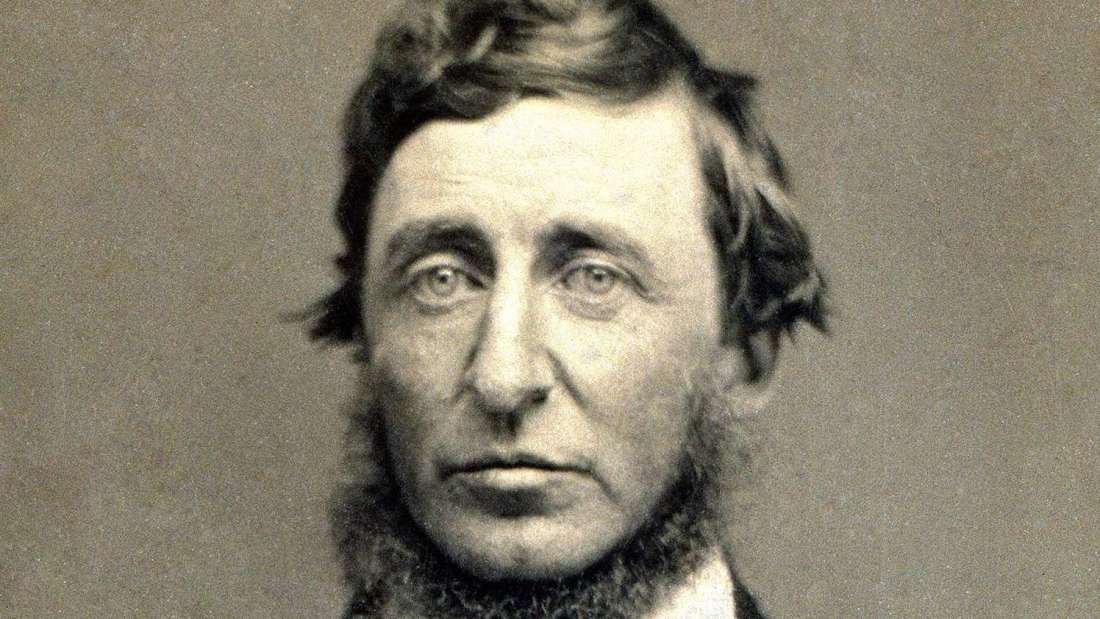
Henry David Thoreau was a contemporary of Joseph Smith, but he took a different path to the divine.

In 1845 (the year following the Martyrdom) Thoreau was nearly 30 years old and found himself in the midst of an existential crisis.

The world had undergone one of its most transformative periods in history ― the Industrial Revolution ― and Thoreau was not impressed.

In particular, he was troubled by the dreariness of life for the working-class, who labored for subpar wages and led "lives of quiet desperation."

And so Thoreau set out to unclutter his soul by living a simpler way-of-life.  He embarked upon a two-year experiment at Walden Pond, where he built a little hut and detached himself from the world.

"I went to the woods because I wished to live deliberately ... and not, when I came to die, discover that I had not lived.  I wanted to live deep and suck out all the marrow of life."  (If ever there was a motto I could get behind, there it is:  "I wanted to live deep and suck out all the marrow of life.")

(I once attempted my own Walden Pond experiment in college, going up Maple Mountain by myself, to spend overnight alone, fasting, thinking I would commune with the Lord like Enos.  I took only a blanket and pad of paper and pen.  I lasted about four hours before giving up and heading back down the mountain, sunburned, my notepad empty.  I drove to Provo and stopped at Chuck-a-Rama for dinner.  Hey, I tried!)

At the end of Thoreau's life, during his final illness, his Aunt Louisa visited him and asked if he had made his peace with God.  Thoreau famously replied, "I did not know we had ever quarreled."

On May 6, 1862, he died.  His last words were, "Now comes good sailing."  He was 44 years old.

His friend, Ralph Waldo Emerson, published a eulogy for him in the Atlantic Monthly.  "He chose to be rich by making his wants few, and suppling them himself.  He was bred to no profession; he never married; he lived alone; he never went to church; he never voted.  Yet, hermit and stoic as he was, he was fond of sympathy and threw himself heartily and childlike into the company of young people, whom he loved, always ready to lead a huckleberry-party or a search for chestnuts or grapes.

"In 1847 he refused to pay his town tax, and was put in jail.  A friend paid the tax for him, and he was released.  The like annoyance was threatened the next year.  But, as his friends paid the tax, notwithstanding his protest, he ceased to resist.

"No truer American existed than Thoreau; he was a speaker and actor of the truth, standing for abolition of slavery, abolition of tariffs, almost for abolition of government.  The country knows not yet, or in the least part, how great a son it has lost.

"He had in a short life exhausted the capabilities of this world.  The axe was always destroying his forest.  'Thank God,' he said, 'they cannot cut down the clouds.'"

(Ralph Waldo Emerson, August 1862, "Thoreau", The Atlantic, pp. 239; I've edited and combined excerpts for brevity and clarity.)
Picture
"Thank God They Cannot Cut Down the Clouds"

One of the hardest things for us to do is to support the faith of others ― especially when we do not share their vision, or have not received the same spirit as they have.  

How quickly we "cut down the clouds" of our fellows, thinking we know better than they, viewing their differences as "error."

I struggle with this myself.  Recently I was reminded how judgmental I am, and how easily I dismiss other people's notions (at least the ones I find "weird."  Yes, I know: it takes one to know one).

For all of my talk about being "open minded" and allowing others to follow their personal inspiration, I confess to being an occasional wet blanket.  Et tu, Brute?

Case in point: there's currently a resurgence of religious fervor among some Christians to reinstitute the Jewish feast days.  Yes, even though the Lord fulfilled the Law of Moses.

While I enjoy a good Seder meal and appreciate the historical and cultural significance of the Jewish calendar, this strikes me as a bit fringe, this newfound  emphasis on Jewish holidays.

But the real reason, I think, I was taken off guard was not because people were choosing to celebrate the old holy days, but because they implied we all should be, making it sound like it was God's will for everyone.

But as I pondered the issue and my reaction, I realized I was being hypocritical.  No one was forcing me to participate.  Why was I reacting negatively to something that didn't even effect me?  And if someone invited me to join them and to blow my shofar 'till I'm red in the face (or whatever else one does at them), why shouldn't I?  For didn't Paul say:

   One man esteemeth
   one day above another:
   another esteemeth
   every day alike.
   Let every man
   be fully persuaded
   in his own mind.


(Romans 14:5)

I concluded that if someone wants to celebrate the Feast of Trumpets as a Christian, who am I to second-guess them?  I can honor their walk with God, arm-in-arm, right?

Because, don't we all want others to respect the way we choose to exercise our faith in God, even if, to them, it seems "weird"?

I've found it's easier to be respectful of another's faith when it is worlds apart from our own, like if they're Buddhist or Muslim.  But when someone is part of our own faith-tradition, closer-to-home, and does something we don't understand, it is harder to honor their choices.  Why is that?

Upon reflection, maybe the reason Zion hasn't arisen yet is because we've been trying to get everyone on the same page ― as if there was a single, celestial ideal that everyone had to agree upon and live up to ― rather than just loving each other in our glorious, Christ-given diversity.

Isn't this what Paul was trying to teach us in 1 Corinthians 12?  Wasn't he telling us to stop trying to get everyone to act like femurs or humeruses, unbending bones, and be more like elbows and kneecaps?  Those are joints; and are we not called to be "joint-heirs" with Christ?

With Christ as our head, maybe it's okay if the ears celebrate Shavu'ot and the lips go to the circus instead; and if the toes want to swim in a yellow polka dot bikini while the kidneys dress like nuns.  There's no reason to get worked up over our differences.

I am beginning to believe that the cause of Zion is not advanced by dictating a one-size-fits-all faith or worship, assuming we know what is correct for everyone based on what is right for me, as if our version of faith were the universal standard.

I regret spending so long trying to persuade others to come around to my way of thinking, when I should have been trying to get them to come around to Christ. 

So let us be like Christ who did whatever pleased His Father (John 8:29).

Because if "the unity of the faith" (Eph. 4:13) were to be achieved through an authoritative-orthodox-model-of-religion, the Church would have long ago succeeded.

But after two thousand years, we're no closer to a unity of faith.  Isn't that shocking?  What is it going to take?

Well, for starters, why not cheer for the "Thoreaus" of the world, and their crazy experiments?  Sure, there's no way I'm gonna live for two years on Walden Pond without electricity or plumbing, but if you want to?  I'll bring you tater tot casseroles and check in on how things are going.

Let us support each other in our individual Waldens. 
Picture
"Try the Experiment"

Few seem willing to experiment with their faith today.  What are we afraid of?

   1.  "No, no, Tim; we're not here to experiment.  God's will is revealed to us in the scriptures and through the prophets.  We've just got to knock some obedience into those who haven't got the Memo, my dear boy.  You know, all those folks out there in the fields experimenting with different kinds of seeds?  Why can't they just harvest the squash right in front of them, like everyone else?  They're making this difficult."

   2.  "Tim, my lovable loon," someone else objects, "They're right.  God's House is a house of order.  We need to avoid confusion and disagreement.  We've got to hold onto God's one, single, celestial ideal, and require everyone who wants to be 'in the boat' to conform, even if it kills them.  If they don't hold their feet-to-the-fire, we throw them overboard and let them drown.  Here, I'll prepare the plank."

My colleagues in #1 and #2 must be unfamiliar with Alma 32, which says:

   Neither must ye lay aside
   your faith . . .


Ask yourself: how do we "lay aside" our faith?  Is it by substituting our faith in Christ with an alternative device, therewith hoping to gain our eternal reward?

   Plant the seed
   that ye might try
   the experiment . . .


Faith is sowing seeds in his field, not knowing which ones will yield fruit.

We reverse the process, going to the store and asking the clerk, "I want only seeds that are viable, that will grow no matter what the conditions of my soil.  Just give me superman seeds, basically."

No matter how handsome or wise the store clerk is, they can't tell us whether a seed will grow or not.  There are no superman seeds.

Good seeds are simply those that grow.  Bad seeds produce no growth.  We can tell whether a seed is good if it causes our faith in God to grow.  (Inversely, what would a "bad" seed be?)

   As the tree beginneth
   to grow . . . 


Okay, we've got a good seed!  It "beginneth to grow."  Into what?  Has our seed sprouted into a . . . tomato plant?  Watermelon?  Giraffe? 

Nope: it's a tree.  Not just any tree, but "the tree of life" (Alma 32:40).

Here's the point: the Tree of Life is grown in each of us.  The only way to "partake" or "pluck" of its fruit is to have it inside of us.

So instead of thinking of the Tree of Life as something external to us, try thinking of it as the Tree we've tended throughout our lifetime, "springing up unto everlasting life" (Alma 32:41).

   Nourish it with great care,
   that it may get root.


Nourish how?  It makes far more sense when we realize what the Tree is, and where it is (inside of us) and, most importantly, Who it is.
Picture
Each Soul is a Tree of Life

There, I said it (I even bolded it and underlined it).  Each soul is a seed that can grow into a Tree of Life.

There is danger in trying to prune someone else's branches, for each Tree is unique, in God's image ― but not identical.

By way of metaphor, pretend our Trees are bonsai trees ("wax on, wax off").  Over the years, the Master of the Vineyard works with me on my Bonsai.  In time it bears His countenance and is shaped, say, like a Lion (hippopotamus?).

So picture me wandering around the neighborhood with my pruning hook, with a sense of self-importance (my Bonsai's looking pretty good, after all), and I see your Tree.  But it looks wrong to me, not quite right.  God helped me to shape my Tree into a Lion, so why does yours look like a Lamb?

Imagine the violence of me taking my shears and cutting off some of your branches to make it resemble my own tree better.  Is this one way we "offend one of these little ones?"

The Tree of Life takes many forms, as natural things always do.  Each one is beautiful.  Trees represent family.  These trees are not stamped in a factory, from a mold, and air-lifted into our hearts.  There is no one-right-way to "family" because the Family of God are not robots.  Love bridges all variations and differences.

The important thing to remember is that our own Tree begins as a seed taken from Christ's Tree.

We plant His tree-seed in our hearts, and nourish it with His living water, and patiently watch it grow gradually into a Tree after His likeness, in His own kind. 

Our fully-grown Son-or-Daughter-Tree produces seeds (fruit) of its own.  We hope to pass along these seeds to our children.

As we observe the Trees in the orchard grow, we begin to notice a lot of variation.  Variation is not deviation.

All things that grow take upon themselves a uniqueness.  This is God's way; it is His glory.
Picture
Enter: Wild Fruit

Any time there's experimentation, we're bound to produce some wild fruit.  That is part of the process.

I mean, we aren't going to produce only good fruit.  By virtue of God giving us agency, there will invariably be some branches-gone-wild.

"Wild fruit" or branches in scripture can refer to individuals or peoples, but as I'm using it here, I only mean practices that do not comport with God's celestial law.

The million-dollar question becomes:  What does God do with the wild fruit?


Answer:  It depends.

There is an aspect of God's plan, and heaven's constitution, that is nuanced and often overlooked.

Wild fruit is, yes, generally burned (Jacob 5:9).  The Lord does not favor wild fruit.

But for a moment, you lovable pyromaniacs (D&C 86:5), put your matches away; we don't need to call down fire from heaven for every infraction; differences do not equal a diseased branch.

Because there are exceptions; Christ's gospel is designed for them (why else do we call it the "good" news?).

God's grace allows, at times (generally due to the faith of someone), for wild fruit to be grafted into Him (Jacob 5:10), and thereby become tame, or natural.

Now, I am using imagery from the allegory of the olive tree, but I am not speaking dispensationally, but personally.

A Celestial Thought Experiment

Pretend for a moment that in heaven, the celestial law is X.  God gives commandments unto the children of men to abide by X.  It's the ideal.  God never tells anyone to do anything other than X because He cannot vary from what He hath said.

But guess what: mortality is messy.  Look around!  There's also A, B, Q and R, and a hundred other letters.  What does God do with all these mortal adaptations, the alphabet soup we create here below?  "Well, Tim, those unruly, wild fruits will 'be thrown down, and shall not remain after men are dead' (D&C 132:13)."

Okay, is that the end-of-story?  We're just going to pick up God's trumpet and, with it, tell the most biodiverse and glorious creation under heaven to "get in line or else?"

Let me introduce you to F.  F-for-Fred.  F-for-Faith.  He's a faithful fellow who lives his life and, for whatever reason, ends up with Z instead of X.  Whoops, right?

Well, our initial, knee-jerk reaction is to rehabilitate Fred and get him on the straight and narrow: "Buddy, repent of Z and get on board with X.  Or else you will be tossed into the air fryer at the last day."

Not bad advice, if we were playing the odds.  But here's where things get interesting.  For Fred is the possessor of great faith (we wouldn't have thought it from the looks of him).  Fred cries unto the Lord.  Given Fred's biological factors, epigenetic history, and his social, cultural, and other limitations, Fred pleads with the Lord.  And lo and behold, Fred obtains God's word through faith.  Like Abraham, he "receives the promise" of God. 

Thus Fred and the Lord arrive at an understanding, as it were, where accommodation is made for Z.  (If you're keeping score, this is the narrative of Hebrews 11, with all the Rehabs of the world.)

Now watch: Fred dies and goes to heaven, where you'd expect there to be, you know, only X.  But Fred is Z and walks freely along the golden sidewalks, passing some bewildered angels.  "Umm, Lord," an unassuming angel asks, "What's Fred doing in the celestial kingdom?  He doesn't have X."

"It's none of your concern," the Keeper of the Gate answers.

Now multiply Fred's "Z" by worlds without end, and by the fact God's seed stretches endlessly through time and space, and all the multi-splendored variation of saved creations as the sands upon the seashore, and ask yourself: Exactly how much diversity is there in the Celestial Kingdom?

To be sure, Z is not the standard; no one is arguing for Z to be rolled out among the beasts of the field and the fowls of the air.  It is not God's ideal.

And yet!  There is Fred: perfectly acceptable and suitable to God's kingdom as Z, and as agreeable and in-season as the driven snow, X-notwithstanding.

This explains Paul's mysterious saying ― who, recall, knew a man who had been caught up to the third heaven (2 Cor. 12:2):

And those members of the body, which we think to be less honourable, upon these we bestow more abundant honour; and our uncomely parts have more abundant comeliness.

For our comely parts have no need: but God hath tempered the body together, having given more abundant honour to that part which lacked:

That there should be no schism in the body; but that the members should have the same care one for another.


​​(1 Corinthians 12:23-25)
Picture
The Parable of the Five Sons

A mother had five sons.

The first was strong and worked the fields.  He grew into a tall, fine man and was everything a mother could ask for in a son.

The second son was a tanner of leather and worked wonders with his craft.  He was short and stout and brought great pride to his mother.

The third son mined stone from a quarry to provide bread for his family, and was a man of few words.  His mother loved him fiercely, even more so after a large piece of limestone fell and crushed his leg.  The doctors amputated his leg to spare his life.

The fourth son was born with an elegance and grace that suited him perfectly for the ballet, where he dazzled and entertained the hearts of many, his mother's most of all.

Finally, her fifth son was born with disabilities and required a wheelchair, but went on to make many notable discoveries in science.  The mother was protective of him, her baby, and showered him in her affections.

The mother boasted to all she met about her five sons, all of whom, she said, she loved equally.

As she neared the end of her days, she desired to give one last parting gift to her sons before rejoining her ancestors in the sky.

Being a practical-minded woman, she wanted to give them something they could use daily and benefit from.  Something to remember her by after her departure from this world.

She sought out the most respected tailor in the kingdom to craft the perfect suit of clothing for her sons.  She wanted the tailor to make them the finest suits of clothing as ever were. 

Said the tailor, 'Is the garment for work?  For a fine ball?  For church?'  What sort of clothes did she desire?

'What is best?' asked the mother.

'Best?' said the tailor.  'It depends.'

The mother pondered, and proud of her sons' professions, she instructed the tailor to make each son a pair of work pants and a long-sleeved shirt.

The tailor spent many months at his loom and sewing table, making five beautiful sets of clothing for the woman's sons.

When the mother returned for the clothes, and inspected them, she nearly fainted.  'Why,' she said, 'they are all the same size!  My boys are not identical.  What pattern did you use?'

The tailor replied, his pride hurt, 'You gave me no measurements, Ma'am, so I fashioned them all to fit the ideal man at the pinnacle of his prime.'

The tailor refused to alter the clothing, and the mother took the clothes home.  She passed away before having the chance to alter the clothes for each of her sons.

After her funeral, her sons found the clothes wrapped in colorful paper upon her bureau, next to her bed, with their names written on tags.

The first son opened his, and tried on the pants and shirt.  They fit him to a tee, and he beamed with gratitude.

The second son eagerly opened his gift, but when he attempted to button the pants, he could not, for they were too tight.  And the sleeves were overlong.  'Did not Mother know me at all?' he lamented, crestfallen.

The third son. who had but one leg, pulled on his pants and wept, mistaking it for an insult.  He wetted his pillow that night.

The fourth son found the clothes fit nicely, but he had no use for such coarse cloth, being accustomed to the silks of the stage.  He donated his clothes to a poor beggar he passed on his way home.

Finally, the last son opened his gift and donned the clothes, which made him, with his small frame, look ridiculous.  But he refused to be parted with the clothes, and wore them everywhere as a token of his mother's memory, even though others ridiculed him for it.

And the mother met the Great Mother in the sky, and boasted of her sons she loved so well, and of the gifts. 

The Great Mother said, 'Look, daughter, at what your gifts have wrought.'

And the mother saw, and cried out, 'This was not my desire.  I only wished to show them my love.'

The Great Mother nodded.  'Yet, for all your love, you neglected to take their measurements.  Love,' the Great Mother said, 'must be adapted to the beloved, else it become a bane.'
Picture
3 Comments
Harry
4/17/2024 09:15:49 pm

Reminds me of my high school years in the late '60s. There were 2 groups that I will simply refer to as the hippies (flowers, bell bottoms and embroidered jeans) and the greasers (think Eric Burdon and the Animals and the Fonz). I didn't really relate to or belong to either group but, I was accepted by both. I could hang with either group no questions asked..

Reply
Ruth
4/19/2024 07:16:44 pm

A lot to ponder on. Well written. <3

Reply
Clark Burt
5/10/2024 09:07:41 am

I found this to be the heart of this post:

"Zion is not advanced by dictating a one-size-fits-all faith or worship....

I regret spending so long trying to persuade others to come around to my way of thinking, when I should have been trying to get them to come around to Christ."

How wonderful that someone has experienced the variety that God loves so much. I would say that Z and X are not so much belief systems, but rather are different people whose differences God loves, and therefore so should we. Human love has too many limitations and our job is not to be accusers. Satan is the great accuser, always the tattle tell.

I loved this post because we can all fit comfortably in God's grace, and those who desire more will receive more. And those who don't will receive what they desire. But by bringing them to Christ rather than to our way of thinking, provides the means for them to see and desire more. Beautiful.

Thanks Tim for being one of those many prophets called to teach us.

Reply


Leave a Reply.

    Author

    Tim Merrill

    RSS Feed

    Previous Posts

    Archives

    December 2025
    November 2025
    October 2025
    September 2025
    August 2025
    July 2025
    June 2025
    May 2025
    April 2025
    March 2025
    February 2025
    January 2025
    December 2024
    November 2024
    October 2024
    September 2024
    August 2024
    July 2024
    June 2024
    May 2024
    April 2024
    March 2024
    February 2024
    January 2024
    December 2023
    November 2023
    October 2023
    September 2023
    August 2023
    July 2023
    June 2023
    May 2023
    April 2023
    March 2023
    February 2023
    January 2023
    December 2022
    November 2022
    October 2022
    September 2022
    August 2022
    July 2022
    June 2022
    May 2022
    April 2022
    March 2022
    February 2022
    January 2022
    December 2021
    November 2021
    October 2021
    September 2021
    August 2021
    July 2021
    June 2021
    May 2021
    April 2021
    March 2021
    February 2021
    January 2021
    December 2020
    November 2020
    October 2020
    September 2020
    August 2020
    July 2020
    June 2020
    May 2020

    RSS Feed

    Previous Posts
Home
© COPYRIGHT 2019 - 2025
  • Home
  • Poetry
    • Fleeing Egypt >
      • Tower of Babel
      • The Orchard
      • Tithing Settlement
      • Chastity for Churches
      • Sign
      • Cleaning House
      • Elijah
      • Rulers of Sodom
      • Beware
      • Two Churches
      • Beginning At My Sanctuary
      • Toll Road
      • Get it Strait
      • Corporation Sole
      • The Religion of the Circle R
      • Fig Tree
      • Eve
      • New Jerusalem
      • Shemlon's Shore
    • Ascending Sinai >
      • Ark
      • Sin of the Calf
      • An Idol Observation
      • Dew from Heaven
      • I love you, Elder Holland
      • Easter
      • How Sweet
      • Haiku
      • The Barn
      • Patron Saint
      • A Conversation with Brigham Young
      • Mine Testimony
      • The Meadow
      • The Gardens
      • Ice Fishing
      • Without End
      • Forest
      • Continental Divide
      • A Great Sacrifice
    • Promised Land >
      • Lanolin
      • Zion
      • Wisdom
      • Take Up Your Cross
      • Was the Sun the Same
      • Plain and Precious
      • Bridegroom
      • Faith
      • Amos
      • But First
      • Wax
      • Parable of the Piano
      • Repentance
      • Wake Up, Child
      • Cold Storage
      • Covered Wagon
      • Multiply and Replenish
      • Rollercoaster
      • The Baptist
    • Seven Stations of the Cross >
      • Jesus Condemned to Die >
        • Life Signs
        • Fashionable Religion
        • Tithing Declaration
        • A Pretty Important Detail
        • Jesus is All
        • Salt Lake Temple
        • Zion in the Lion's Den
        • High Noon
        • Bookmark
      • Jesus Stumbles and Falls >
        • Unveil
        • But Faith
        • Sifting
        • The Ballerina
        • Credit Declined
        • Prayer Circles
        • Work Out Your Salvation
        • Lovebirds
        • Unrequited
      • Simon of Cyrene Bears the Cross >
        • Proxy
        • Chartres
        • Like the Nile
        • Artificial Intelligence
        • Not Born
        • Parable of the Crossing
      • Women of Jerusalem Weep >
        • With A Price
        • Fields of Asphodel
        • Night
        • Desert Rose
        • Goodbye
        • Spring Snow
      • Jesus Stripped of His Garment >
        • Love Letter
        • I am disquieted
        • Dream
        • Noah's Wife
        • Parable of the Five Sons
        • Eggshell
      • Jesus Nailed to the Cross >
        • This Day
        • Sacred Orientation
        • Sacrament
        • Wrestle with God
        • What is Man?
      • Burial and Resurrection
  • Blog
    • Previous Posts >
      • 2025 Posts
      • 2024 Posts
      • 2023 Posts
      • 2022 Posts
      • 2021 Posts
      • 2020 Posts
  • About
  • Contact